
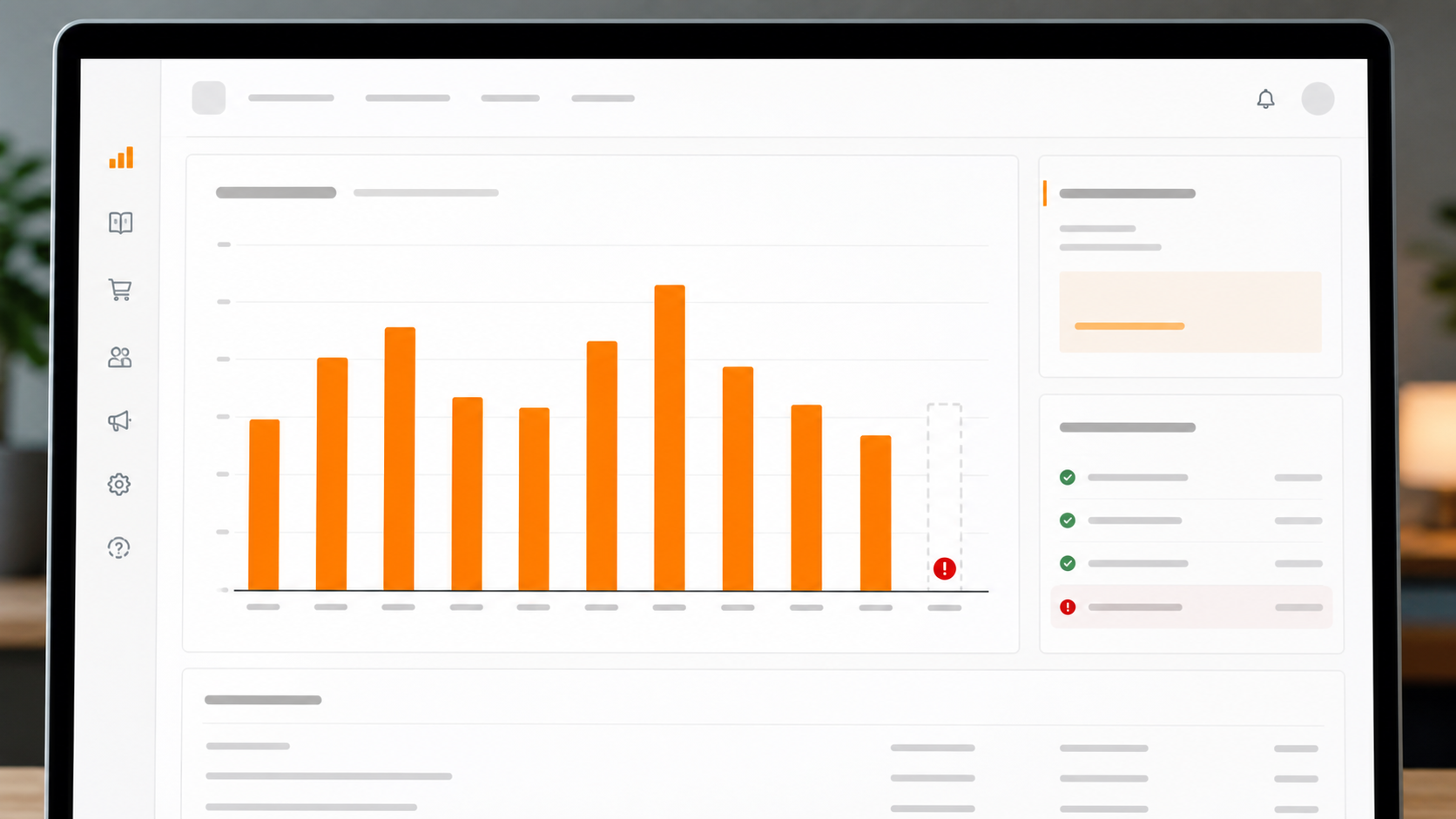
Somewhere in your KDP dashboard right now, a book is quietly earning half what it should. Not because anything went wrong with it. Not because a robot decided you’d broken a rule. Because, until 7 July, Amazon drew a hard line at $9.99, and one cent over it cut your royalty clean in half. That line has just moved—for the first time since 2007—and almost nobody’s backlist has caught up with the news yet.
What people reasonably assume
The headlines mostly read as “Amazon raises author royalties”, which sounds like the sort of thing that simply happens to you, like a cost-of-living adjustment landing in your account overnight. Understandable, since not one of them mentioned the word that actually matters here: opt-in.
What actually happened
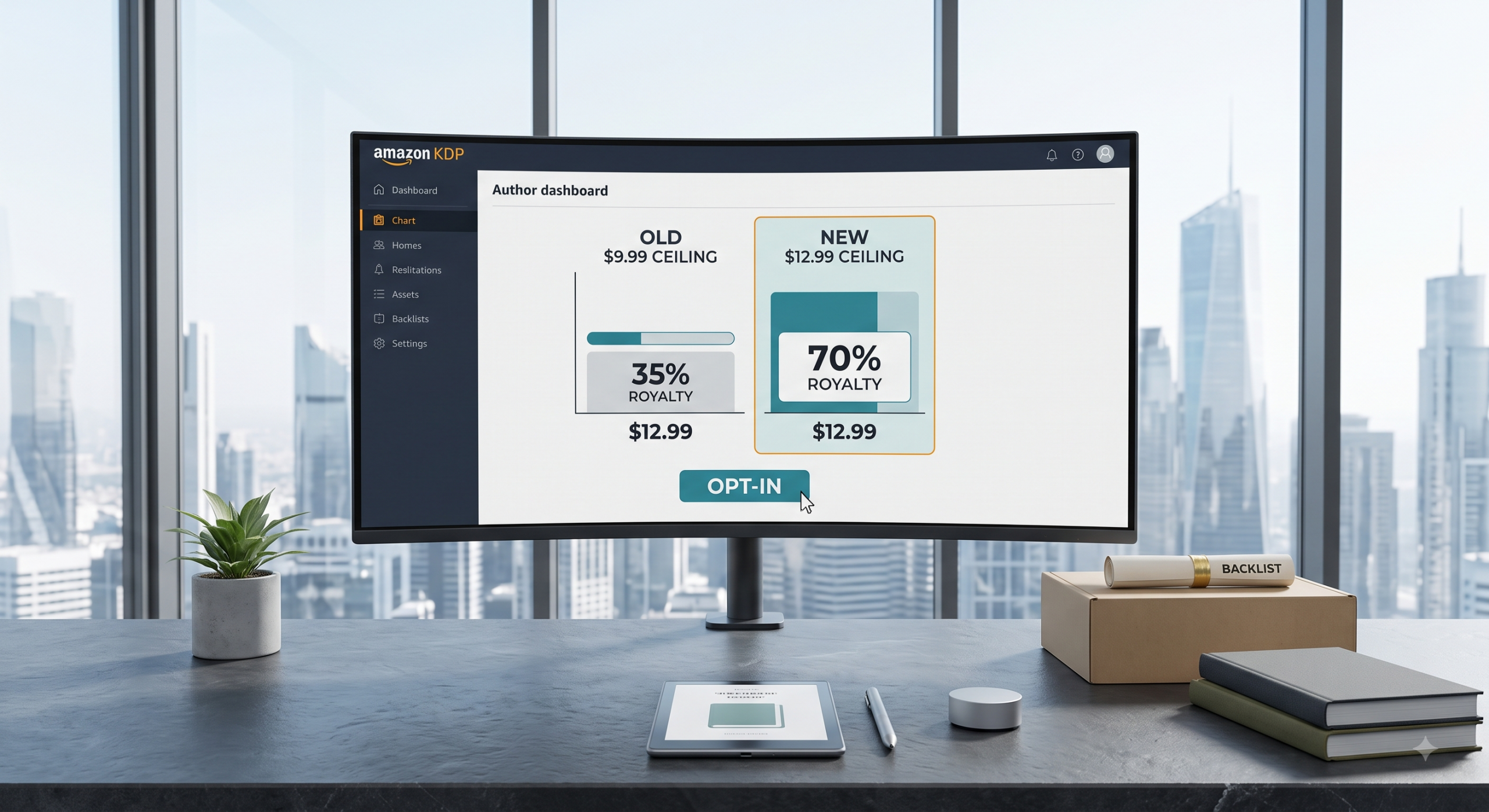
As of 7 July 2026, KDP expanded the price band eligible for its 70% ebook royalty option from $2.99–$9.99 up to $2.99–$12.99 on Amazon.com, with equivalent adjustments across other KDP marketplaces—£1.77–£12.99 in the UK, €2.69–€12.99 in the Eurozone, and up to AU$15.99 in Australia (Amazon KDP Help). This is the first increase to the longstanding $9.99 ceiling (Publishers Marketplace). The floor, the 35% option, and everything else about the mechanics stayed exactly where it was.
Nothing about your existing listings changes unless you go and change it yourself. Amazon says so directly: books currently priced between $9.99 and $12.99 that got shunted into the 35% tier under the old rule stay there, at the lower rate, until someone opens Bookshelf, goes to Rights & Pricing, and manually flips the royalty option. Amazon will not do this for you. Nobody at Amazon is going to notice on your behalf that you’re leaving money on the table.
Amazon will not do this for you. Nobody at Amazon is going to notice on your behalf that you’re leaving money on the table.
The Authors Guild, which had been raising this specific complaint with Amazon, welcomed the change on 9 July—noting it particularly helps longer novels, box sets and specialist nonfiction that previously had to either undercut their real value or accept the 35% rate outright (Authors Guild).
Investigation, and what to rule out
This is not the same change as the print royalty cut from June 2025, which dropped paperback and hardcover royalties from 60% to 50% below a marketplace-specific price threshold—a separate, older and considerably less flattering story that’s easy to muddle with this one if you’re skimming (SecondStream). This piece is ebooks only.
It’s also worth being honest about scale. The Authors Guild’s welcome came with a pointed caveat: it wants the 70% band extended further still, and it wants Amazon to drop or reduce the per-megabyte delivery fee that no competing retailer charges—Apple Books and Barnes & Noble Press pay a flat 70% at any price, Kobo pays 70% from $2.99 up, no fee attached. As one commentator put it: three extra dollars of ceiling after nineteen years of inflation is not exactly a parade (Korben).
Three extra dollars of ceiling after nineteen years of inflation is not exactly a parade.
The boundary of what’s settled
The delivery fee itself hasn’t moved—$0.15 per megabyte on Amazon.com, deducted before the 70% is applied, and it still only applies to the 70% option, never the 35% (Amazon KDP Help). For a plain-text novel that’s negligible. For an illustrated book, an image-heavy title or an unusually large file, it starts eating a genuine slice of the extra you’re now eligible for. And the 20%-below-print-price rule hasn’t gone anywhere either—if you sell a paperback edition, your ebook still has to sit at least a fifth cheaper to qualify for 70% at all.
The practical lesson
If any part of your catalogue is priced at $10.00–$12.99 (or the local equivalent) and currently sitting on the 35% option, that’s real money sitting unclaimed. Concretely: a $12.99 ebook on the 35% option earns roughly $4.55 before any applicable adjustments. Under the 70% option, the same sale could earn around $9 before delivery costs and other applicable deductions—close to twice as much, for doing nothing except opening a dropdown menu (Amazon KDP Help: Royalty Calculation Rules).
Worth checking specifically:
- Any box set, omnibus or bind-up you priced down to stay under $9.99—it may no longer need to be.
- Any longer or specialist title you kept at $9.99 out of habit rather than value.
- Whether your ebook price still clears the 20%-below-print threshold if you nudge it upward.
- File size, if you’re running close to the delivery fee mattering.
This is not a decision to make blind across an entire catalogue in one sitting—genre pricing psychology still exists, and a higher price doesn’t automatically mean higher total revenue if it costs you conversion. But it is a decision that’s currently being made by default, by inertia, for a large number of authors who haven’t looked.
Further reading
If you’re already in KDP fixing this, it’s worth pairing with our check of Amazon’s Payment Service Provider rules, which quietly started withholding royalties from non-compliant accounts on 1 August—different problem, same dashboard, same afternoon of admin.
Sources: Amazon KDP Help—eBook royalty requirements; Amazon KDP Help—royalty calculation rules; Publishers Marketplace; Authors Guild; SecondStream; Korben.




Leave a Reply