
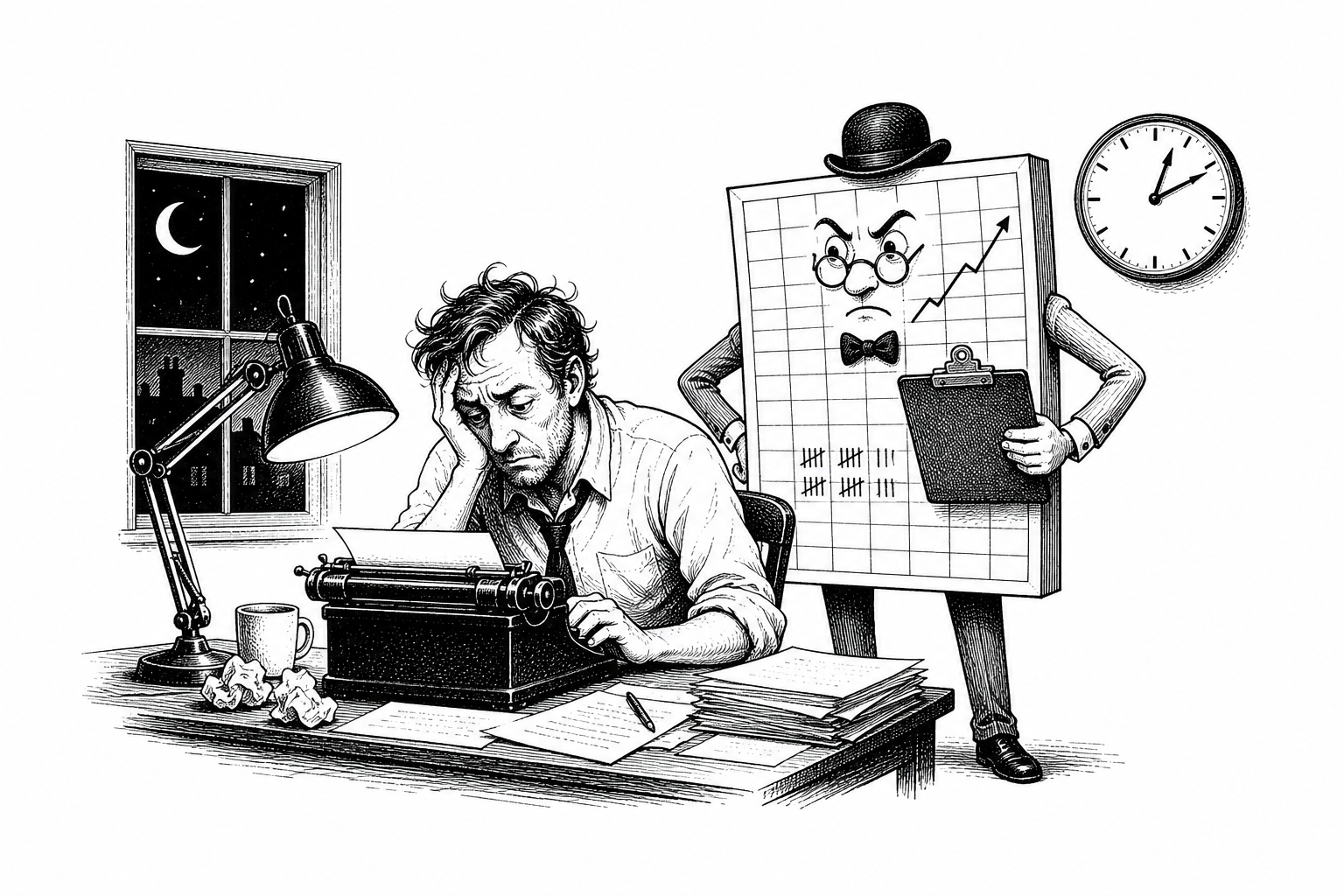
There is a particular kind of writing advice that arrives carrying a whistle and a stopwatch. A writer must write every day, it says. No exceptions. No excuses. Presumably illness may be considered after the paperwork has been completed.
The author-publisher whose experience informs this article has written for more than thirty years. He generally does write every day. He also thinks the word must is doing rather too much work.
Writing daily can be extremely useful. It keeps a story alive, maintains contact with its characters and prevents a promising manuscript from becoming something its owner mentions apologetically at dinner parties. But a routine is a tool, not a test of moral character.
Discipline matters when finishing matters
If writing is an occasional pleasure and the completion date does not matter, there is no crime in proceeding gently. A book may take three years, six years or the approximate lifespan of a modest cathedral.
If the intention is to finish within a reasonable time, however, discipline becomes less optional.
Discipline is what turns “I’m writing a book” into “I wrote one.”
For this author, the routine has usually meant the same time and the same desk. Even while working full-time in an office, he rose in the middle of the night to write before showering, dressing and going to work. The office job was not especially thrilling. Writing provided the escape; the alarm clock provided the administration.
Thirty years ago, maintaining that routine involved considerably more friction than opening a lightweight laptop and waiting for it to remember yesterday. Pages were produced on heavier machinery, saved to floppy disks when technology was feeling cooperative and backed up through processes that involved actual physical objects. Losing work was not an abstract cloud-related anxiety. It was something a small square of plastic could accomplish personally.
The machinery has improved. The requirement to sit down has remained stubbornly analogue.
Why writing regularly helps
Regular writing is not valuable merely because it produces a respectable tally. It keeps the writer inside the story.
Characters become familiar through sustained contact. Their voices remain available. The atmosphere does not have to be reconstructed from notes written by an earlier version of you who was apparently very confident and explained absolutely nothing.
This matters particularly in character-driven work. Spend enough time with fictional people and they begin to feel like colleagues, friends or relatives whose decisions you cannot quite control. Leave them for several weeks and the reunion may be warm, but somebody will first have to remember why everyone is furious.
A daily practice reduces that re-entry time. It keeps the emotional weather of the book close enough to touch.
Returning after an interruption
Interruptions happen. Other work intervenes. Life develops requirements. Occasionally another book becomes more urgent and elbows its way to the front.
Returning is possible, but it is rarely instant. A short break may require only a reread of the most recent pages. A long absence may mean starting again from the beginning—not necessarily to rewrite everything, but to remember the story’s internal logic and meet the characters again.
Time can also change the writer. One series was conceived as hard, unflinching horror, then set aside while another project took priority. Three or four years later, the author returned to find that he still wanted to write the series, but no longer wanted to write quite the same books. The project had waited faithfully. The person returning to it had changed.
That is not failure. Sometimes distance reveals the book more clearly. Sometimes it reveals that the book belonged to an earlier appetite. Experience teaches a writer to recognise the difference.
The spreadsheet is expecting you
Most writers do not maintain elaborate production spreadsheets. They write, inspect the word count and think, with varying degrees of satisfaction, “I did that many today.”
This author does maintain one. It records daily words, monthly averages, projected completion dates and the trajectory of actual progress against planned progress. Cells turn green when the target is met and orange or red when the spreadsheet feels standards have slipped. There is also a chart, because disappointment apparently benefits from a visual aid.
A target is not there to punish the writer. It is there to stop September quietly becoming next May.
The spreadsheet is not a universal requirement. The principle behind it is useful: a long project needs milestones. Without them, drift can look remarkably like patience.
Professional writing also involves delivery. Readers, publishers and production schedules are not greatly comforted by the purity of a creative process that produces nothing. Measurement need not dominate the work, but it can tell the truth about whether the work is moving.
What happens when the words will not come?
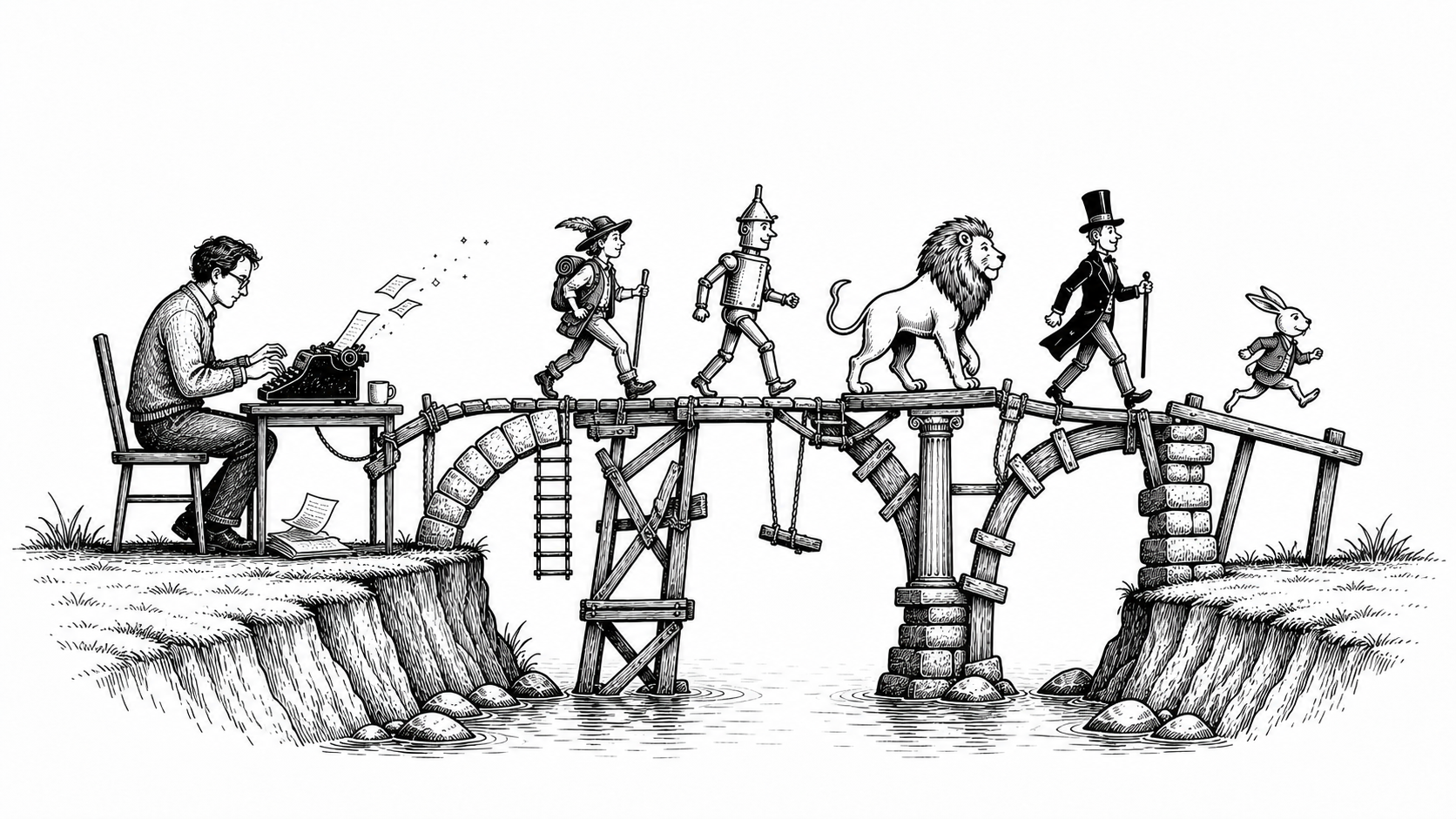
Forcing the current scene is not always the answer. A discovery writer can move to a later chapter, write the scene that is alive today and construct the bridge between them afterwards.
This is one advantage of treating a manuscript as connected pieces rather than a compulsory march from chapter one to the end. If one section refuses to cooperate, another may be perfectly willing. Progress does not cease to count merely because it occurred out of order.
And sometimes nothing useful is happening anywhere. On those days, stepping away is allowed. Perspective is part of the work. Human destruction of several thousand resentful words tomorrow is not inherently more professional than writing none of them today.
Exhaustion, hesitation or procrastination?
Writers can spend a great deal of time identifying the precise category of not writing they are currently experiencing. Genuine exhaustion. Creative hesitation. Fear of failure. Procrastination wearing an artistic scarf.
The author’s view is less diagnostic: are you delivering?
The cause may matter when deciding what to change, but the label does not produce a manuscript. If there is no result, there is no result. One may approach that fact kindly without decorating it beyond recognition.
Rest when rest is necessary. Change scenes when a scene is dead. Set the project aside when another genuinely needs to take precedence. But know which decision has been made. “Not today” is useful information. “Not today” repeated invisibly for two years is a publication strategy only in the broadest possible sense.
Must writers write every day?
No. A person does not lose the right to call themselves a writer because Tuesday escaped unwritten.
If you write, you are a writer. Frequency does not confer a special rank. A poet who writes irregularly is not less legitimate than a novelist producing two thousand words before breakfast, although the novelist may have a more alarming spreadsheet.
Whatever name you give it, an unwritten book remains remarkably consistent.
Daily writing is best understood as practical advice rather than doctrine. When a book is under way, writing as often as circumstances permit keeps it warm, keeps its people close and makes completion much more likely.
The routine should serve the work. It should not become another elaborate system for avoiding it.








Leave a Reply