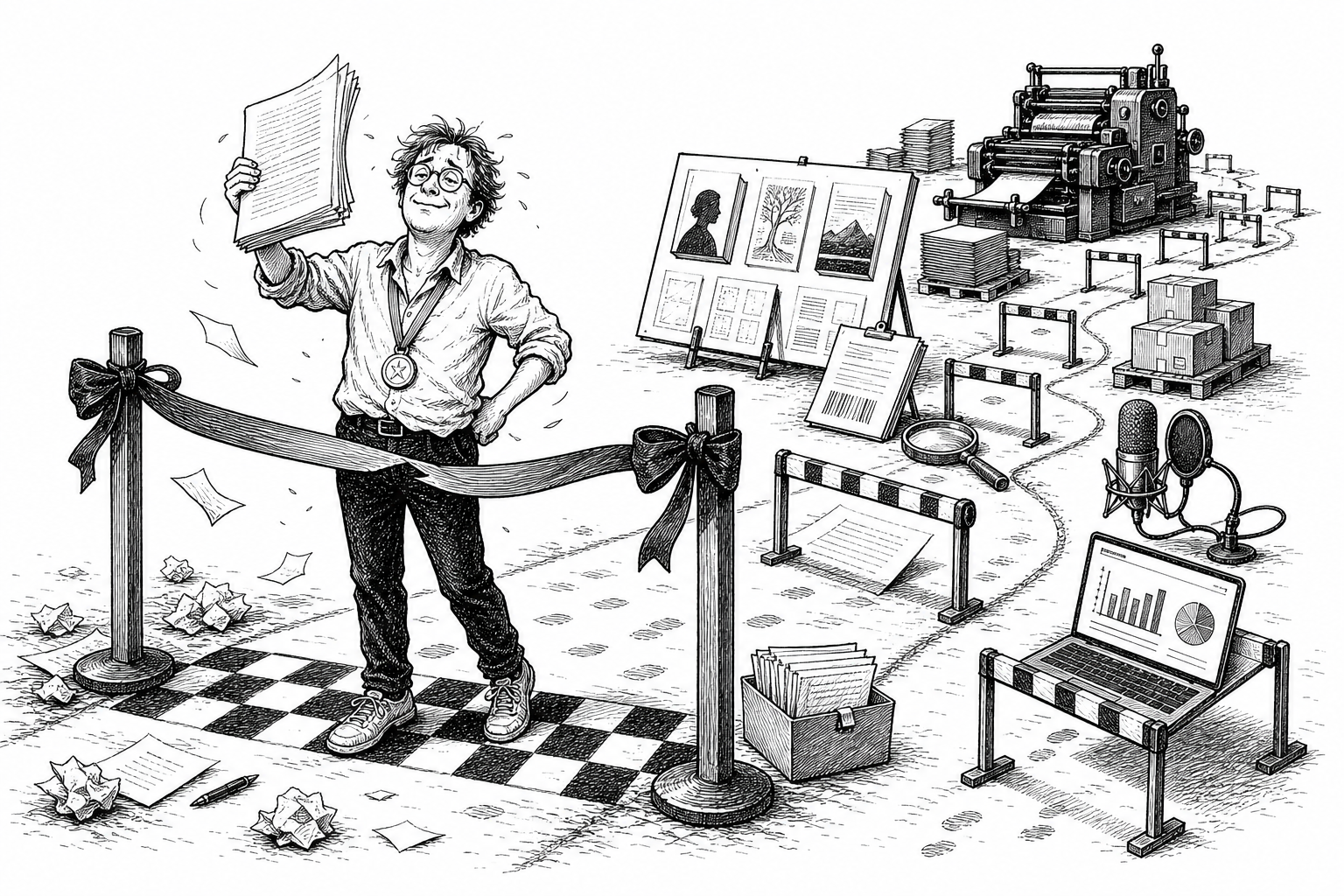
Finishing a book is a proper achievement.
The final sentence is written. The characters have stopped demanding things. The manuscript no longer follows you around the house pointing out the chapter you still have not fixed. Somebody may even have read it and said something more encouraging than, “Well, it’s certainly long.”
Celebrate. Open something. Inform the people who have been living with your vacant expression for the past year that you have returned.
Then sit down, because finishing a book is not publishing one.
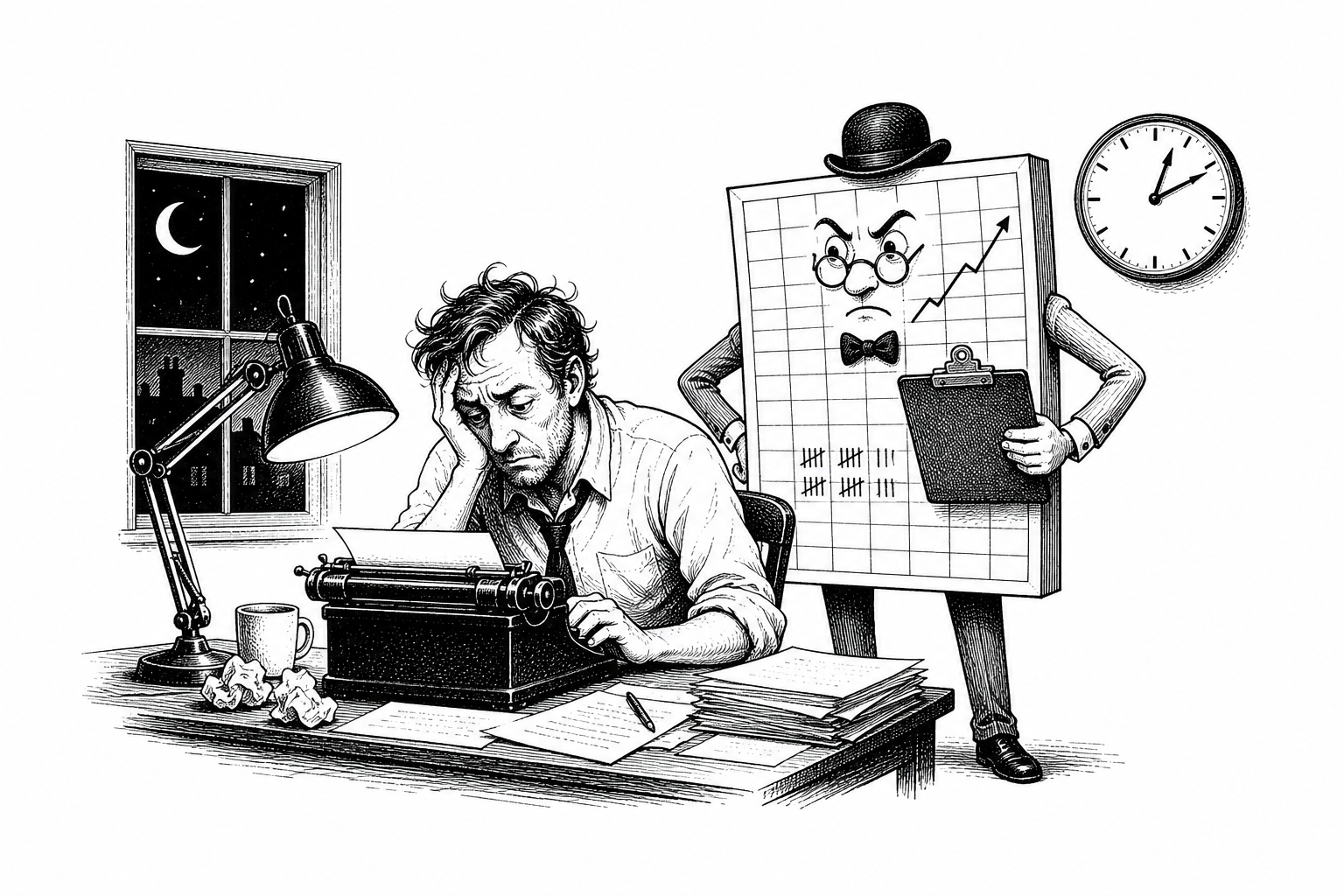
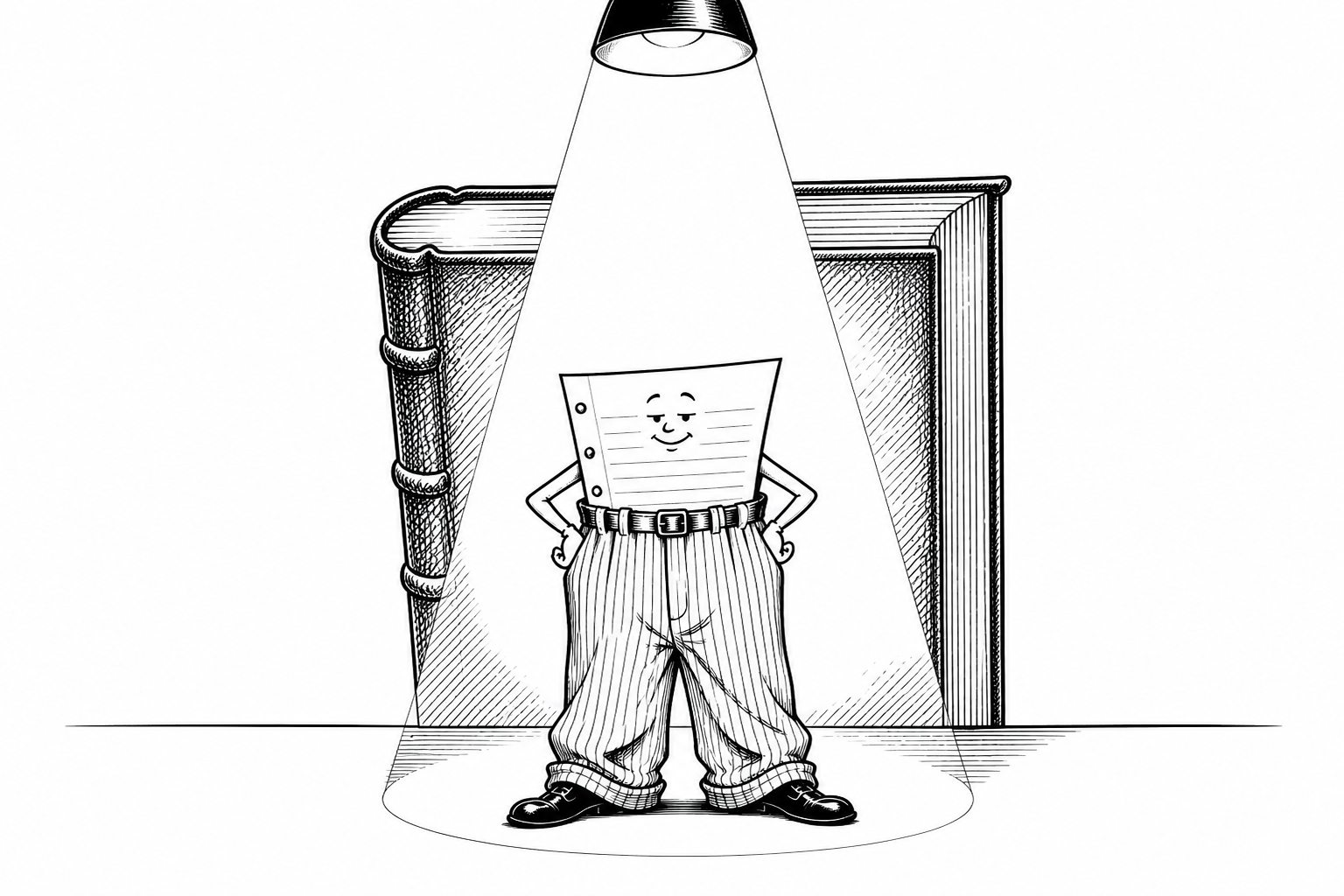
Finishing the manuscript gets you to the publishing department. Unfortunately, you are the publishing department.
The manuscript has finished. The jobs have multiplied.
A finished manuscript is the creative work. Publishing is the collection of decisions, files, systems and mildly threatening dropdown menus required to turn that work into a book people can actually find, buy and read.
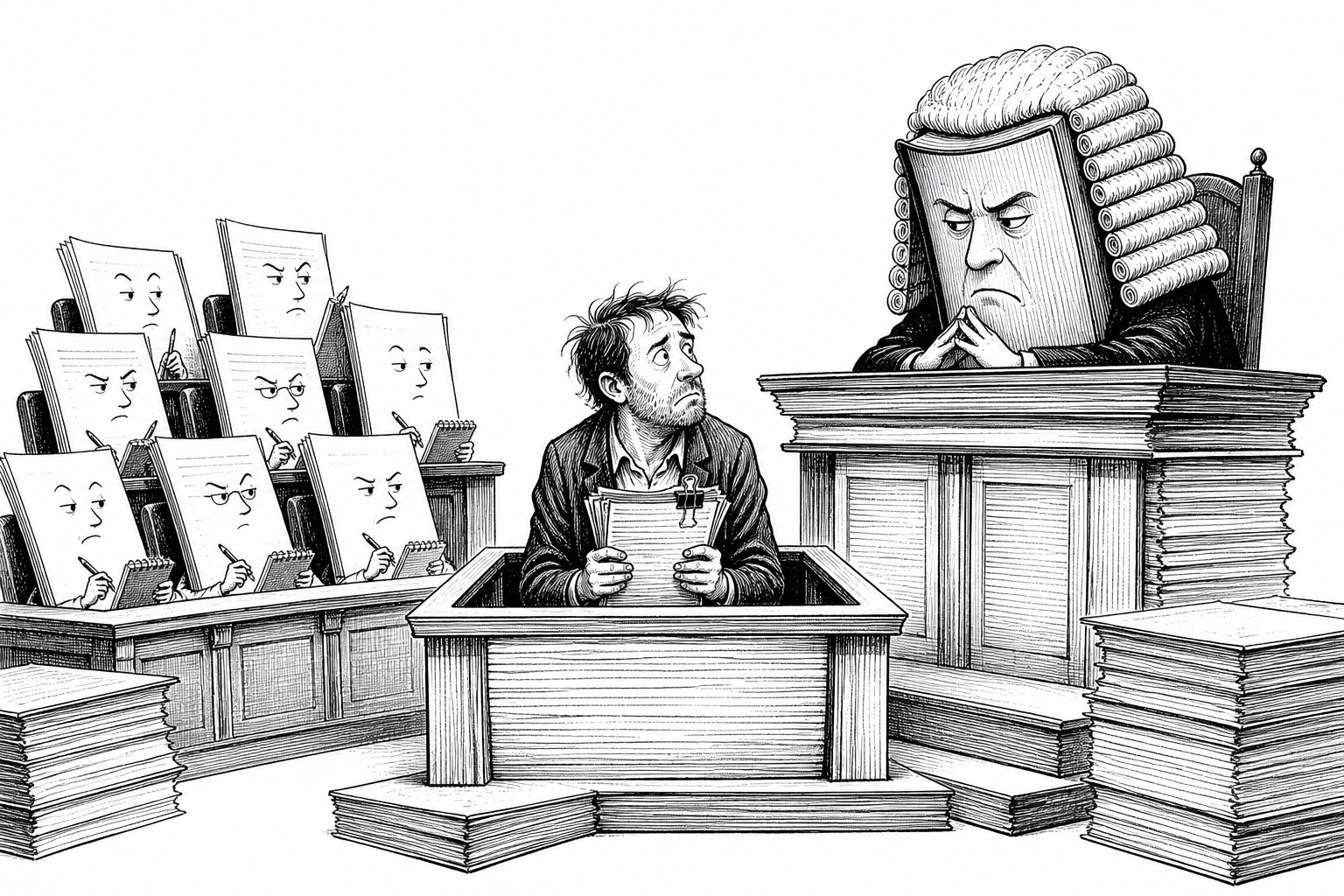
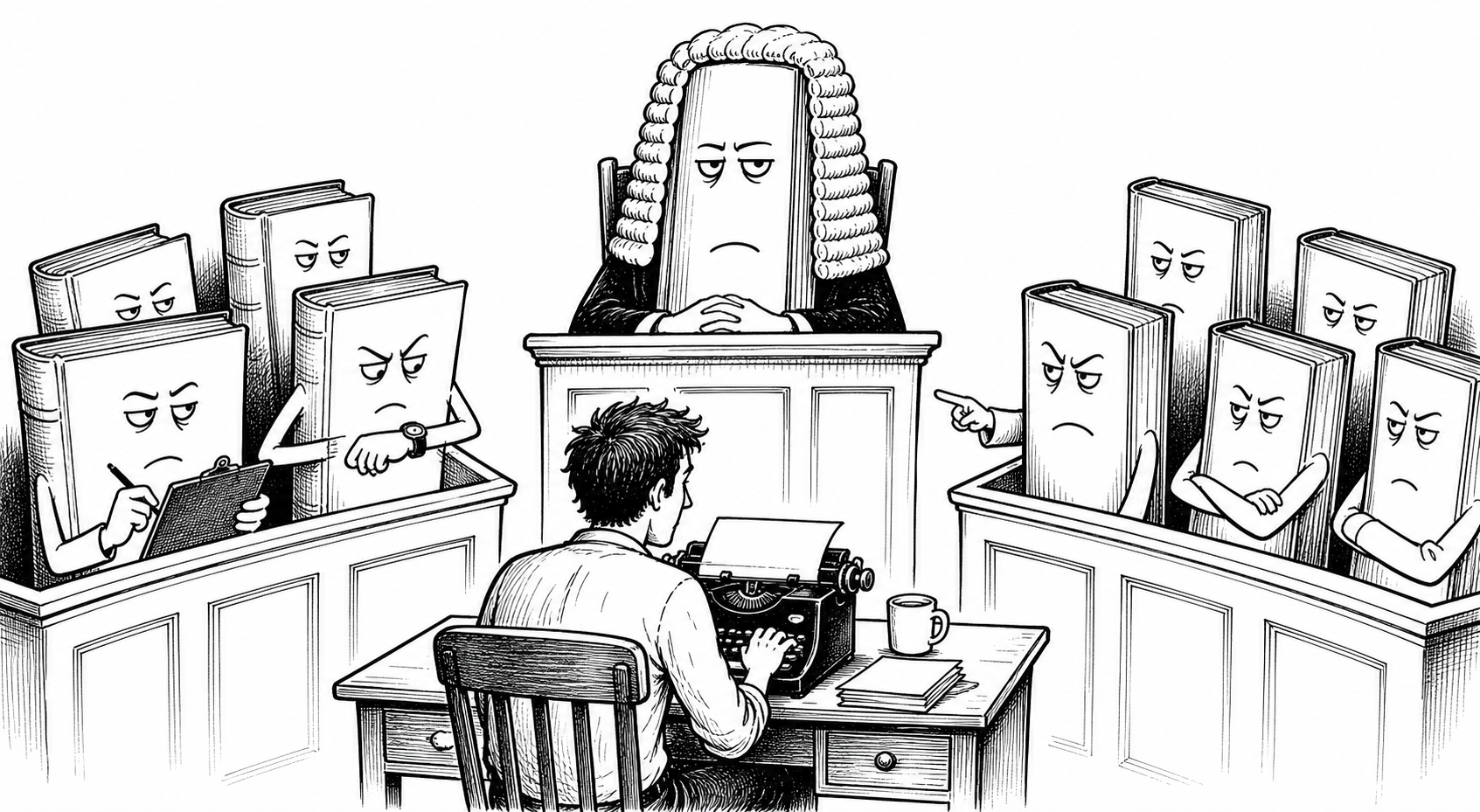
First comes the uncomfortable return to the manuscript. Revision asks whether the story works; editing asks whether the language works; proofreading waits until everybody is exhausted and points calmly at the missing word on page 247. None of these jobs is glamorous. All of them become remarkably visible if skipped.
Then the manuscript needs different bodies. The paperback requires a trim size, margins, running heads, page numbers and a spine that changes width whenever the page count changes. The ebook must reflow without turning every indented paragraph into a small architectural event. The hardback may need an entirely different cover template. The audiobook requires performance, recording, editing, mastering, technical compliance and the acceptance that a single mouth click can eventually become the most important sound in the universe.
Printing is one step in that procession. An important step, certainly, but not the coronation. A perfectly printed book can still be invisible, badly described, incorrectly categorised, unavailable in the right territory or attached to metadata last seen wandering around a distributor’s database in 2019.
Now give the book an administrative identity
The story already knows what it is. The publishing systems would like it to prove that in seventeen separate fields.
It needs a title and subtitle that agree everywhere. It may need ISBNs for its different formats. It needs an author name, imprint, publication date, price, territories, subject codes, retailer categories, keywords and a description capable of introducing the book without recounting the whole plot like an excited relative after two glasses of wine.
It also needs a cover that performs several incompatible jobs. It must look convincing at paperback size, remain legible as a thumbnail and survive being cropped into shapes nobody approved. The designer may create a beautiful sweeping landscape. The retailer may display the middle twelve pixels of it inside a circle.
The story knows what it is. The publishing systems would like documentary evidence.
These choices are connected. Change the trim size and the interior changes. Change the interior and the page count changes. Change the page count and the spine changes. Change the price and a retailer may decide the royalty should change too. Correct an innocent typo late enough and three apparently unrelated files begin clearing their throats.
A book also needs somewhere to go
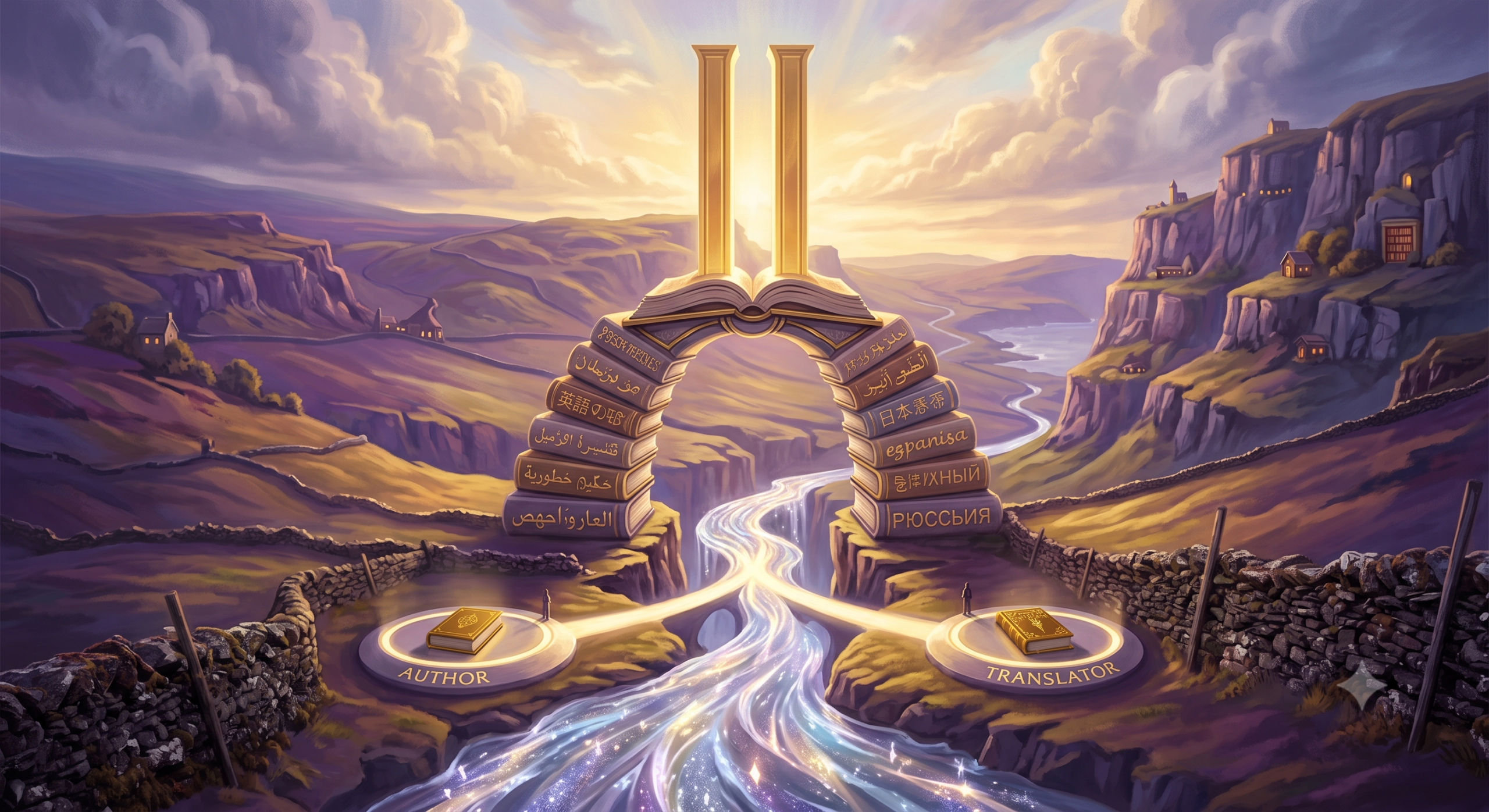
Once the files are ready, the book needs distribution. That might mean print-on-demand platforms, wholesalers, ebook retailers, libraries, direct sales, audiobook services or some combination assembled after an afternoon spent comparing royalty tables until percentages lose all connection with ordinary mathematics.
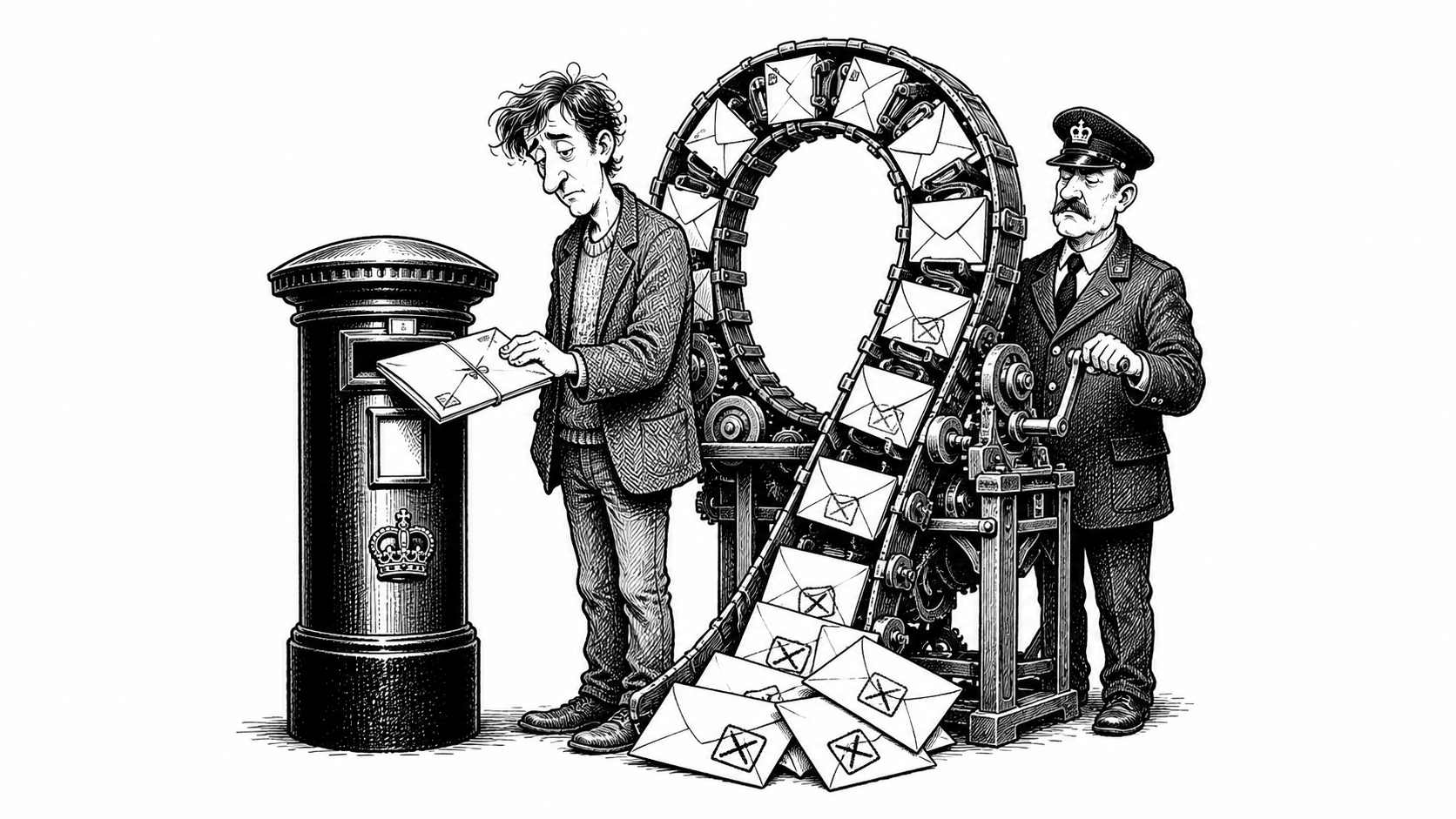
Uploading is not the same as arriving. Each platform has its own technical rules, review process and private interpretation of words such as “optional”. A file accepted yesterday may be rejected today. Metadata may travel slowly, incompletely or with an old description clinging to it like an unwanted forwarding address.
And availability is not discovery. The book still needs to be presented to readers: through its description, cover, author presence, website, publicity, reviews, advertising, social posts, newsletters or the ancient and occasionally effective method of one human being recommending it to another.
None of this means the writer must become a full-time performer shouting “my book!” into every available social network. It means somebody has to decide how the right readers will learn that the book exists. Silence is a marketing strategy, but it rarely produces demanding administrative work.
This is where publishing actually starts
Thirty years ago, many of these jobs were divided among departments and controlled by businesses with physical distribution, sales teams and access to shops. The internet removed some gates and gave authors extraordinary access to the machinery.
It did not remove the machinery. It placed the control panel in front of the author and helpfully labelled half the buttons “Learn more”.
The internet did not abolish the publishing department. It gave you its password.
That is the territory of this site. Not instructions barked from a lectern, and not miraculous seven-step systems whose seventh step is buying the expensive course. We are interested in what happens when real books meet real publishing systems: what the instructions said, what actually happened, which innocent setting caused the damage and how the thing was eventually persuaded to work.
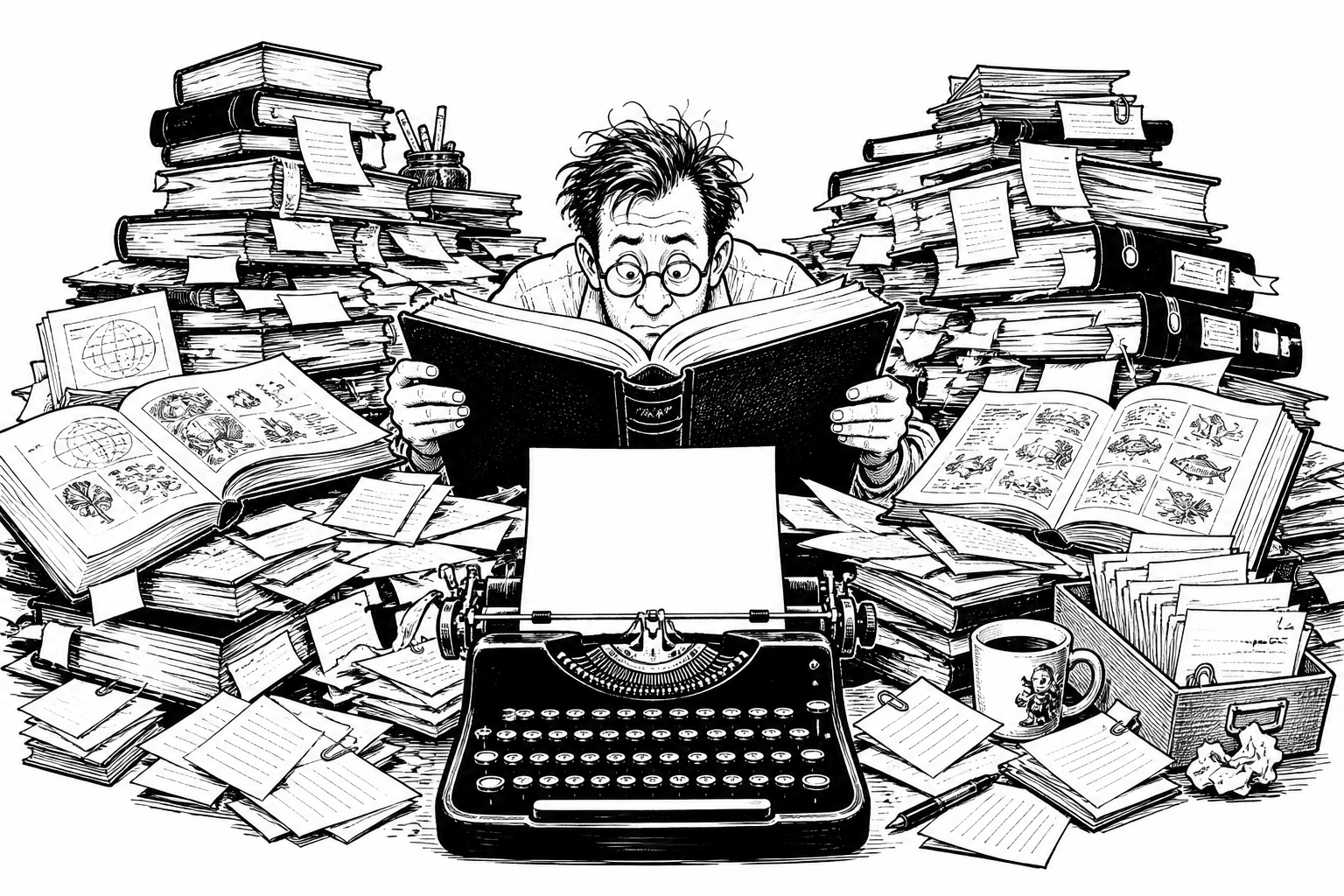
You do not need to master every part of publishing before you finish writing. That would be an excellent way never to finish writing. Nor must you personally perform every job. But once the manuscript is complete, these jobs exist, whether you undertake them, hire them out or stare at them until one becomes urgent.
So yes: you finished the book. Hooray. That matters, and nobody should diminish it.
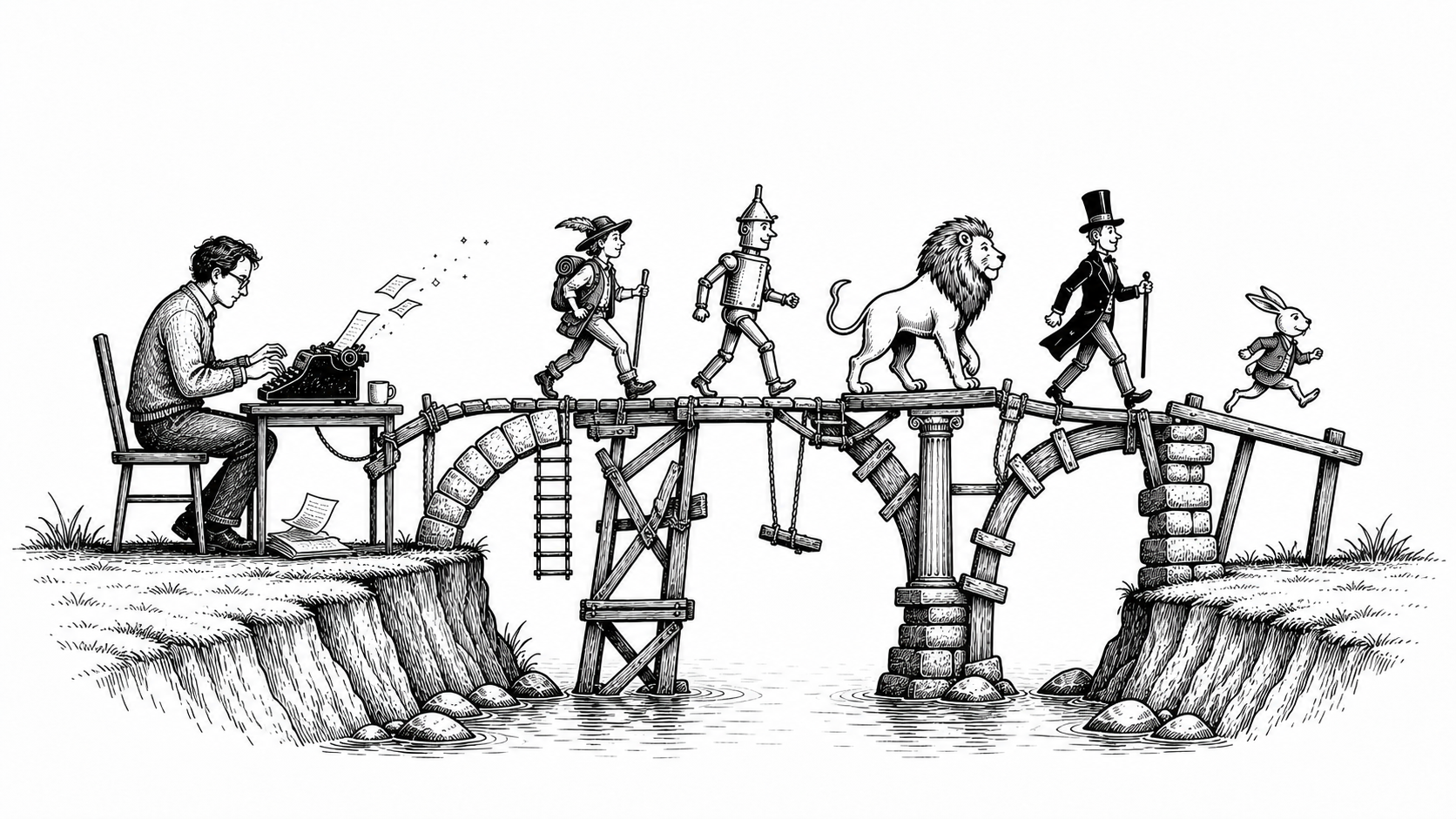
Now the book needs editing, shaping, dressing, identifying, pricing, distributing and introducing to strangers. It needs to cross a succession of platforms without losing a shoe or becoming listed as gardening equipment.
Finishing the book was the end of writing it.
Publishing it is what happens next. And we’re here for that.




Leave a Reply