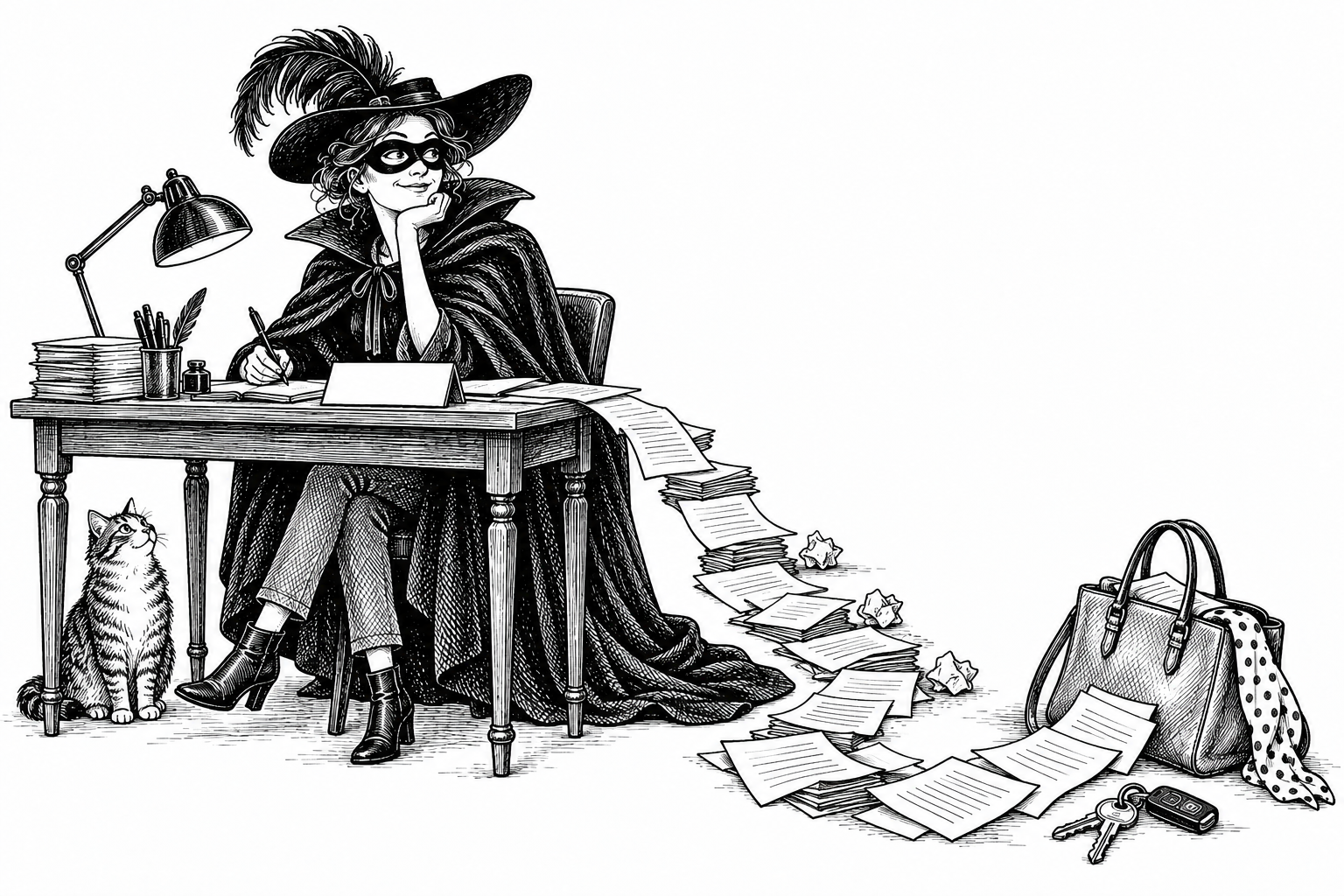

Two writers agree they’ll sort the boring stuff later. Later, as it turns out, arrives carrying a royalty statement, a cover invoice and a disagreement about whose name is bigger.
Co-writing can be a brilliant arrangement. One person has the plot, another has the discipline; one knows the subject, another knows how to make a reader turn the page. It can also produce a book that has two owners, three retailer logins and no agreed answer to the question, “Who is allowed to press the button?”
That is why a co-author agreement belongs near the beginning, while everybody is still optimistic and nobody has yet described a spreadsheet as “basically betrayal”. It is not a romance killer. It is the document that gives the collaboration a chance to survive contact with money.
This is a decision checklist, not legal advice or a substitute for jurisdiction-appropriate counsel. The point is to identify the questions before they become accusations.
Start with the work, not the split
“We’ll divide everything fifty-fifty” sounds admirably grown-up until you ask what everything is. Drafting? Research? Rewrites? Newsletter wrangling? Paying the copy-editor? Running the ads? A fair division is not necessarily an identical one, but it does need to be understood before the book becomes a minor commercial enterprise with feelings.
The Alliance of Independent Authors’ sample co-authoring agreement is useful here not as a document to copy blindly, but as a prompt for the subjects a written arrangement can cover: copyright, authorship, expenses, payment, contribution, disagreement and succession. The Authors Guild’s contract guidance makes the wider point: contract terms shape control as well as compensation.
The decisions worth making while you still like one another
1. Who owns what?
Say clearly whether the book is jointly owned, whether either writer is contributing pre-existing material, and what permission each person has to use that material elsewhere. Include the formats and rights you expect to exploit: ebook, print, audio, translation, serialisation and anything else relevant to the project. “We’ll know when we get there” is an atmospheric writing motto. It is a thin rights policy.
2. What will the reader see?
Record the author names, billing order and how those names will appear on the cover, title page and retailer metadata. This is not vanity; metadata has an irritating habit of becoming permanent before a polite disagreement has finished warming up.
3. Who does the work—and who decides it is done?
List the practical jobs: outline, research, first draft, revisions, fact-checking, editorial decisions, cover briefing, files, upload, retailer accounts, newsletter copy and reader queries. Agree how a deadlock is handled. You do not need an elaborate parliament for every comma, but you do need to know whether one person has a casting vote on a cover change or whether both must agree.
4. How do costs and income move?
Set out which expenses need approval, who pays them, how reimbursement works and how royalties are reported and divided. Decide whose account receives retailer payments, who can see the reports and how often the other person receives a statement. A shared book can be delightful; a shared password with no reporting routine is merely a suspense novel.
5. Who controls the publishing machinery?
Make an inventory of the operational assets: manuscript files, cover source files, domain names, ISBN records, retailer accounts, mailing-list access and advertising accounts. Decide who holds them, who gets access, and what happens if a collaborator becomes unavailable. Treat this as basic continuity planning, not pessimism. The book should not vanish into somebody’s old laptop because life happened.
6. What happens if the arrangement changes?
People miss deadlines, change careers, fall ill, disagree or die. None of this is a cheery subject, which is precisely why it should be dealt with in writing before it becomes personal. Consider a withdrawal, an unfinished draft, a buyout discussion, future editions, continuing royalty payments and successors or estates. The ALLi sample expressly raises failure to contribute, disagreement and succession; your own agreement needs treatment appropriate to your jurisdiction and circumstances.
Do not mistake a template for a finished agreement
A sample agreement is a conversation starter. It cannot know your country, tax position, business structure, contribution mix or appetite for risk. If the book matters commercially—or simply matters to the relationship—have the final document reviewed by a qualified adviser in the relevant jurisdiction. This is cheaper than discovering the missing clause after a productive partnership has become a group chat with frost on it.
If you are still putting together the practical foundations of a publishing operation, start with So This Is Publishing’s practical publishing guides and keep a record of the accounts and assets that support each book. Co-authorship is a creative relationship, but the publishing side is still a business arrangement.
The agreement is not a vote of no confidence
The best time to make these decisions is before anybody needs them. A good agreement does not predict a falling-out. It gives two collaborators a shared map for the awkward terrain, leaving more energy for the thing they actually wanted to do: write the bloody book.