
You have written a novel. You know why the marriage failed, what happened in the cellar and which apparently harmless person should never have been given access to a conservatory. Now somebody wants a few paragraphs explaining why a stranger should read it.
Naturally, you begin with the marriage. The cellar requires context. The conservatory makes no sense without the brother. Three paragraphs later, you are introducing the brother’s business partner and the stranger has gone to make toast.
Writing the book gave you an intimate knowledge of everything inside it. Writing the blurb requires deciding how much of that knowledge to keep to yourself.
The author-publisher whose experience informs these articles has a useful way of putting the problem: you are asking for the reader’s latte money. You are also asking for hours of their life. The money can be earned again. The evening spent discovering that nothing happens until chapter twelve is a more personal loss.
A blurb has to make that invitation worth accepting. It should offer a taste of the story compelling enough that the reader wants to go inside. It does not need to account for everyone who will be there.
A blurb is an invitation, not a plot report.
Find the person inside the plot
When you know a novel well, it is surprisingly easy to describe everything except the thing that makes it matter.
You explain the setting, the family history, the disappearance, the investigation and the second disappearance, which is different and must not be confused with the first. All of this may be accurate. None of it necessarily gives the reader somebody to care about.
My colleague starts with the central human problem. Who is this person? What are they facing? Why should anyone outside the manuscript feel concerned, delighted, frightened or curious about it?
That does not require a complete biography. A character becomes interesting through the situation confronting them, the thing they want or the trouble they cannot neatly walk away from. The reader needs enough to begin feeling the pressure.
There is a difference between learning that a woman returns to her home town after twenty years and understanding why returning is the last thing she wants to do. The first supplies an itinerary. The second begins to suggest a story.
Find that point of emotional contact before attempting to squeeze the plot into smaller trousers. You may discover that several events you thought indispensable were merely standing in front of it.
The reader needs the pressure, not the paperwork.
Give curiosity something to work with
Writers sometimes respond to the instruction not to reveal too much by revealing almost nothing.
Someone has a secret. Something will change. Nothing is what it seems.
Possibly. But that also describes a surprise birthday party, and we still do not know whether this book contains a murder or a disappointing cake.
A blurb needs a concrete proposition. The prospective reader should be able to grasp the central situation and feel why it might become compelling. Mystery works better when there is something definite to be curious about.
That is different from recounting the sequence. Once you begin explaining what happens next, and then what happens after that, the copy can quietly become a synopsis. You are no longer inviting the reader into a problem. You are escorting them through its administration.
My colleague describes the desired result as a small, “sublimely compelling” taste. The reader’s response should be, “I want to taste what’s inside.”
The appetite matters. A person can understand a plot perfectly well and feel no wish to spend an evening with it. Equally, they can know very little about the eventual events and already care about the predicament.
Your job is to make the second response possible without leaving them so bewildered that buying the book feels like agreeing to an unspecified medical procedure.
Give the reader a reason to be curious, not a list of things to remember.
The first line has to start something
One of my colleague’s books opens:
I’m a dick.
It is certainly economical. It is also doing considerably more than inserting a rude word where a conventional opening might have stood.
Somebody is speaking. They have chosen a remarkably unflattering introduction. The reader can begin wondering whether this is self-awareness, bravado, a confession or an attempt to get their apology in early. There is voice, character and a reason to continue.
The lesson is not that every blurb should open with an insult. A gentle village romance may struggle to recover from one, particularly if the next sentence concerns the harvest festival.
The useful question is what your first line sets in motion. It might reveal a character, establish a place, introduce the premise or create a feeling. Whatever its method, it should give the next line a reader.
A first line does not have to explain the book. It has to make the next line unavoidable.
An opening can be beautifully grammatical and still sit there waiting for the real blurb to arrive. If the copy only comes alive in the second paragraph, try starting there. The introductory paragraph may be very upset. It has had plenty of attention already.
Sound like the book they will receive
A good opening also begins making a promise about the experience ahead.
If the novel is dark, intimate and psychologically uncomfortable, the blurb needs to belong to that world. If it is funny and warm, the language should allow some of that warmth and humour through. You are introducing this particular book, with its particular pleasures.
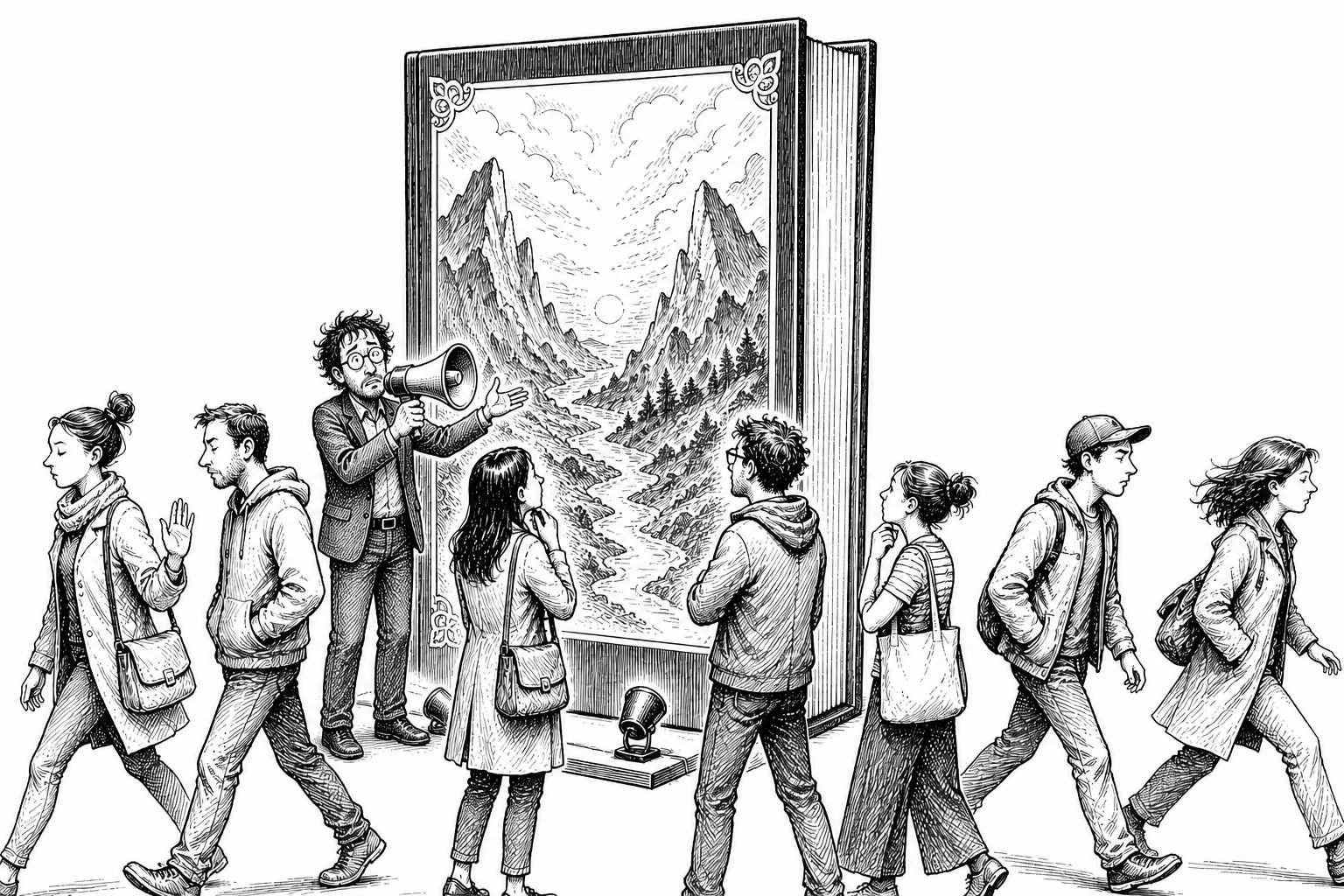
Generic sales language is wonderfully portable. A breathtaking journey, an unforgettable story, a discovery that changes everything: these phrases can travel between manuscripts without once asking where they are going.
Portability is the problem. They tell the reader very little about the book in front of them.
The tone needs to be truthful. You might make a grim novel sound like a cheerful romp and produce an appealing paragraph, but you will also have invited people to the wrong evening. Someone expecting drinks and light conversation is entitled to object when you lock the cellar door.
This connects directly with positioning a book before launch. The cover, blurb and campaign should help the right reader recognise the same book. There is little advantage in each of them giving a persuasive account of a different one.
Concentrate it; don’t simply shorten it
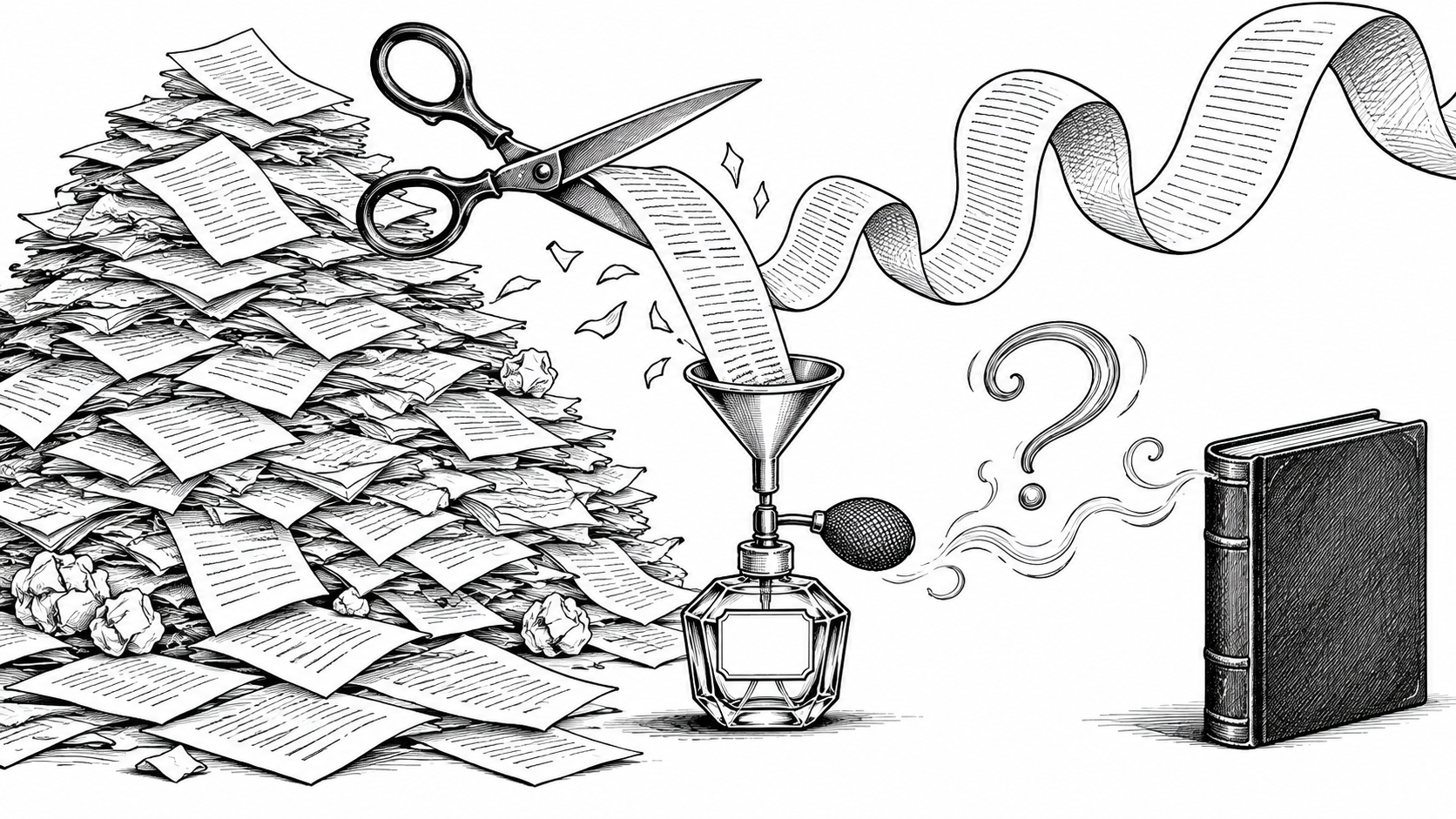
“Less is more” becomes unhelpful if it turns into a competition to remove the most words.
You can cut a blurb until it is impressively short and entirely useless. A person. A problem. Buy now. Excellent saving on ink; rather a lot left to establish.
My colleague’s principle is concentration. The reader needs powerful, relevant information without having to excavate it from explanations. Every line should contribute something worth knowing or feeling.
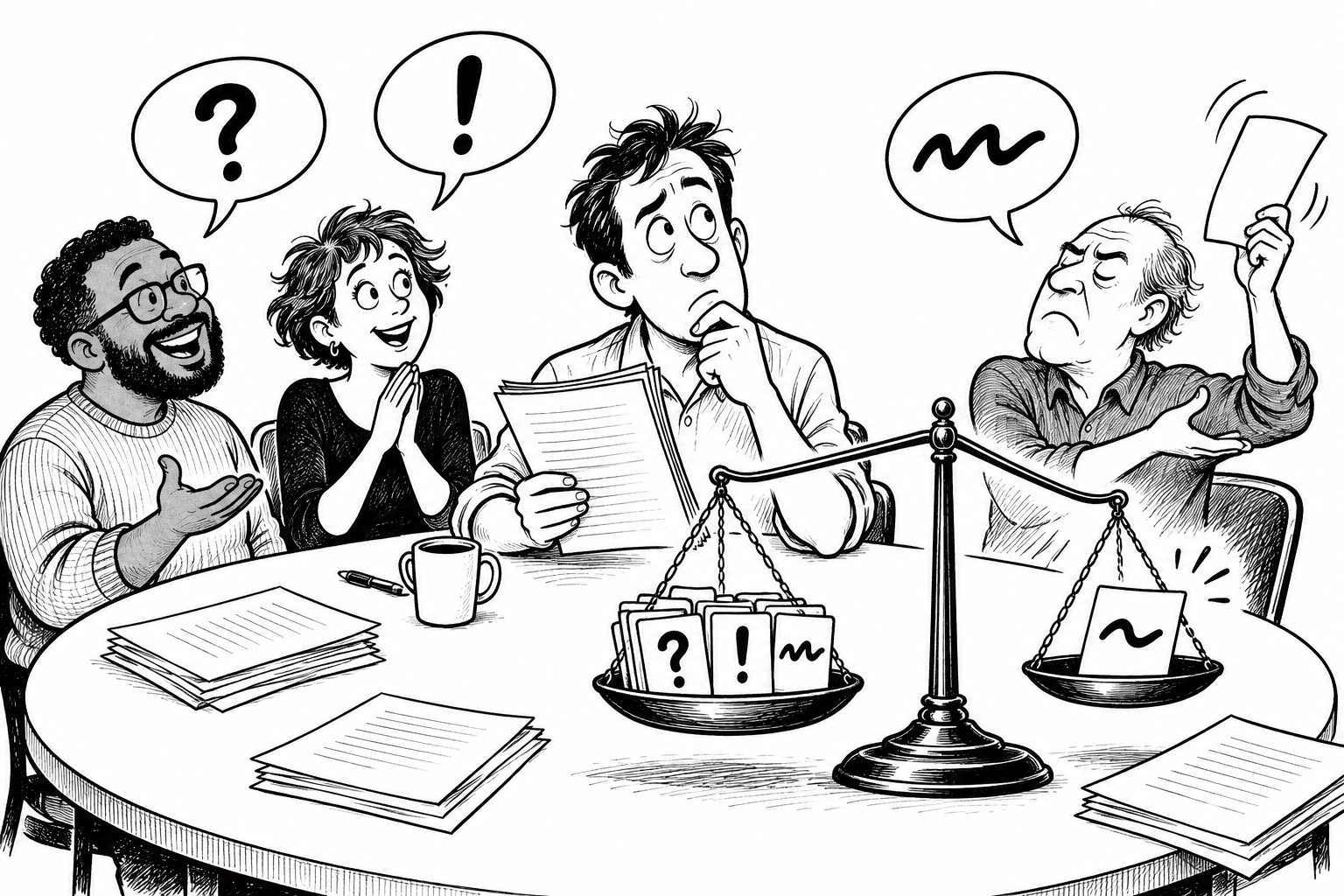
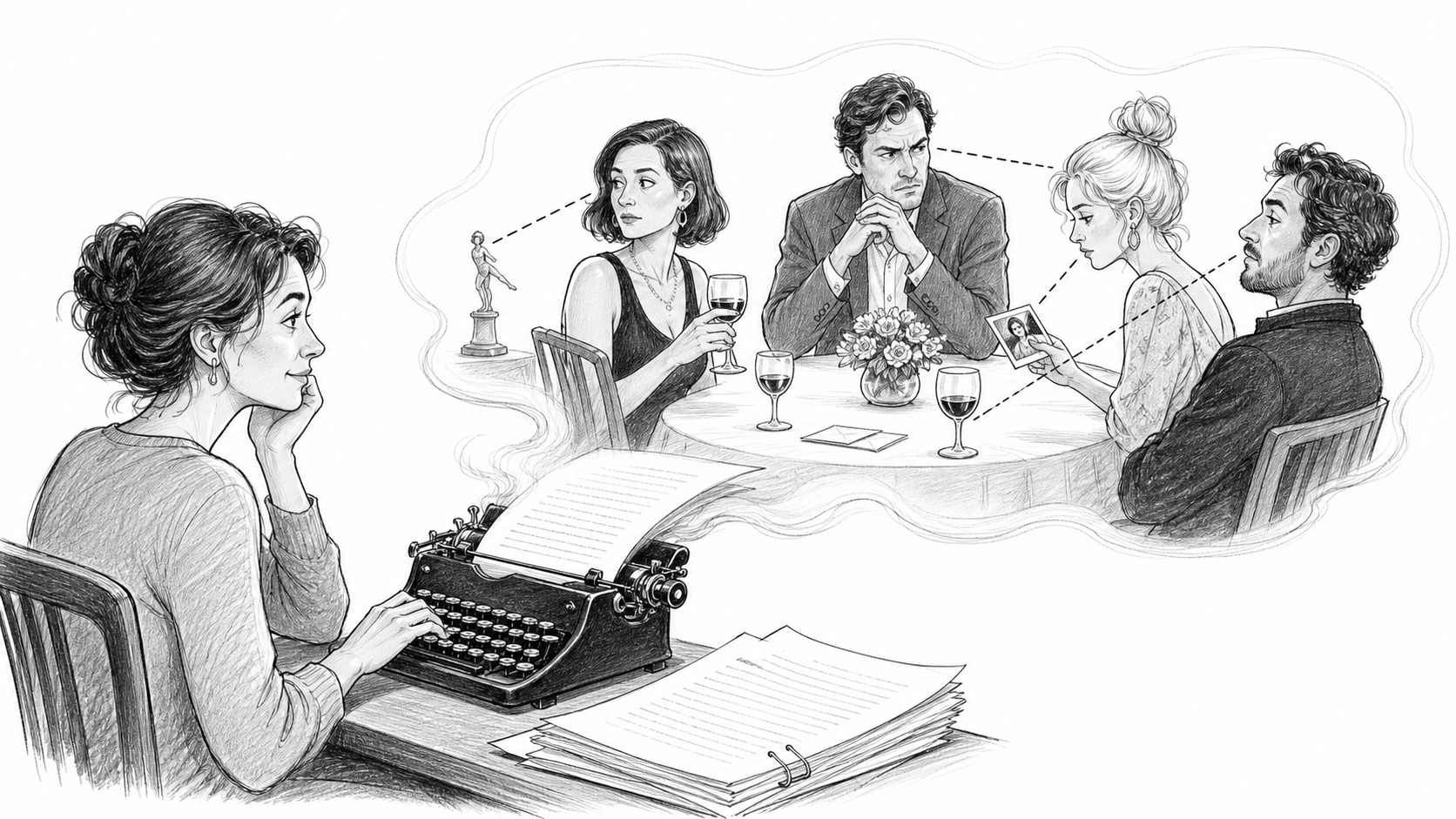
Names are a common source of congestion. You know all these people and their relationships. The reader is meeting them for the first time, possibly while deciding between your novel and several others. Introducing six characters does not automatically create six reasons to care. It may create a memory exercise.
The same applies to background and subplots. Their importance inside the novel does not guarantee them a place in the invitation. Ask what the reader needs now to understand the central problem. Material that becomes fascinating in chapter seven may be inexplicable before page one.
Repetition can be harder to spot because each sentence uses different words. You establish that the protagonist trusts nobody, explain that she keeps people at a distance and add that letting someone in is difficult for her. We understand. She will not be organising the street barbecue.
Keep the strongest expression and see what happens when the others go. The copy may gain force without losing anything the reader needed.
Length should follow the work the blurb has to do. Stop when the proposition is clear, the feeling is right and curiosity has somewhere to go. A further paragraph explaining why the preceding paragraphs were interesting rarely improves matters.
A few paragraphs can take weeks
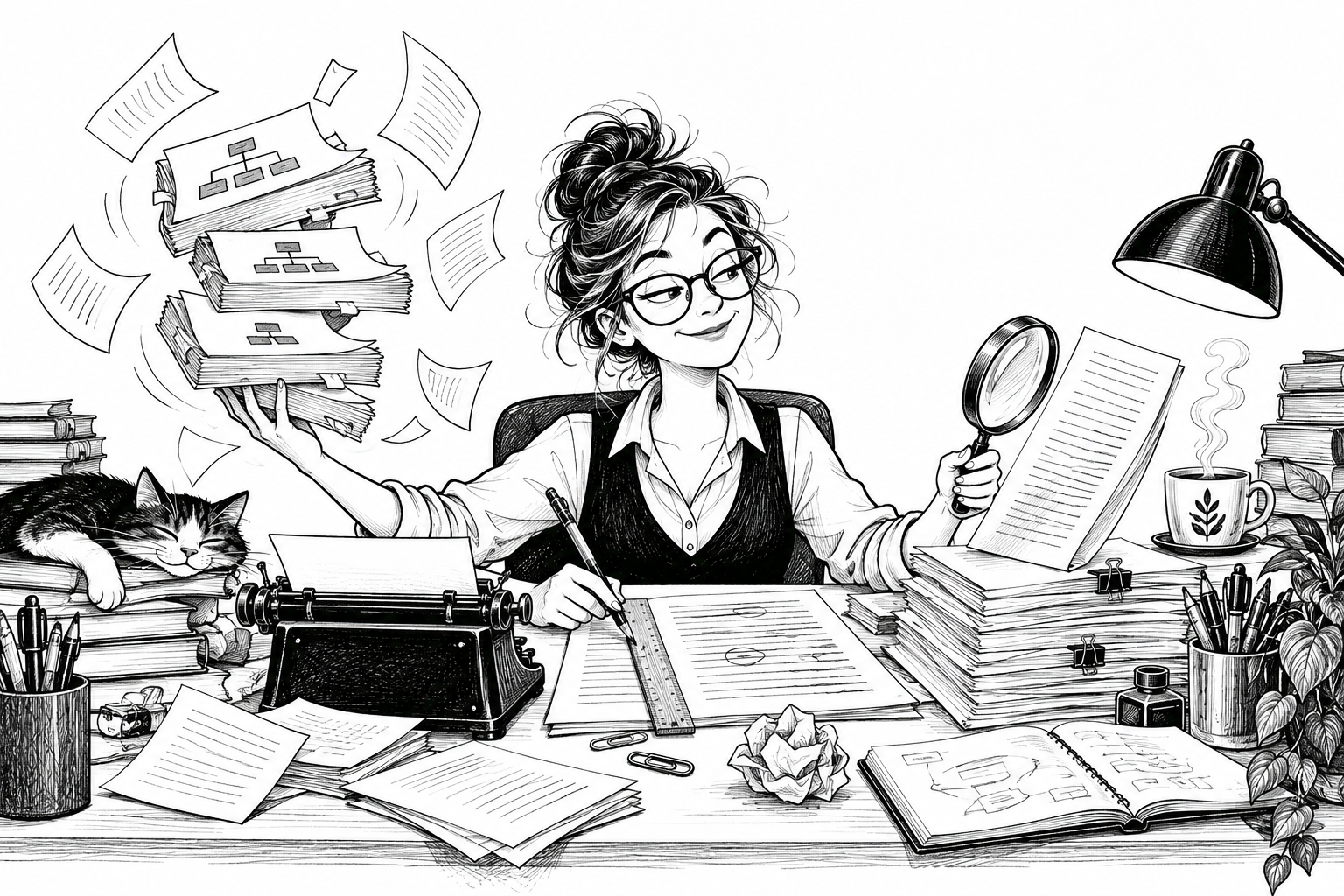
My colleague develops blurbs over weeks. He works on the wording, rhythm, emphasis and amount of information until the short passage carries what it needs.
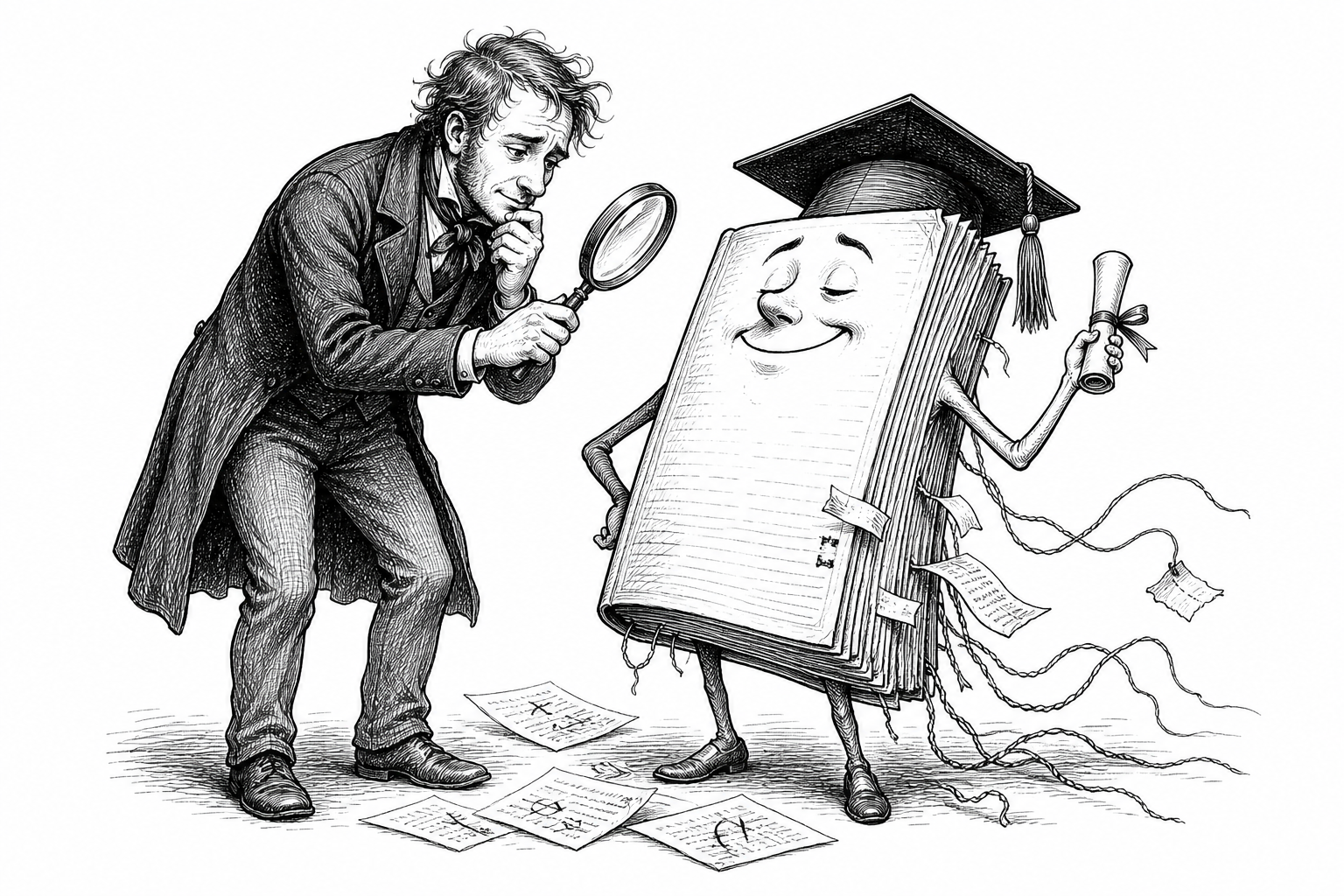
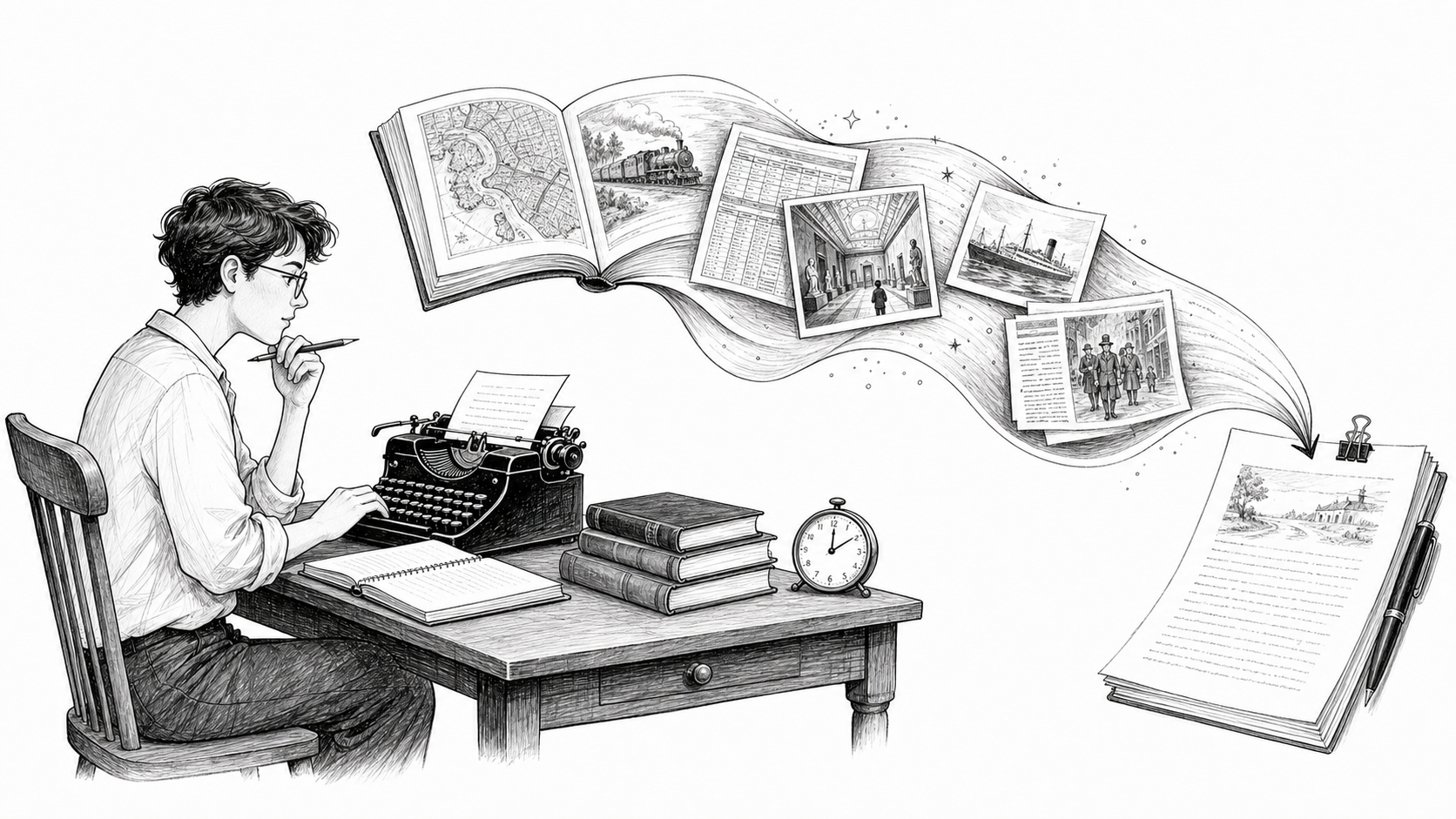
In practice, the first version is often trying to prove that you have read the book. It remembers every excellent subplot, every carefully planted detail and the sentence in chapter nine that took three days to get right. That is understandable. It is also how the blurb ends up hauling a suitcase full of things the reader does not yet need.
Start with the person, the pressure and the promise. Then put it aside long enough to become slightly less impressed by it. When you return, remove the detail that is only there because you know how hard it was to write. Keep the detail that makes a stranger want to open the book.
That is not the same as spending weeks finding more enthusiastic adjectives for “gripping”. The work is deciding what belongs, what the reader will feel and where the language is making them labour unnecessarily.
A short piece gives weak sentences very little cover. In a novel, a pedestrian line may pass between two strong moments. In a blurb, it has rented a substantial proportion of the premises.
A short blurb has nowhere for a weak sentence to hide.
Read the draft as an invitation from a book you do not already understand. Notice where you need knowledge the copy has not supplied. Notice where you explain the same thing twice. Listen for the point at which a distinctive voice becomes the familiar hum of somebody trying to sell you something.
Then revise the actual problem. Add the detail that makes the situation intelligible. Remove the paragraph that answers a question nobody has asked. Keep the sentence that sounds like the book, even if it refuses to behave like the descriptions surrounding it.
You are trying to make a stranger want the experience you have spent so long creating. That deserves more care than whatever fits into the upload box before lunch.
The blurb has done its job when the right reader understands enough to care and wants to discover the rest.
Let them. The brother’s business partner can introduce himself in chapter four.










Leave a Reply