By Chris Cameron
The phrase “record the book” makes audiobook production sound like a small administrative job. Open manuscript. Switch on microphone. Speak until the murderer is caught.
There are people, contracts, performance decisions, recordings, repairs, files, artwork and distribution choices concealed inside that phrase. Quite a few of them will send an invoice.
Tony Marturano learnt much of this through experience, including the sort that obliges you to buy the same lesson twice. His advice begins before the microphone comes on: decide who is doing the work, prepare them properly, and test the result before committing the whole book.
Enthusiasm is welcome. It is not an audio qualification.
Cast the book before booking the room
An author reading alone, a professional narrator, alternating narrators and a full cast are different productions. An outside company, an in-house team and a digital-voice workflow create different responsibilities.
Decide who performs, who directs, who edits, who approves and who delivers the finished files. Otherwise several people may reasonably assume that a particular job belongs to somebody else. The audiobook then becomes an unusually expensive exercise in waiting.
Tony’s experience of substantial outsourced productions includes bills of several thousand pounds, depending on length, cast and scope. That is experience, not a tariff. Find out what a quotation includes and what happens when corrections are needed.
If hiring talent, establish availability and the production agreement before principal recording. Include the later return for pickups, or go-backs: lines that need another attempt once editing exposes the problem. An actor’s excellent performance in April does not guarantee their availability in June.
Digital voices can make some corrections easier to generate, but rights, service access and a consistent result still need attention. Consent and permitted use belong in the arrangement from the beginning. A voice sounding ideal does not tell you that you are entitled to use it.
Writing it does not mean you should read it
Tony once narrated one of his own audiobooks after being encouraged to do so. He tested it in a studio, received reassurance, spent thousands and released the result.
The listeners then supplied a less encouraging assessment. Reviews praised the story while recommending that the author employ a professional narrator.
He eventually replaced the performance and paid again. The original launch opportunity and its review history were harder to replace.
This does not mean authors should never narrate. An author can be a gifted performer; a personal memoir may benefit from its subject’s own voice. It means authorship should not exempt anyone from an honest audition.
You know what the sentence means. The listener needs to hear that meaning without borrowing the inside of your head.
Give the performer something to work with
A manuscript is essential. A brief prevents avoidable guesswork.
Tony may supply character notes, relationships, pronunciation, accents, the share of the book each role occupies and the dramatic context. If two narrators are dividing the work, knowing the size of those parts helps before everybody has agreed a price.
Important information can remain hidden from the listener while being known to the performer. A character concealing fear needs a different reading from one who has simply failed to notice the danger.
Leave room for the professional’s judgement, but settle the things that must remain consistent. A character should not acquire a new birthplace every third chapter because nobody agreed how the name sounded.
The script itself deserves a listening pass. Tony sometimes adapts wording where performance supplies something the printed page has to explain. If the voice makes the anger unmistakable, an emotional tag may be redundant. If that same sentence also tells us she picks up a suitcase, the physical action still has a job.
Treat this as deliberate adaptation. Agree and track any changes, including the intended relationship to the text edition, instead of inviting casual omissions during recording.
And if the text says someone whispers, the performance should not suggest they are addressing a railway platform.
Test the quiet bits as well
A polished audition can show what a performer does well. It cannot necessarily show what will happen across the entire novel.
Tony prefers meaningful sample chapters, exposing different demands: conversation, description, tension, emotion, sustained narration. Listen for understanding and stamina, rather than only the most dramatic thirty seconds.
Then listen to the recording itself. Mouth clicks, lip noise, plosives, background sound, unstable levels and glitches become conspicuous when delivered straight into someone’s ears.
Breathing is part of a human performance. The aim is natural, unobtrusive sound, not removing every sign that the narrator survived the chapter.
Tony has received excellent initial samples followed by long-form recordings containing enough mouth and saliva noise to add weeks of cleanup. A test establishes a standard; continuing checks establish whether the production is meeting it.
Take an early chapter through the intended edit and mastering process. You want to discover the workload while it is a chapter, rather than when it has become a collection.
Do not ask a filter to resurrect the recording
Clean source audio makes the rest of the work more manageable.
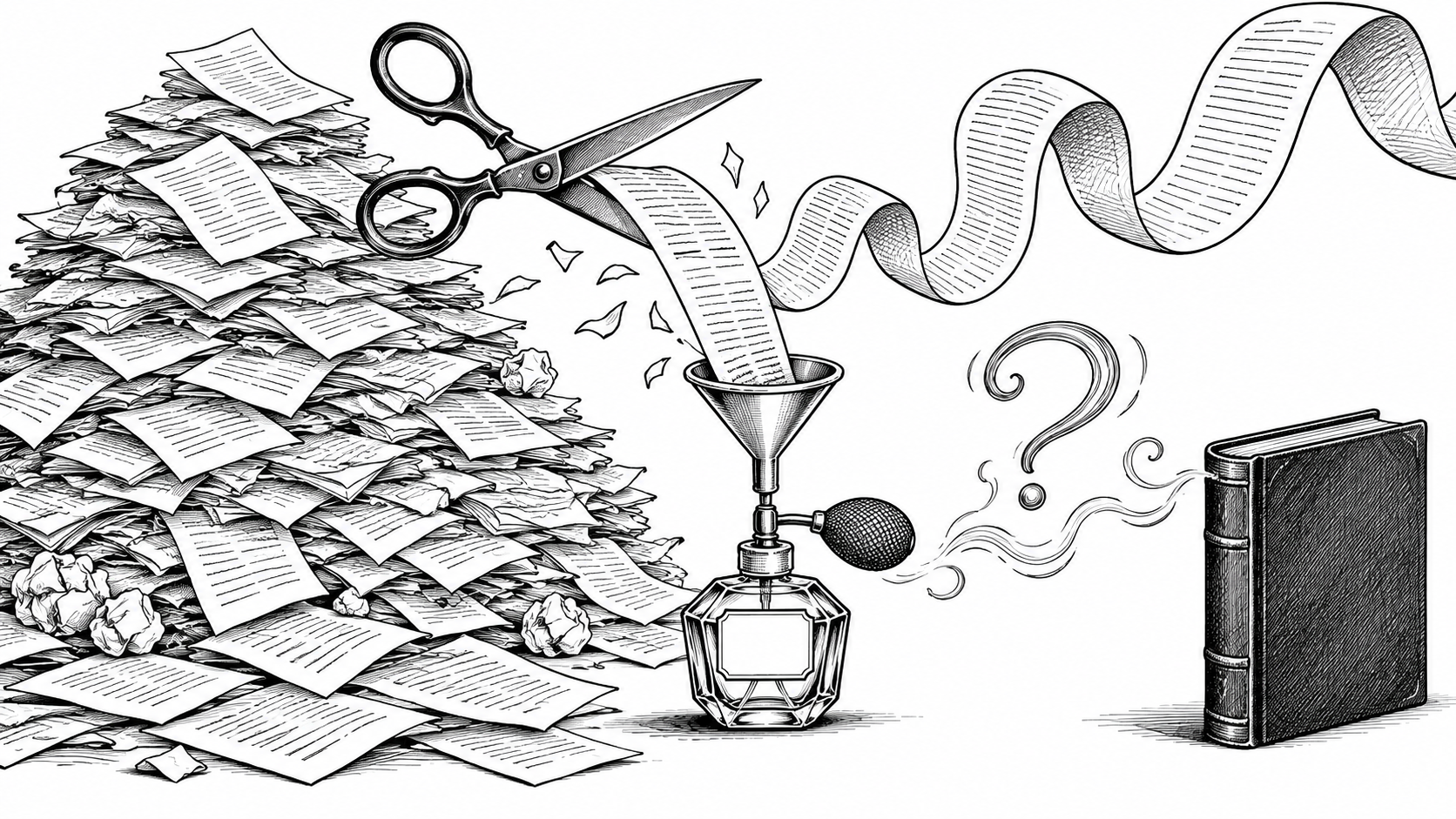
Dirty audio creates hours of detailed repair. Aggressive processing can then strip warmth from the voice or introduce new artefacts. You remove the unwanted noise and, with impressive efficiency, some of what made the performance worth hearing.
Tony’s preference is to fix the recording conditions where possible. Post-production should polish the performance rather than attempt necromancy.
Keep a clear correction list. A mispronunciation, damaged line or performance error needs a location and a usable instruction. “Something odd happens somewhere near the argument” is less helpful once the book contains seventeen arguments.
Obtain and check pickups while the performer and recording setup can still produce a close match. Dropping one bright, distant sentence into an otherwise warm, intimate chapter may fix the word while advertising the repair.
Editing is work you must actually listen to
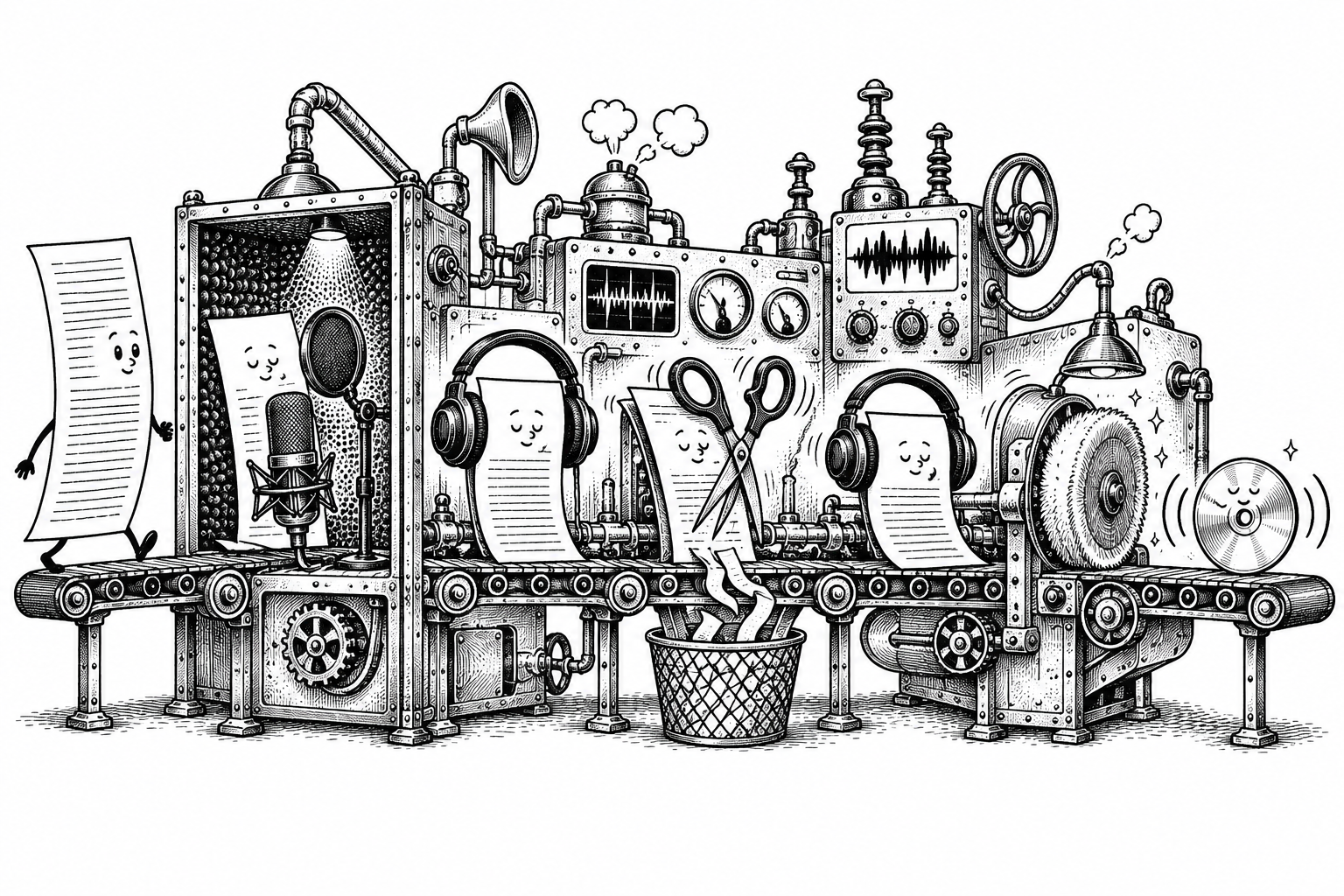
After recording come corrections, editing and cleanup. Depending on the production, there may also be effects, ambience, music and transitions before the final mix and master.
These steps overlap in practice. Their purpose matters more than presenting them as a ceremonial procession.
The whole book needs attention. A ten-minute chapter does not take ten minutes to edit simply because time passes at that speed. You listen, locate a problem, repair it, listen again and check that the repair has not created a small new problem of its own.
Tony’s immersive productions add further work. An effect must fit the scene, sit at the right level and support the words. A beautifully recorded storm is less useful if it wins the argument with the narrator.
He learnt editing and production over years because he wanted more control and had become frustrated with outside results. That is a history of acquiring competence, not evidence that every first-time publisher should personally master six professions before lunch.
Hire the ability where that is the sensible choice. If learning the work yourself, include the learning and checking time in the schedule.
The finished sound still has to pass inspection
Mastering turns the approved edit and mix into files suited to the destination.
Check the distributor’s current specification. For example, ACX requires MP3 files at 44.1 kHz with a constant bitrate of at least 192 kbps, alongside its loudness, peak, noise and structural requirements. A file opening successfully on your computer establishes very little of this.
Keep usable masters so a required export change does not send you back through the whole production.
Automated analysis helps, but it cannot listen on your behalf. ACX’s own analysis-tool guidance says issues including editing, extraneous noise and dynamics can escape the tool and emerge during quality review.
The final listen should check performance, text accuracy, joins, levels, missing or repeated material and the experience of moving between chapters. Allow time for corrections and distributor review. A launch date should not depend on every file passing first time merely because you have announced it.
A square cover and somewhere to find Chapter Eight
Audiobook artwork needs recomposition for its format.
Squeezing a portrait cover into a square generally produces the visual impression that the entire cast has been standing in a lift. Rework the hierarchy so the title, author and image remain clear.
ACX currently specifies square artwork of at least 2400 by 2400 pixels, in RGB, with further format and content requirements. A remembered 1080-pixel working size would not meet that minimum. Check the destination before commissioning the final export.
Chapter organisation is equally visible to the customer, once something goes wrong.
Tony recently listened to a nine-hour recording supplied as one continuous file. He fell asleep and then had to hunt through hours of audio to recover his place. An atmospheric listening experience had become a search operation.
Split and label the material sensibly, verify the order, and test the navigation after upload. Check the credits and chapter names too. The customer bought a story, not an opportunity to improve their filing skills.
Choose a route that accepts the production
Narration method can affect distribution.
ACX’s default is human narration unless otherwise authorised. A licensed digital voice does not by itself establish that the resulting title qualifies for every store.
Spotify supports disclosed digital voice narration, including providers such as ElevenLabs and Google Play Books. Google has its own eligible-ebook auto-narration process. Check the specific route and licence instead of assuming all three arrangements are interchangeable.
Where exclusivity is offered, compare its income and obligations with the opportunities available elsewhere. ACX’s current guidance explains its different production arrangements and royalty models. A royalty-share arrangement also affects what the rights holder retains.
Do this before the budget is committed. Discovering that the planned distributor does not accept the completed production is an unnecessarily theatrical way to finish the project.
Let listeners hear what they are buying
Audio deserves marketing that sells the performance as well as the plot.
A retail sample can reveal the voice, atmosphere and production quality in a way a static cover cannot. Tony favours a passage representative of the whole book, rather than the loudest scene selected because it contains the largest explosion.
Follow the platform’s actual preview rules. ACX currently asks for a sample of five minutes or less and recommends the opening; it notes that most listeners will hear the beginning even if another excerpt is supplied. Your carefully curated spectacle may therefore be less important than a strong opening.
Test promotional activity with the same sobriety as production.
Tony describes a campaign he was involved with that spent roughly US$10,000 targeting thriller audiobook listeners on Meta, producing impressions and clicks but no audiobook downloads in the results he saw. He contacted Meta because the outcome seemed so extreme.
That is his campaign experience, not proof that audiobook advertising never works. It is very good evidence that dashboard activity cannot pay a narrator.
Decide what you will measure and when disappointing results will trigger a change or a stop. Check the buying route and the evidence, then act. Repeating an unsuccessful campaign indefinitely does not become a strategy simply because you remain determined.
An audiobook can also benefit from people discovering its ebook or print edition and choosing audio. That route still matters if a particular paid campaign proves uneconomic.
The whole production should eventually disappear behind the listening experience. The cast, cleanup, chapter files and commercial arrangements have done their job when someone presses play and wants to stay.
They should be wondering what happens next.
They should not be wondering what that clicking noise is.