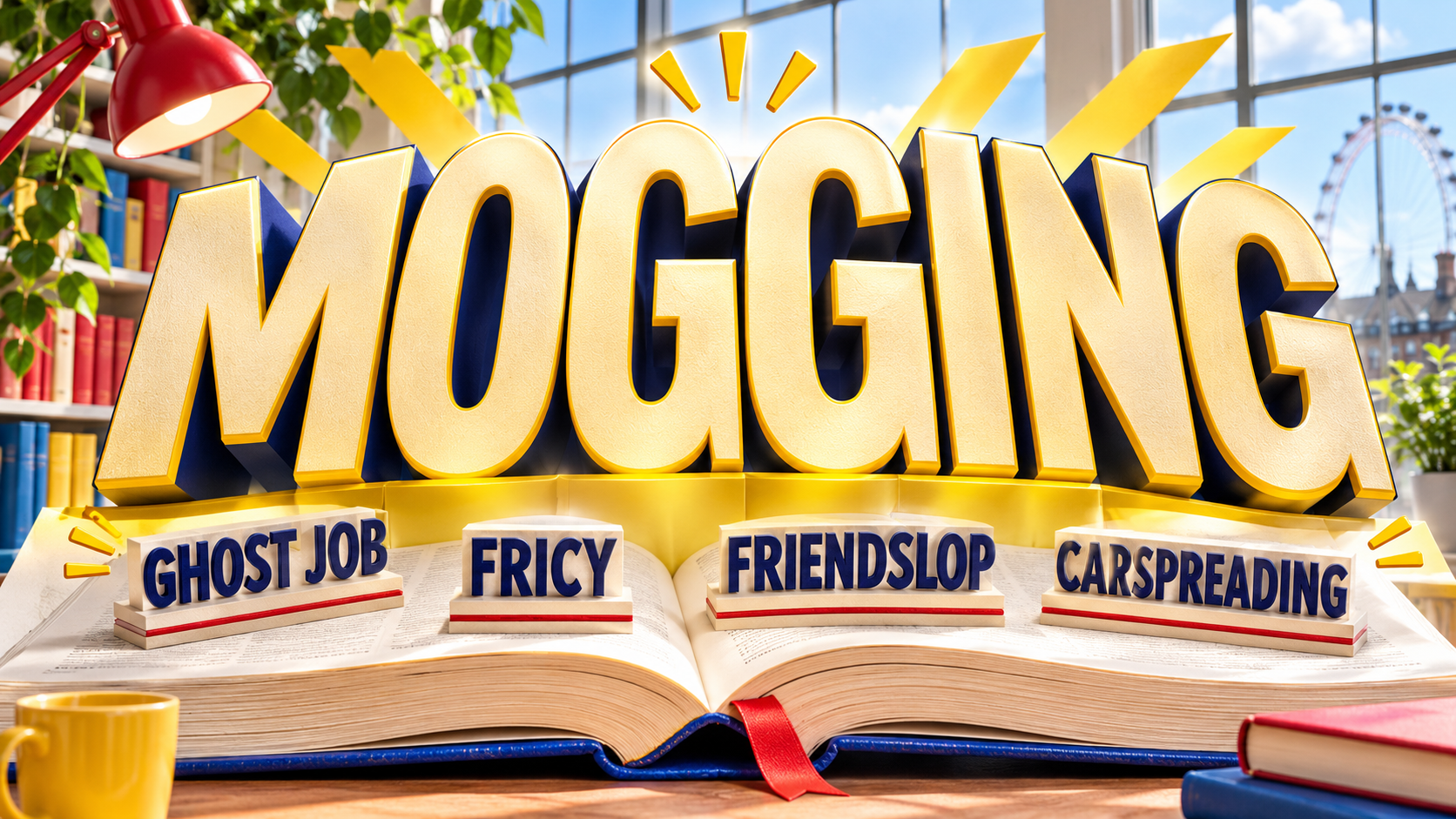
Collins Dictionary has looked across the entire English language and decided that 2026 belongs to mogging.
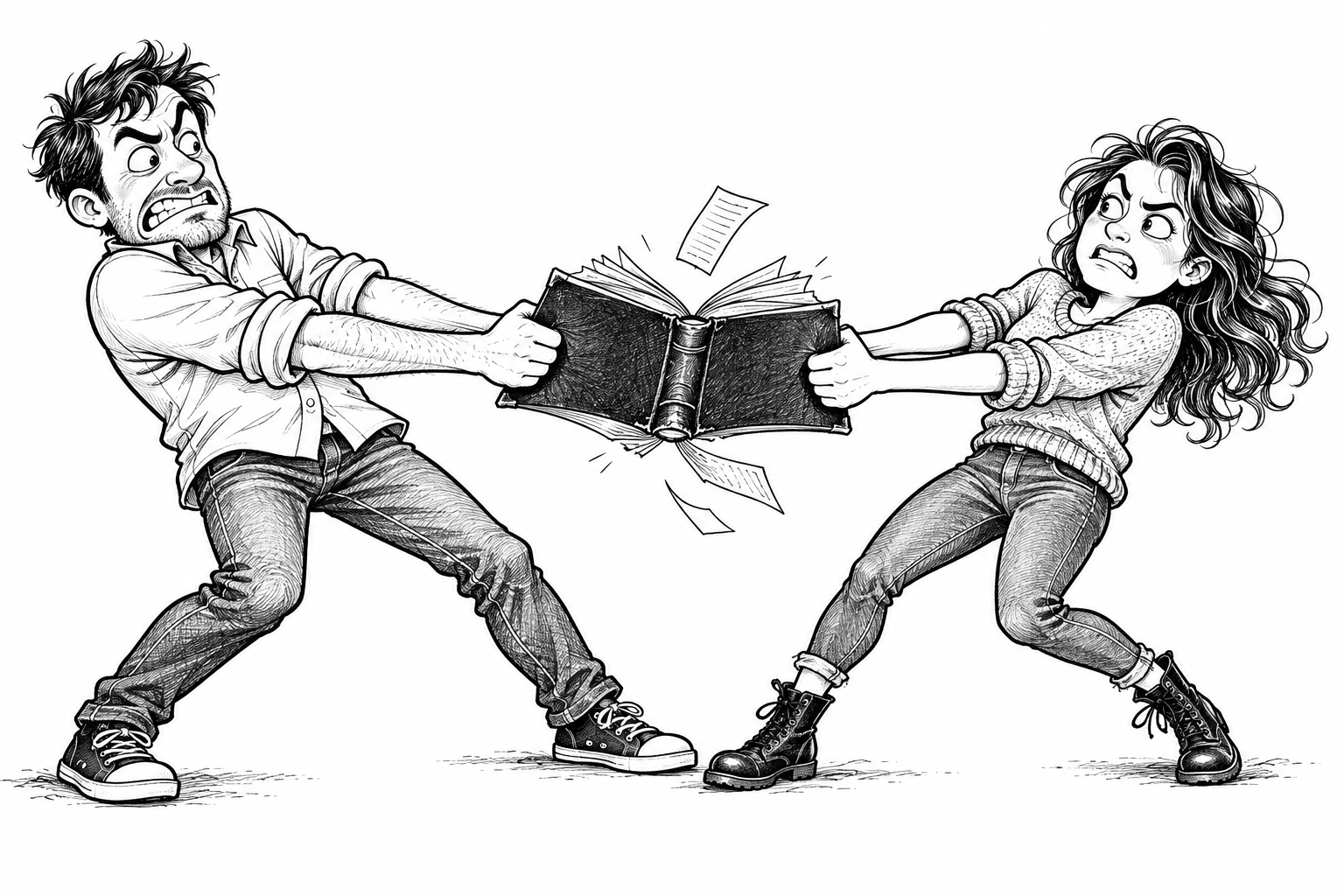
It sounds like something a damp dog does to a carpet. In fact, it means to outshine, outperform or upstage somebody so thoroughly that they look rather disappointing by comparison.
If you already knew that, congratulations: you have successfully maintained diplomatic relations with somebody under 25. If you did not, do not worry. Until this week, millions of adults were living productive lives without once having been mogged knowingly.
Your friend’s sourdough can mog yours. One footballer can mog another. A new game can mog the old favourite everybody was praising last Tuesday. And now mogging has mogged every other word on Collins’s shortlist, which is exactly the sort of intolerable behaviour one would expect from it.
A word built around comparison
Collins says usage of mogging increased by 210% during 2026. Its lexicographers monitor a corpus of around 27 billion words drawn from published material, broadcasts, websites and social media to identify changes in the language.
The dictionary defines the winning word as outshining or outperforming someone or something. Among younger users, particularly Generations Z and Alpha, Collins says it is frequently used in a playful or ironic way when somebody has been visibly upstaged.
That is the sanitised dictionary version. The history is slightly sweatier.
The term is thought to have developed from AMOG, meaning “alpha male of the group”. It appeared in bodybuilding culture around 2016, where physical dominance and appearance were being arranged into the sort of hierarchy normally associated with wolves in a documentary. From there, it became a verb and spread through online communities, including the manosphere and looks-focused social media.
Some of that culture is not harmless. Researchers have raised concerns about young men being encouraged to measure faces, bodies and status as though attractiveness were an engineering specification. But the word itself has travelled beyond those origins. Once people began using it for trainers, hairstyles, cars, games and overachieving bread, its usefulness became considerably less sinister and considerably more silly.
A word can escape the people who coined it. English has never been particularly respectful of ownership.
Does Collins choosing it make it proper English?
Not in the sense that the headmaster has finally admitted it to the building.
Dictionaries do not normally decide which words people are permitted to use. They observe language, record meanings and try to identify when a term has moved from a niche into wider circulation. A Word of the Year announcement is partly linguistic observation and partly extremely effective publicity for a dictionary publisher. Both things can be true without anybody needing to faint.
Collins’s choice tells us that mogging has become widespread enough to be worth explaining to people who keep encountering it. It does not mean every editor must now force it into a historical romance before Christmas.
The 210% increase is evidence of growth in recorded usage, not a declaration that 210% of the population has started saying it. Percentages remain capable of mogging context if left unsupervised.
The defeated words are more revealing than they look
The rest of the shortlist gives a compact and slightly alarming portrait of 2026.
- Ghost job: a vacancy advertised without any real intention to appoint somebody.
- Carspreading: the tendency for manufacturers to make cars progressively longer, wider and heavier.
- Fricy: food or drink combining fruity and spicy flavours.
- Friendslop: a low-budget independent video game enjoyed primarily as a social experience with friends.
- Firewave: several urban wildfires occurring within a short period.
- P(doom): an estimate of the probability that artificial intelligence will cause catastrophic or existential harm.
There are jobs that do not exist, cars that no longer fit the spaces built for them, climate language, extinction calculations and fruit that has apparently become spicy. Against that competition, mogging begins to look almost cheerful.
Why publishers should care about internet language
For writers and publishers, the useful point is not that every fashionable term deserves a place in a manuscript. Most will date the work faster than mentioning the model of a mobile phone.
The useful point is that language does not wait for publishing to approve it. Words are being created, repurposed and distributed at enormous speed by communities that may never consult a style guide. A term can begin in a small, unpleasant corner of the internet, be adopted ironically, detach from its origin and arrive in ordinary speech before a copy editor has finished objecting to it.
Context therefore matters more than novelty. A contemporary character using mogging may sound completely natural. A narrator scattering it across a novel because the publicity department has discovered TikTok may sound like somebody’s father has borrowed the account.
Writers do not need to chase every new word. They do need to notice how real people speak, which meanings have shifted and what a term communicates about the person using it.
As for mogging, its victory feels oddly appropriate. The word describes an act of conspicuous superiority, then won an annual competition by making all the other words look smaller.
That is either excellent lexicography or intolerably smug behaviour from a noun. Possibly both.