
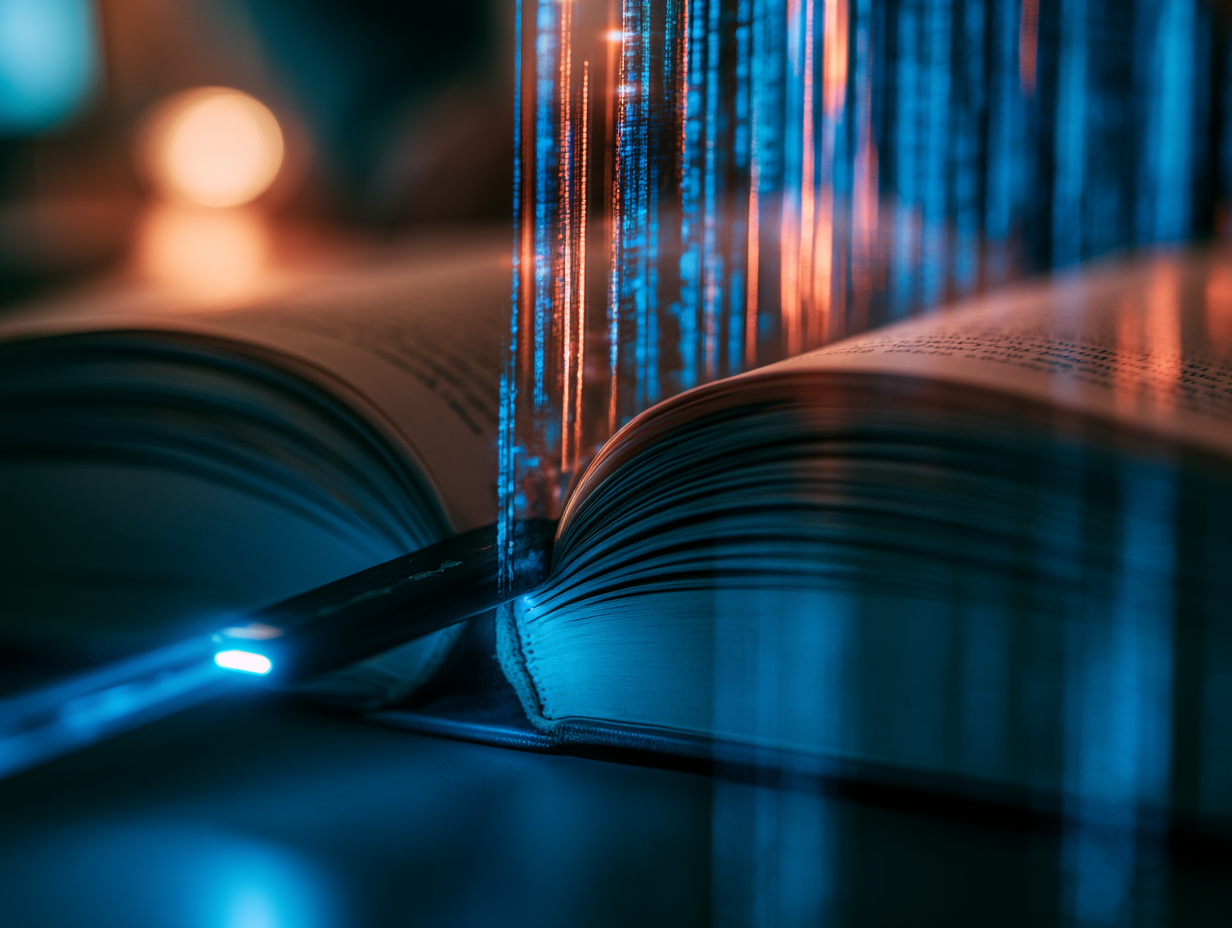
Rare-book sellers have a peculiar sort of radar. They can spot a buyer who loves a first edition, a buyer who has mistaken “foxing” for a wildlife problem, and—lately—a buyer who wants a pallet of old books but could not care less what any of them are.
That last kind of buyer prompted a 404 Media investigation. The outlet put a tracking device in a rare book it expected to be bought for AI training and followed the shipment to an Amazon facility in Las Vegas. Amazon workers there told 404 Media that incoming printed books are received in large shipments, have their bindings cut off to speed scanning, and are destroyed in the process.
What is confirmed
The central finding is unusually concrete for a story about training data: a tracked physical book reached Amazon’s VGT3 operation in Las Vegas. 404 Media reported that Amazon employees at the site said books are scanned after their bindings are removed. TechCrunch’s independent summary also identifies the facility as VGT3 and reports Amazon’s response: it buys books through commercial channels to improve the products and services customers use.
That is enough to establish a meaningful fact: Amazon is acquiring printed books through normal commercial routes and processing them for scanning. It is not enough to turn one tracked shipment into a spreadsheet of the whole operation. The sensible distinction matters. One route is evidence of a route; it is not a reliable total for the number of books, the age of the programme, or every product that might use the resulting scans.
Why this is different from ordinary secondhand buying
Used-book buyers normally ask questions. Is it a first? Is the dust jacket present? Does anyone have a condition note that does not sound like it was written during a fire drill? An operation buying bulk stock without much interest in condition, editions or resale value is playing a different game.
That does not mean every large buyer is an AI-data buyer, and it would be a mistake to claim otherwise. It does mean a seller with signed copies, scarce editions, or personal backlist stock has a new due-diligence question: who is actually buying these books, and what will happen to them after the box leaves?
What Amazon has not said
Amazon’s public response, as reported by TechCrunch, confirms book purchases through commercial channels but does not answer the practical questions publishers and collectors will naturally ask. There is no disclosed figure for volume, no clear start date, no public list of the services involved, and no public explanation of how scarce or irreplaceable copies are screened before their bindings come off.
That uncertainty is not a reason to overstate the story. It is the story’s boundary. The investigation establishes the destination and the reported process at one facility; Amazon has not filled in the bigger operational picture.
What self-published authors should take from it
Your KDP files are not about to be physically carted off to Las Vegas. Digital publishing agreements and a secondhand physical-book purchase are different arrangements. But the story is still worth an author’s attention because it makes the content supply chain visible in a way that usually stays buried under terms, warehouses and euphemisms.
- If you sell author copies, review stock or an out-of-print backlist in bulk, ask the buyer what they intend to do with the books—especially when the offer is oddly generous and oddly uninterested in condition.
- If you collect signed, early or scarce books, treat provenance as part of the sale decision. A fast sale can still be the wrong destination.
- Keep platform questions separate. Amazon’s policies can matter to an author’s income—as with its recent KDP royalty-ceiling change—but that is a different question from how a physical book bought on the open market is later used.
The slightly surreal bottom line
Amazon began as the shop that made buying books dangerously easy at 1 a.m. This investigation says that, at least at one confirmed facility, books can now also be raw material for the next generation of AI products. The awkward part is not that a technology company needs text. It is that the text may arrive as a rare physical object, be scanned, and leave no book behind.
For authors and collectors, the practical lesson is pleasantly old-fashioned: know your buyer. In a market where a bulk offer can be a data-sourcing operation in a trench coat, that is no longer paranoia. It is basic bookkeeping.
Sources
- 404 Media: “We Tracked a Shipment of Rare Books. It Ended at an Amazon AI Training Facility.”
- TechCrunch: “Amazon, which started off selling books, is destroying rare texts to train AI.”











Leave a Reply