
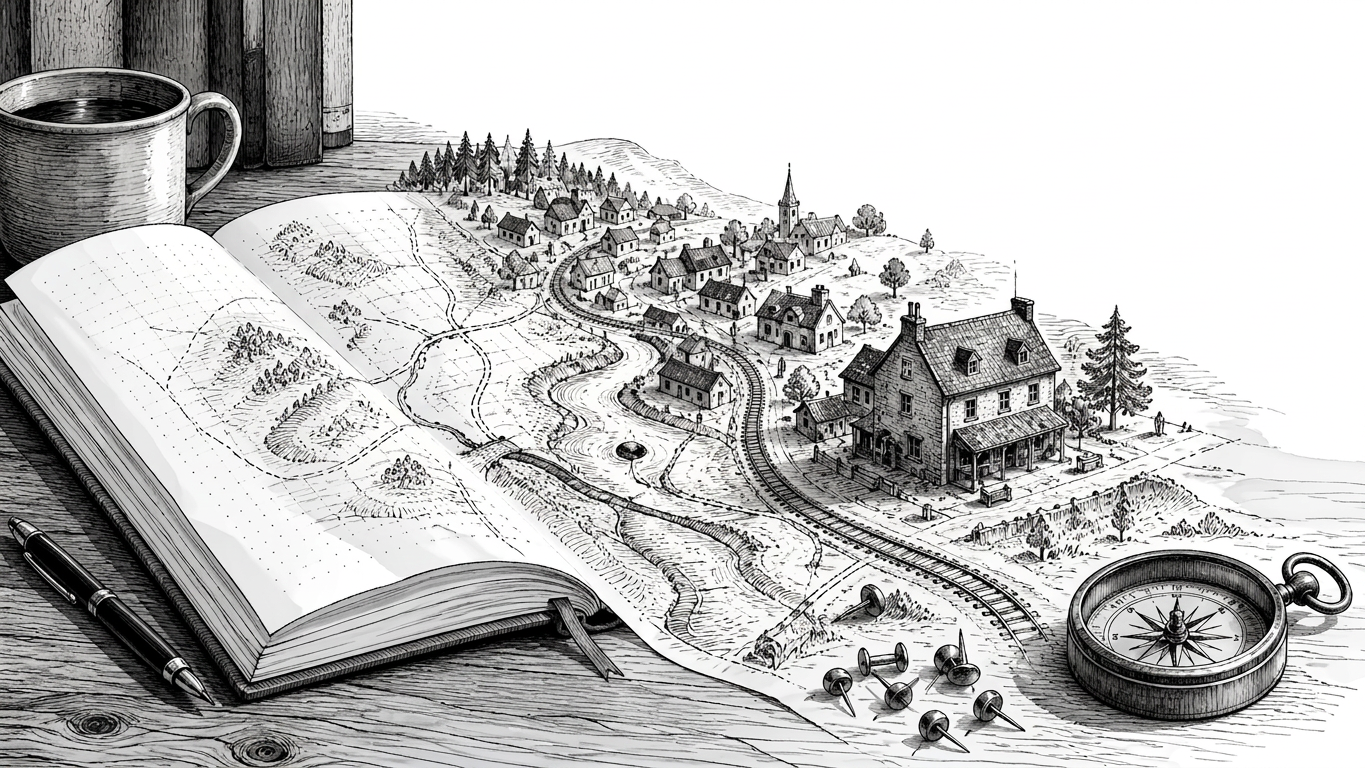
A story world does not need a sixteen-volume encyclopaedia, three invented alphabets and a map that requires its own planning permission. It needs to feel as if it existed before chapter one and will continue causing trouble after the reader has put the book down.
That applies whether you are inventing a kingdom with suspiciously active volcanoes or setting a novel in the very real town where the bins are collected every Thursday. World-building is not a competition to remember the most facts. It is the craft of deciding which details make this particular story believable, useful and alive.
Start with the story, not the tourist brochure
Before you name a river, ask what the place has to do. Does the setting trap two people together? Put a dangerous journey within reach? Make a character feel watched, small, powerful or hopelessly out of their depth? Those questions give you a working brief. Everything else can earn its place later.
Some writers plan the world before they draft a scene; others discover it while a character notices something inconvenient. Both methods are perfectly respectable. The useful distinction is between a detail that changes how a scene works and a detail that merely proves you enjoyed researching municipal drainage. Keep the first. Put the second in your notes, where it can wait patiently for its moment.
A convincing world is not the one with the most information. It is the one whose information changes what people can do.
Let people reveal the place
Readers rarely need a panoramic survey before they can care. Give them a character trying to get somewhere, avoid somebody, hide an object or make a bad decision, and let the setting get in the way. A steep staircase matters when somebody is carrying a suitcase. A bus route matters when it stops running. A palace matters when a servant knows which door is never used.
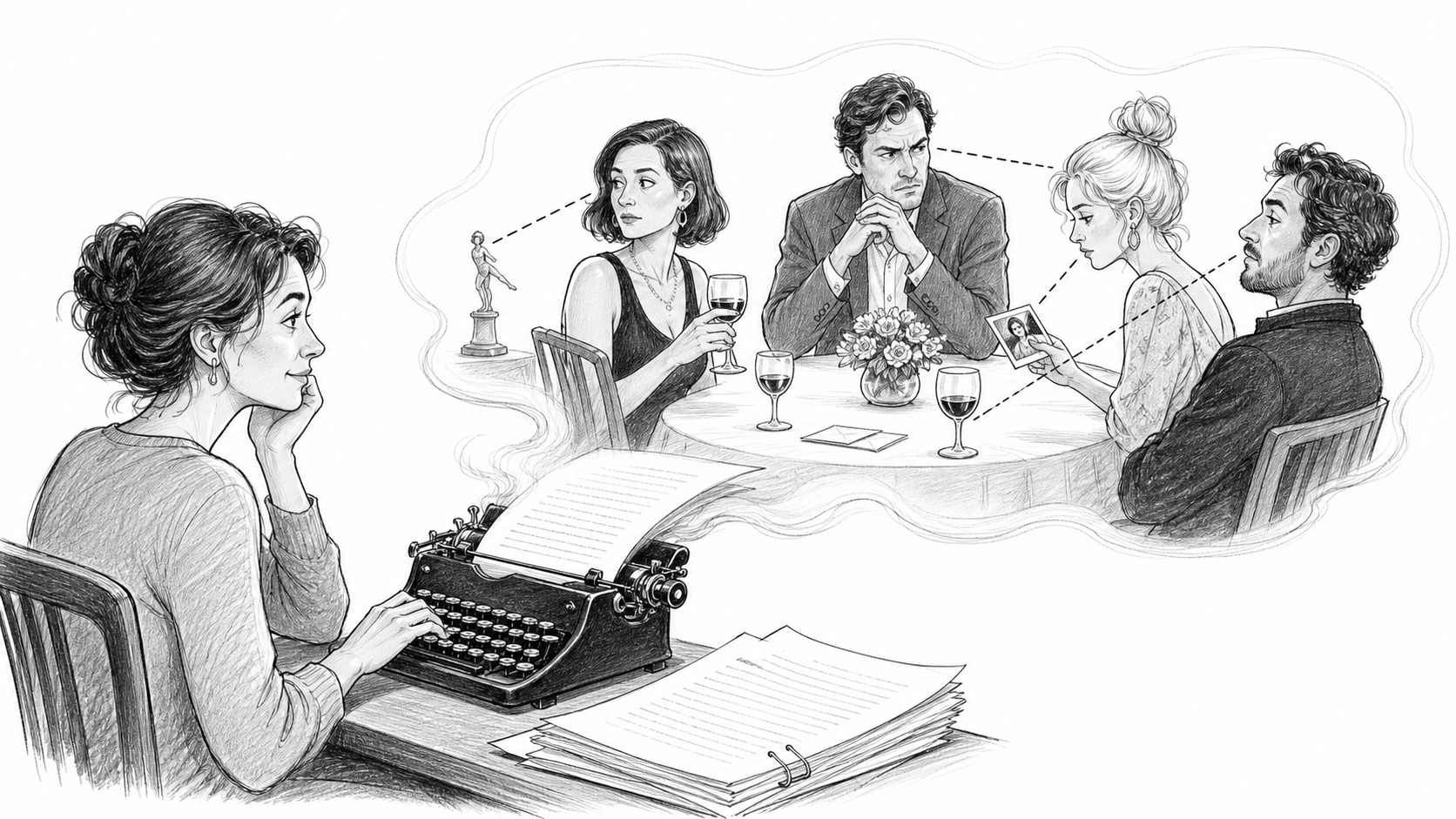
This keeps description attached to action. It also gives different characters different versions of the same room. One sees a handsome old house. Another sees expensive repairs. A third sees the exact window they climbed through at sixteen. Place becomes character-specific rather than a static backdrop waiting to be admired.
That is especially helpful in contemporary fiction. You do not have to pretend a familiar street is exotic. The lived-in details are the point: the shop that changes hands every six months, the shortcut everyone takes, the pub where one person will not go. Ordinary places become memorable when they carry history and pressure.
Use sensory detail with a job to do
Vividness is not achieved by throwing every sense at every paragraph like confetti. Pick details that establish mood, reveal the character’s relationship with the place or create a practical problem. The tang of chlorine in a hotel corridor, grit under a nail, a lift that smells of someone else’s dinner: each can do more work than a page of adjective-heavy weather.
Repeat selected details as the story develops. A train line heard from a bedroom window can begin as comfort, become a warning and finish as an escape route. The reader recognises the place without needing another guided tour. That is how a setting starts behaving like a character: it has habits, moods and a way of turning up at inconvenient moments.
Give the world rules, then remember them
Consistency is the quiet machinery that lets a reader relax into the story. In an invented world, establish the rules that matter: how far people can travel, what money buys, who has power, what is forbidden and what the weather usually does. In a real setting, the equivalent may be distance, opening times, geography, local etiquette and the small politics of who belongs where.
You do not need to print the rules on a laminated card. You do need to keep them. If the river is impassable in chapter three, it needs a reason not to become a decorative puddle in chapter fourteen. If it takes two days to reach the coast, do not send a character there for lunch unless the delay is the joke.
A simple continuity sheet is enough: recurring locations, travel times, orientation, relevant weather, physical constraints and facts each main character knows. Sketch a rough map if that helps. It need not be handsome. It needs to stop the bakery moving across town whenever the plot fancies a croissant.
Make geography serve consequence
Physical layout creates story. A bridge, a mountain pass, a single road out of town or a house at the wrong end of a long walk all create choices. Think about distance, access, sightlines and the awkward bits between places. Those are the levers that turn a location from wallpaper into plot.
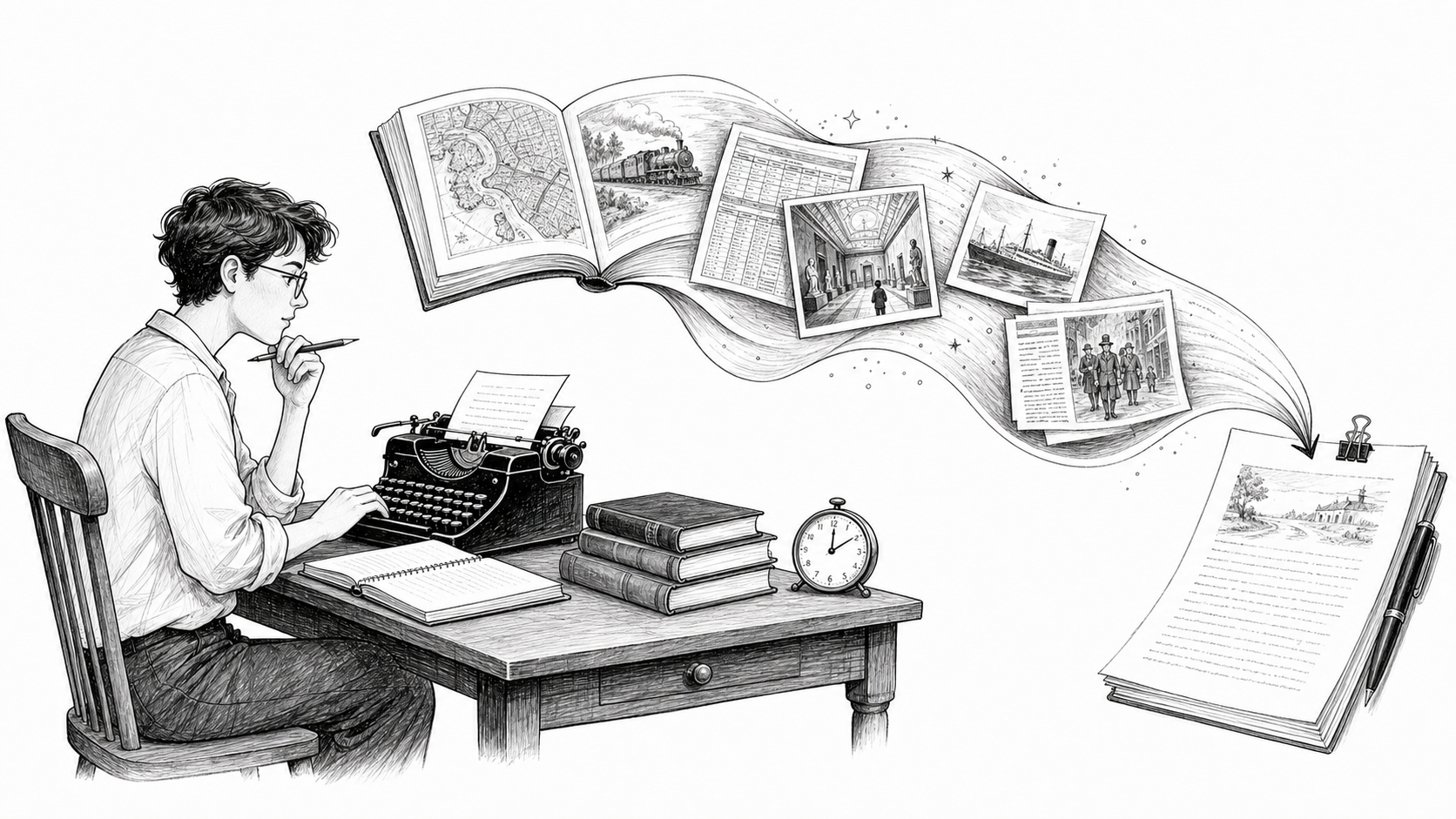
For real-world grounding, use reliable mapping and climate material rather than trusting a half-remembered holiday. The Ordnance Survey’s map-reading guide is a useful reminder of how maps encode terrain and landmarks, while the Met Office’s regional climate summaries demonstrate how much weather can vary across a comparatively small country. You are writing fiction, not filing a planning application, but believable constraints make invention feel sturdier. If you need a method for collecting that detail without accidentally turning it into a second career, our guide to researching a novel without letting it stop you writing has the useful guardrails.
Do not explain the whole world at once
Information-dumping happens when the writer explains a world before the reader has a reason to want the explanation. Hold back until a detail matters. Let the reader meet a custom, a danger or a piece of history in motion, then supply only enough context to make the moment clear.
Trust is built by implication. A guard checking gloves at the city gate tells us something about the city. A neighbour refusing to say a particular family name tells us something about the street. A character who never uses the footbridge tells us there is a story there. Curiosity is more useful than a lecture, and considerably less likely to make the reader reach for a biscuit.
Reveal the world at the speed the story can use it. Anything earlier is a brochure; anything later is a mystery with no clues.
Try a practical world-building pass
- Choose three places the protagonist knows well and write what they notice in each.
- Mark the route between two important locations and identify one obstacle it creates.
- List one rule of the place that helps your protagonist and one that hurts them.
- Give the setting one recurring sensory habit: a sound, smell, temperature or visual quirk.
- Check the manuscript for every time a journey, weather change or local custom matters, then make the details agree.
This is not busywork. It is a way to test whether the setting is influencing the story rather than merely renting space in it. If the answers alter a scene, a decision or a relationship, the world is doing its job.
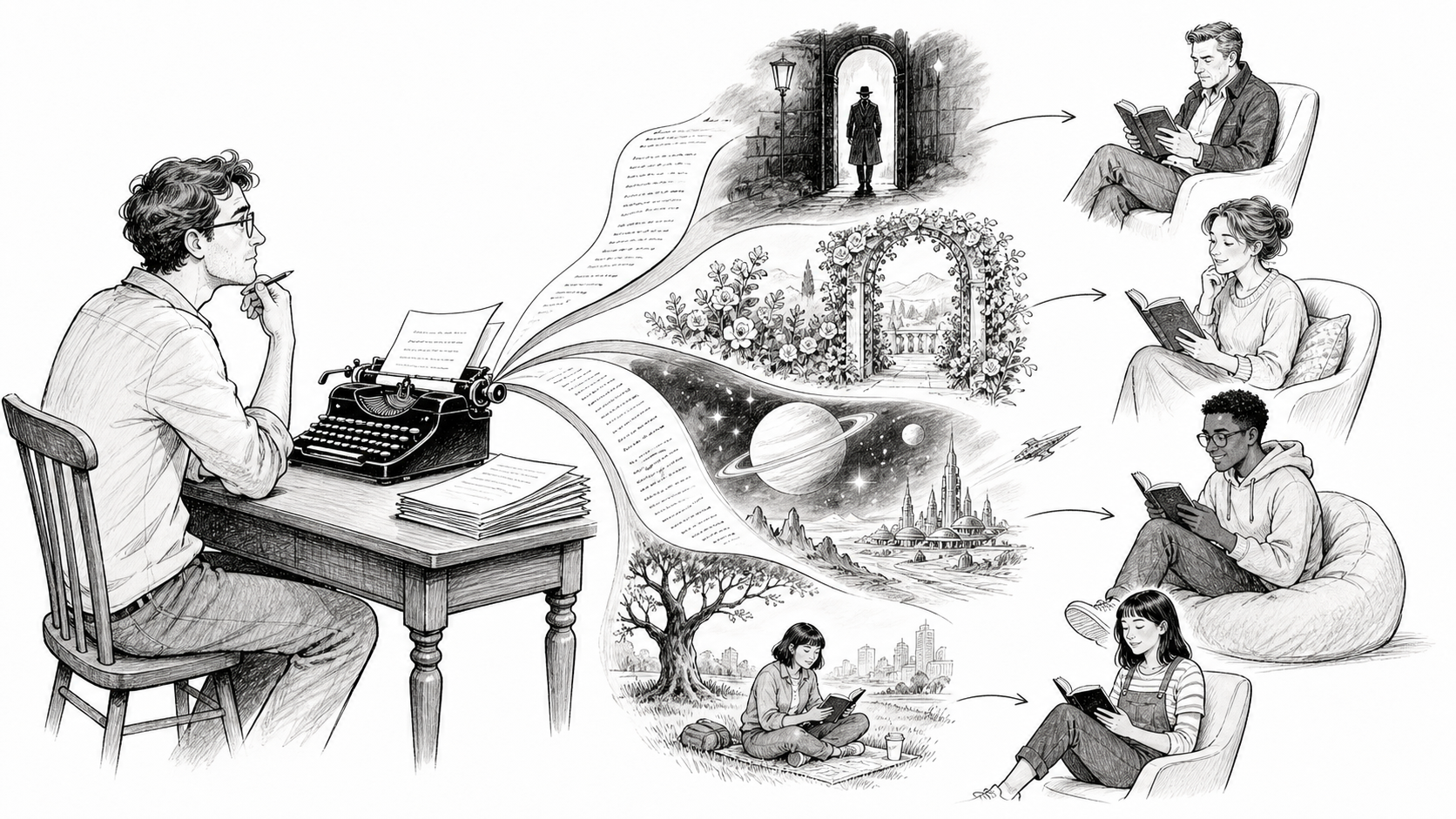
As with choosing whose story the reader gets to inhabit, world-building is a series of decisions about what the reader can see and feel. Build enough that the place can push back. Then let your characters walk into it and make a mess.









Leave a Reply