
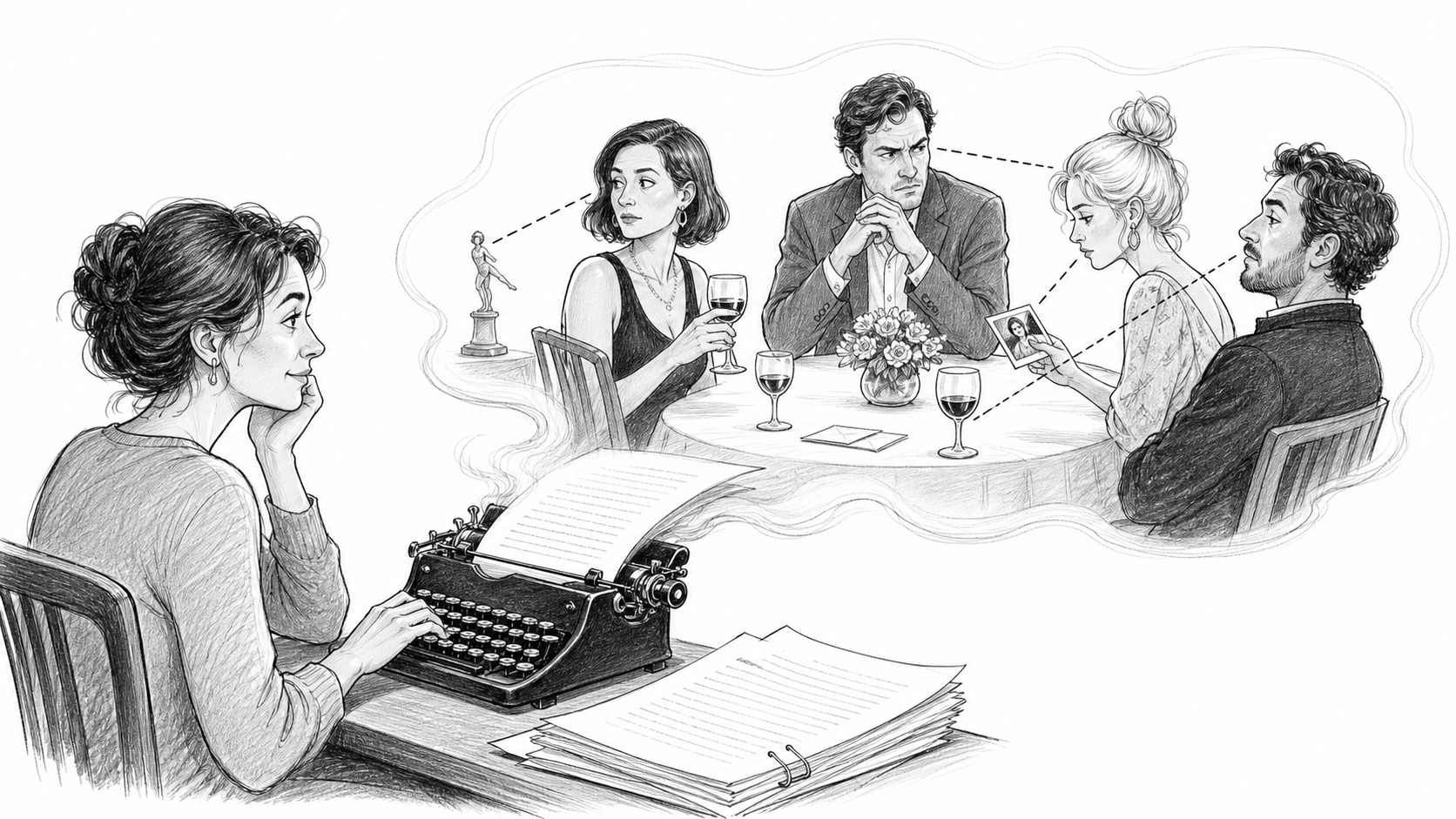
Every novel needs a point of view. Unfortunately, nobody tells the characters this, and several of them may believe the book is really about them.
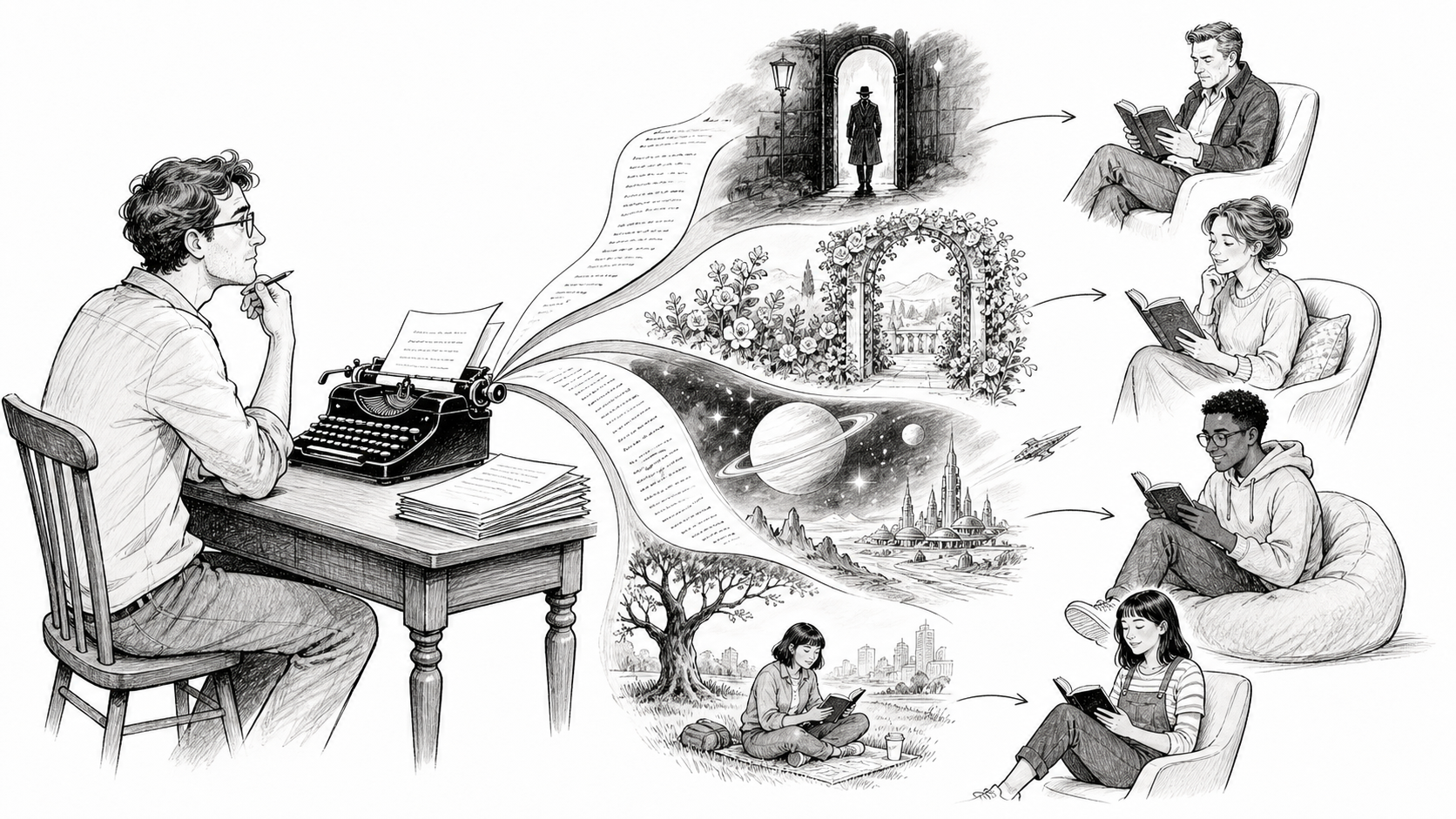
Who gets to tell the story changes what the reader knows, what the reader feels and which dangers the reader can see coming. Choose well and viewpoint becomes one of the most useful tools in the box. Handle it carelessly and the reader spends chapter six wondering whose head they have just fallen into.
The decision is not simply first person versus third person. It is also whose experience matters, how many viewpoints the book can sustain and whether changing perspective adds meaning—or merely resembles the author trying on different hats.
You do not have to choose only one person
A novel can follow one central character from beginning to end. It can also give several characters equal weight, allowing separate journeys to develop and eventually converge. Both approaches work. What matters is that the reader understands the arrangement.
Multiple-viewpoint novels often use a new chapter for each character and place the character’s name at the beginning. It is not dazzlingly experimental, but it is gloriously clear. Tony, James and Anna can each carry part of the story without the reader needing a seating plan and emergency flares.
This is especially useful when characters are living in different places or contributing separate pieces to a larger narrative. Their stories may barely touch until the end. The structure tells the reader that these are distinct lenses serving one book.
You can write from as many perspectives as the story needs. You cannot make the reader guess whose perspective they are in.
First person means living inside the character
First person can be unnerving for a writer trying it for the first time. You are not simply following the character. You are speaking as that person, filtering every event through their assumptions, humour, fear and blind spots.
That demands more than changing “he” to “I”. You need to know the character well enough that the author’s own personality does not leak through every sentence. If the character has been properly developed, this becomes less contrived. They respond in ways that feel native to them. The writer becomes a passenger rather than a ventriloquist frantically working the jaw.
For a psychological thriller, that intimacy can be exceptionally effective. The reader discovers events with the character in real time and experiences every flawed conclusion from inside the machinery. It can create wit, tension and a fierce sense of loyalty—provided the voice belongs to the character rather than the author wearing a novelty moustache.
Third person still has a viewpoint
Third person is not a camera floating neutrally above the furniture. A close third-person narration still follows what a particular character notices, understands and feels. The prose may say “she”, but the world is being filtered through her.
That is why careless head-hopping causes trouble. If a scene begins inside one character’s experience and abruptly reveals another person’s private thoughts, the reader loses the rules. A film can cut from one face to another because the visual language makes the shift obvious. A novel is moving between minds. The transition needs more care.
Experienced writers can change viewpoint within a scene, but clarity has to be engineered. The shift must be signposted, purposeful and consistent with the technique established earlier. New writers are usually better served by cleaner boundaries until managing several minds at once no longer feels like transporting soup on a trampoline.
Confusion is not complexity. If readers cannot tell whose mind they are in, the story has not become sophisticated. It has lost them.
Changing viewpoint can create tension
Used deliberately, a shift in perspective gives the reader information the central character does not have.
Imagine following the protagonist into a room. From their viewpoint, nothing appears unusual. Then the narration moves briefly to somebody across the table, and the reader discovers that this person intends to harm them. When the story returns to the protagonist, the furniture has not changed—but the reader is now examining every movement for danger.
This is dramatic irony doing useful work. The character remains unaware; the reader has received a private note in class. Suddenly an ordinary conversation can become unbearable in precisely the way a thriller requires.
The same principle applies to withholding information. You can delay the full answer, but suspense needs nourishment. Give the reader crumbs, clues and partial revelations. Withhold the entire cake for too long and intrigue becomes hunger, then irritation, then a one-star review written by somebody who has become emotionally invested in disliking you.
Know your characters—or every voice becomes yours
Distinct viewpoints begin with distinct people. Different characters notice different details, interpret the same event differently and remember it according to their own fears, loyalties and prejudices.
If you know the characters properly, the differences emerge naturally: a glance that unsettles one person but escapes another; a joke interpreted as affection by one and threat by somebody else; an apparently harmless action recognised as manipulation by the only person who understands the history behind it.
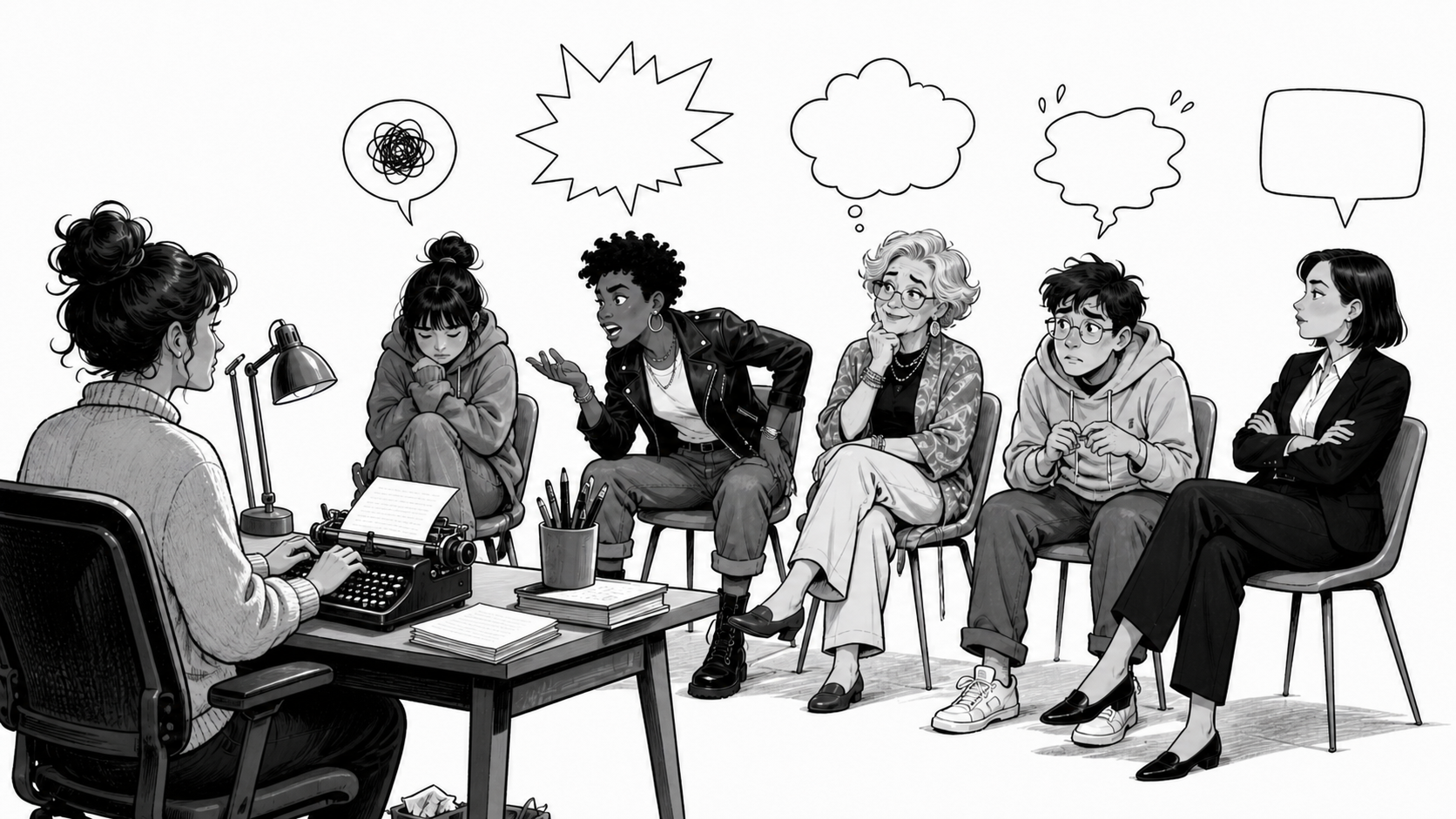
If every viewpoint sounds like the author rearranging the same opinions, the reader notices. Our article on keeping characters recognisably human goes deeper into that problem. Point of view cannot rescue cardboard characters. It simply gives each sheet of cardboard a turn near the microphone.
The most important person need not tell the story
The central figure in the events is not automatically the most interesting narrator. A powerful politician, commander or celebrity may be changing history, but the richer viewpoint could belong to the assistant, driver, spouse, witness or subordinate close enough to see the machinery.
An assassination attempt seen by the intended target is one story. The same attempt seen by the driver who nearly dies despite never choosing a dangerous public life is another. The event is identical. The emotional stakes, observations and sense of injustice are not.
This is where viewpoint becomes more than a technical choice. It decides whose cost matters. The person making the grand decisions may control events, while the person beside them reveals what those decisions do to everybody else.
Every decision compounds
Viewpoint does not work in isolation. What the character says, notices and withholds; which parts of the backstory are revealed; which scenes survive revision; whether an arc is completed—all of it affects credibility.
Too little depth and the character feels one-dimensional. Too much unfiltered history and the book stops moving while the character delivers a guided tour of childhood. The writer’s job is to choose details that earn their place now, in this perspective, for this reader.
Writing a manuscript to the end requires discipline. Writing a convincing novel requires judgement. The two are related, but they are not interchangeable.
How do you choose?
Ask which character you know best—but do not stop there. Ask why that viewpoint feels easiest. Is this genuinely the most revealing and entertaining lens, or simply the least complicated character to inhabit?
If the answer is unclear, write the same scene from several perspectives. See which version comes alive, which exposes something unexpected and which best serves the larger story. A trusted reader can compare them if necessary, although the author still has to make the final decision.
Then commit to rules the reader can understand. First person or third. One viewpoint or several. Chapter changes or carefully managed shifts inside scenes. None is automatically correct.
As with the wider journey through writing and publishing a book, the useful question is not what writers are theoretically allowed to do. It is whether the choice makes this particular story clearer, richer and harder to put down.
Whose story is it? The answer is whoever gives the reader the most compelling way to experience it—not necessarily the person standing in the middle of the explosion.








Leave a Reply