
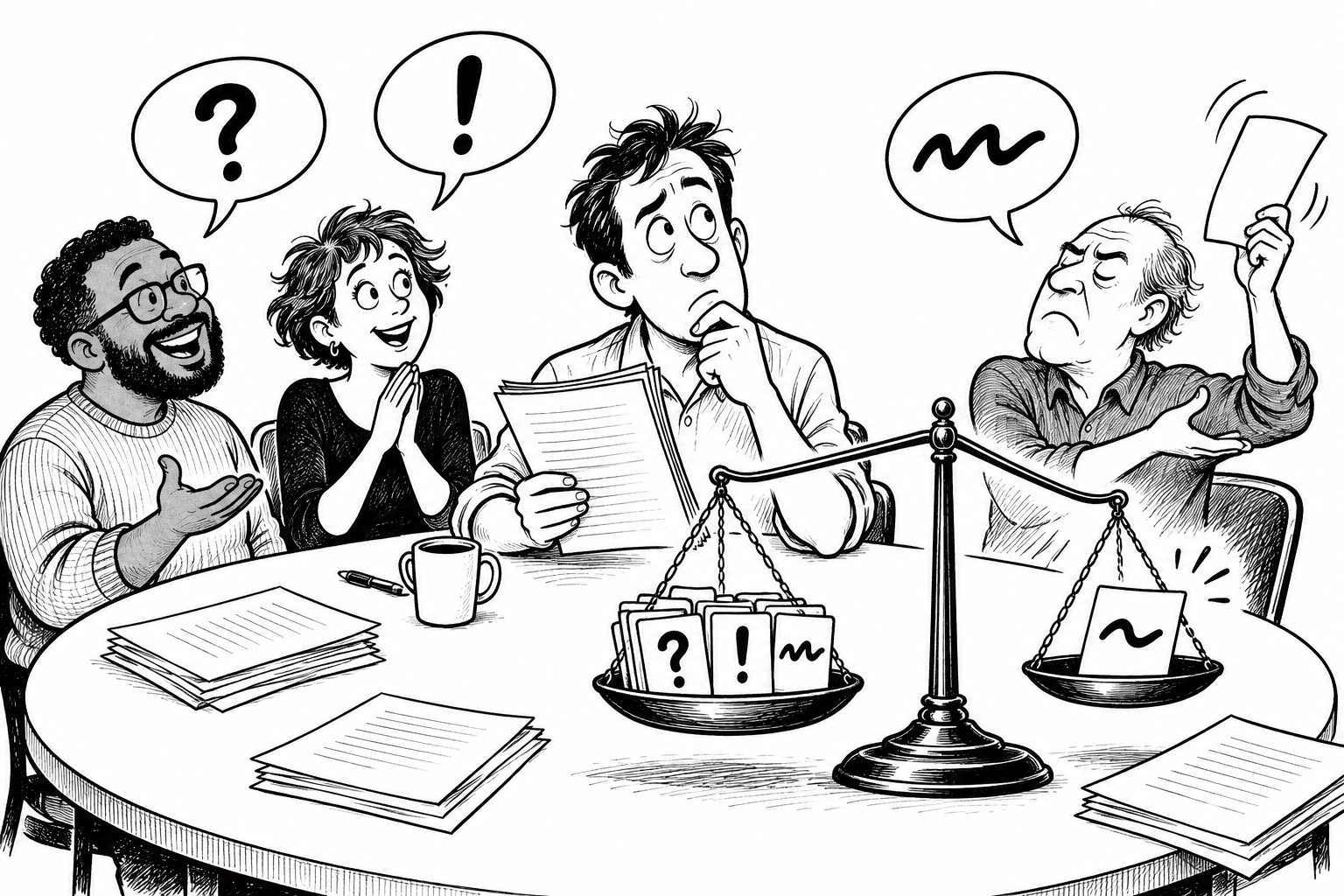
A focus group can be one of the most useful things you do with a finished First Draft. It can also be a surprisingly efficient way to turn a manuscript into a committee project, especially if you treat every raised eyebrow as an instruction from the United Nations.
The useful middle ground is simpler: readers give you evidence. They do not take custody of the keyboard.
Start with a book, not a pile of intentions
There is a good time to ask readers what they think. It is after the First Draft, when the complete story exists in a form that can be read as a book, and before you have welded every later revision into place.
A focus group is not there to invent the unfinished story on your behalf. If the plot is still a collection of scenes waving at one another from different postcodes, finish the job first. You need readers reacting to the experience you have made, not trying to reconstruct the experience you meant to make.
A single comment is evidence. It is not a verdict, a referendum or an emergency rewrite order.
One beta reader and a focus group do different work
An individual reader can give invaluable feedback. They can spot where they were bored, confused, delighted or tempted to throw the book gently across the room. But it remains one person’s reading experience.
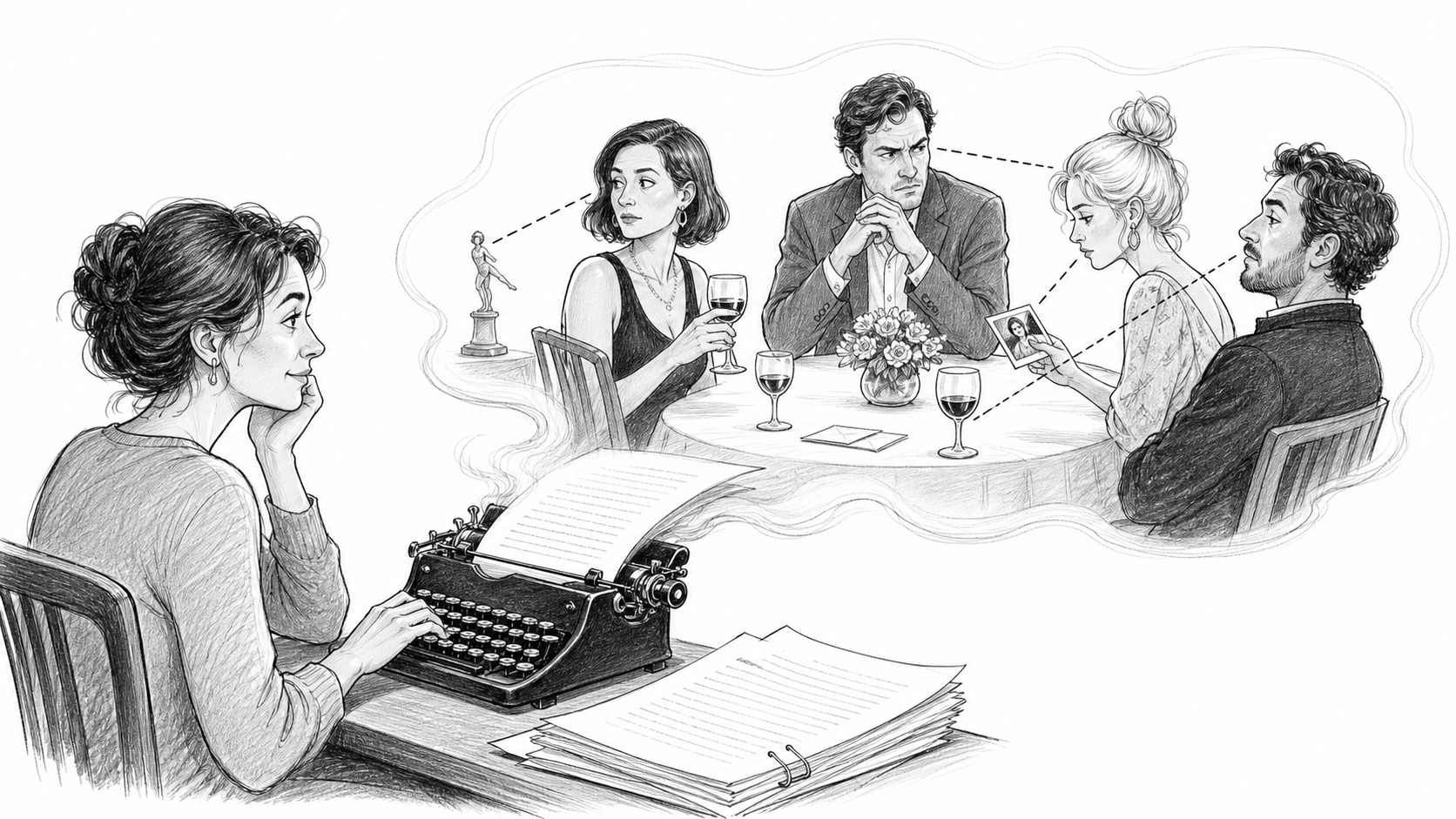
A group adds a second layer: readers hear each other, explain their reactions and sometimes change their minds. One person may say a scene was unclear; another may explain what they thought was happening; a third may reveal that they understood something entirely different. That conversation can expose genuine ambiguity far more clearly than a row of isolated comments.
The point is not a larger headcount for its own sake. It is to notice what repeats, what is contested and what becomes clearer when readers compare notes.
Do not overreact to the loudest person in the room
Every writer eventually meets a reader with a view. Possibly several views. Possibly a view on every sentence. Listen respectfully—but do not rebuild the novel because one person disliked the hero, the weather, the narrative tense or the fact that your detective owned a cat.
One reaction might identify a problem. It might equally be personal taste, a genre mismatch or a reader who would happily redesign Hamlet to improve the third act. The disciplined response is to record it, look for corroboration and ask what it is really pointing to before touching the manuscript.
Trust the pattern, then diagnose it
When several suitable readers independently stumble in the same place, pay attention. Repeated confusion, a shared loss of tension, the same unanswered question or a consistent complaint about a character’s motivation is not proof that readers are wrong. It is evidence about how the book is landing.
That still does not mean you count votes and perform exactly the amendment proposed by the majority. Readers are often excellent at reporting a problem and magnificently unqualified to prescribe the best cure. The useful question is: what experience did they have, and what in the text may have created it?
If three readers say the midpoint drags, the answer may be to cut a scene, sharpen the stakes, move information, change the chapter break or realise that their notes identify a different issue entirely. The pattern deserves action. The exact solution remains your job.
Keep the outlier; learn how to read them
The reader who consistently disagrees with the group is not automatically useless. A reliable outlier can be a calibration point. Perhaps they react more strongly to violence, dislike a genre convention, read unusually fast, or represent a fringe of the intended audience you still care about.
What matters is the pattern. If the same reader repeatedly has a different experience, you can interpret their next comment in context. That is much more sensible than obeying them one week and binning them the next because the group has changed its mind.
Consensus is information, not sovereignty. The author still has to understand the problem and make the book’s decision.
Separate taste from defect
Not every dislike is a defect. A reader may dislike your protagonist, your tone, a genre convention or a deliberately abrasive choice. That can be useful to know, especially if it reveals that you are attracting the wrong reader. It does not automatically mean the choice has failed.
Look harder at repeated craft and clarity signals: readers cannot follow a motivation; they lose interest in the same section; they assume a reveal means something you did not intend; they miss information you thought was unmistakable. Those are the moments where the manuscript may be failing to transmit the story, rather than simply declining to please everybody.
Ask questions that produce useful answers
Do not ask, “Did you like it?” unless you only require emotional support. Ask where attention tightened or drifted, which character felt least convincing, what readers thought would happen next, what confused them and what stayed with them. Then let people explain in their own words. A focus group is more revealing when it records the reading experience than when it invites everyone to become an unpaid development editor.
For the earlier decision about when a manuscript is fit for fresh eyes, see when to show your novel to other people. Fresh reactions are a limited resource; spend them on a version that can genuinely use them.
The author is responsible for the interpretation
Good feedback can hurt because it often arrives at exactly the place where you were already privately worried. That does not make it correct. Nor does the sting make it safe to ignore.
Use the group to gather evidence. Look for patterns. Treat a clear majority as a reason to investigate rather than an order to obey. Keep the outlier in view. Then decide, deliberately, what will make this particular book stronger. That is not democracy by manuscript. It is the author doing the adult part of the job.














Leave a Reply