
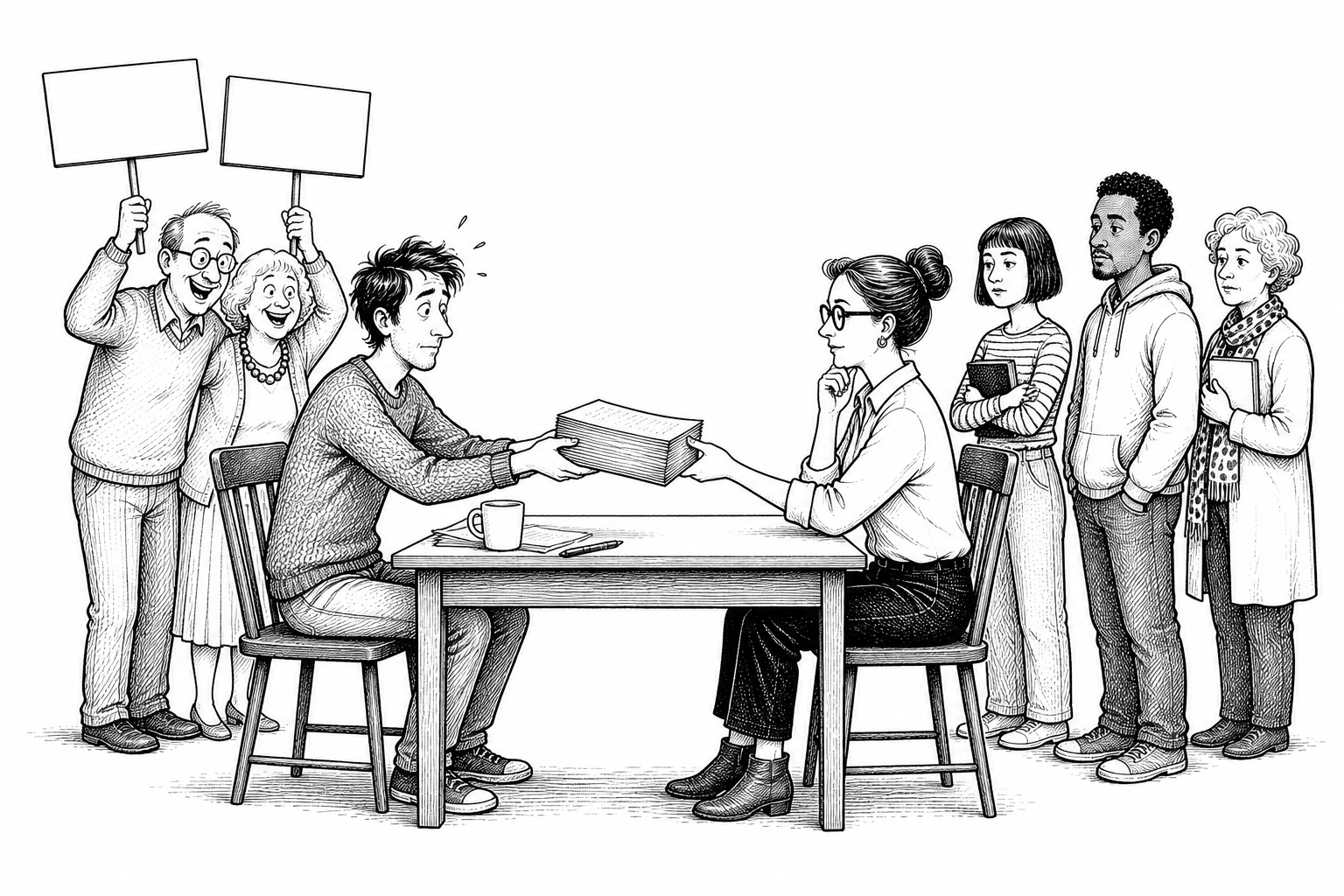
There comes a point in writing a novel when keeping it entirely to yourself begins to feel less like artistic discipline and more like concealing a minor structural incident.
You want another pair of eyes. Preferably intelligent ones. Preferably attached to somebody who will not begin every sentence with, “I’m sure it’s brilliant, but…”
So when should you show your novel to other people?
There is no official kilometre marker
There is no universally correct page number, word count or ceremonial moment at which a manuscript becomes fit for human company. New writers often want feedback earlier because they need reassurance that the thing is alive. More experienced writers may wait longer because they have already watched several manuscripts look dead on Tuesday and recover by Thursday.
For three decades, the author-publisher whose process informs this article has waited until the book hangs together as a complete reading experience. His early version is a skeleton draft: the whole story exists, but some of it is still standing about in its bones. That version stays private.
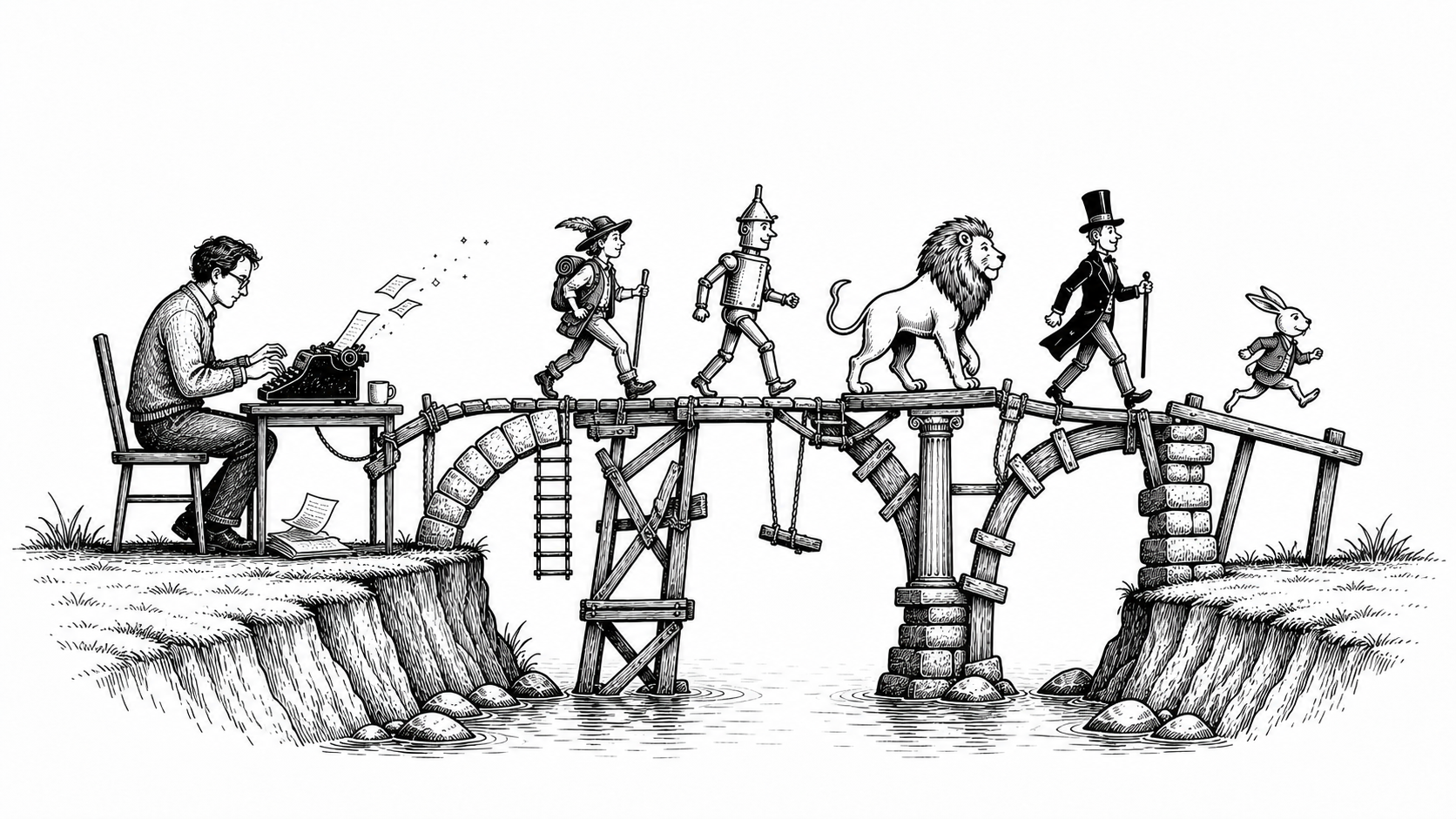
The first full draft goes to a trusted focus group only after the scattered jigsaw pieces have been bridged, the gaps make sense and a reader can travel from beginning to end without requiring emergency signage.
Show people the book when it can be read as a book—not while it is still explaining itself to the furniture.
Choose somebody capable of disappointing you
The first reader matters more than writers sometimes admit. It should be someone with relevant experience: an avid reader of the genre, another writer, an editor, a publishing professional or a member of a trusted focus group.
It should not automatically be the nearest relative with a pulse.
Your mother may love you. Your friend may be delighted that you have written 80,000 words without being arrested. Neither fact qualifies them to judge pacing, character, atmosphere or whether chapter nine has quietly wandered into a different novel.
Vague praise is reassurance. Reassurance has its uses, but it is not evidence. “I loved it” tells you very little unless the reader can also explain where attention tightened, where it drifted and why the protagonist’s decision on page 214 felt inevitable or ridiculous.
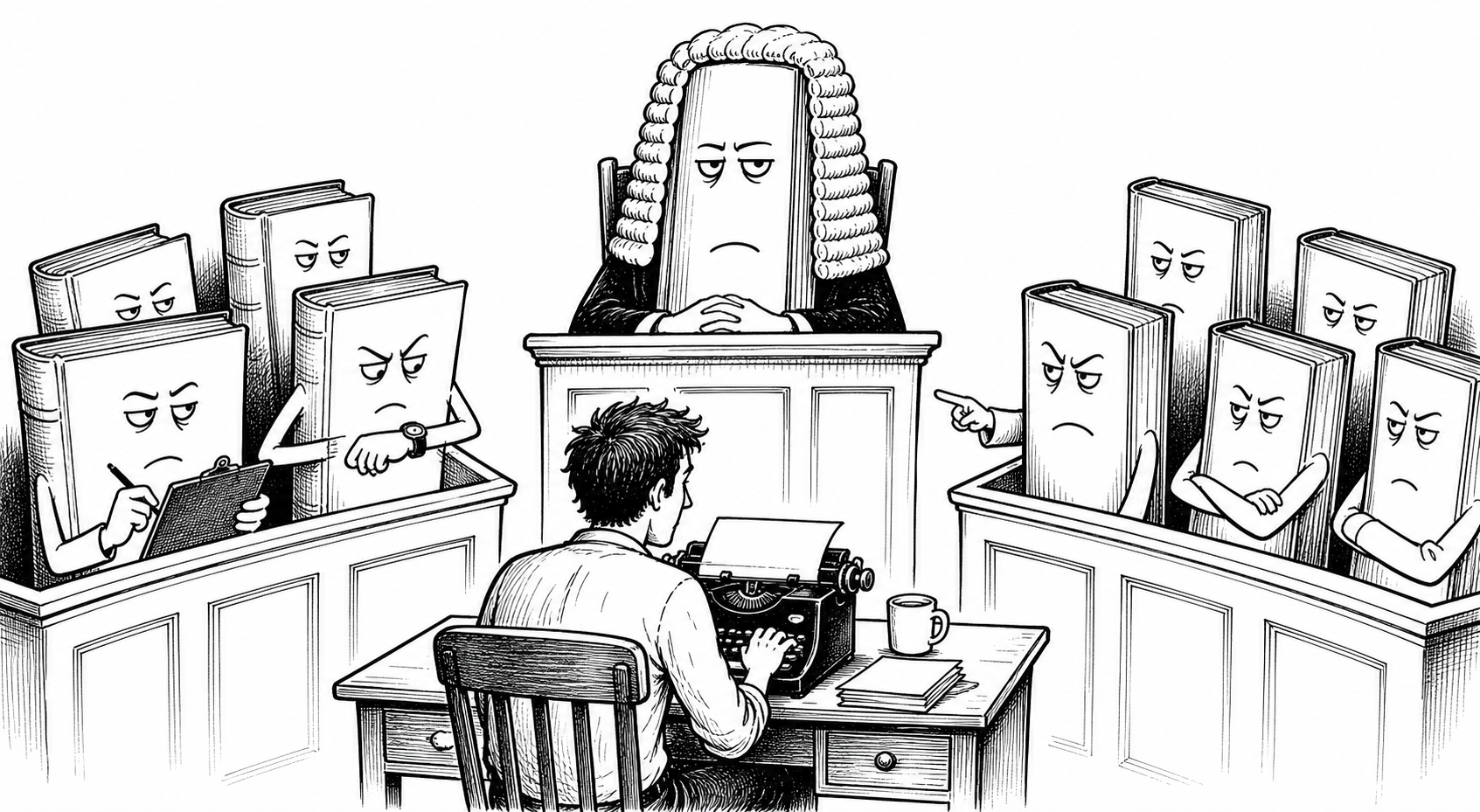
Feedback is only useful if the person giving it is capable of disappointing you.
One opinion is a reaction; several may be a pattern
A single reader gives you one person’s response. That response may be perceptive, eccentric or the consequence of having missed lunch.
When several suitable readers stumble in the same place, however, a pattern begins to appear. If three people independently find a scene confusing, the most efficient explanation is rarely that all three have simultaneously become poor readers.
This does not mean voting on every sentence as though the manuscript were appearing on The Price Is Right: Novel Edition. The author remains the deciding vote. A focus group reveals where the reading experience changes; it does not take custody of the keyboard.
Fresh eyes are a limited resource
Showing the book too early creates a peculiar problem: people give detailed feedback on a version that may no longer exist by the time you can use it.
More importantly, you only get one genuinely fresh first reaction from each reader. Once somebody knows the twist, has met the characters and remembers the corpse in the conservatory, they can compare versions—but they cannot unknow the book.
You only get one truly fresh first reaction. Spend it on a manuscript that is ready to receive it.
Different fresh groups at different stages can be useful. The same reader can still say whether draft B is clearer than draft A, but familiarity has entered the room and taken a chair.
Let people read; do not turn it into homework
Readers do not need to be told to “read critically” before they begin. That instruction can make them analyse the machinery instead of experiencing the story. It is the literary equivalent of asking somebody to enjoy dinner while identifying every saucepan.
Let them read naturally. Ask useful questions afterwards. Where did attention dip? Which character felt least convincing? What did they expect to happen? What stayed with them? Their unforced experience is the evidence you need.
When feedback hurts
Useful feedback can sting. This is partly because criticism of a manuscript often arrives wearing the author’s own nervous system.
Experience helps separate a valuable observation from noise, but the skill is not pretending not to care. It is listening long enough to decide whether the criticism identifies a real problem—and remembering that the proposed solution belongs to the reader, while the final decision belongs to you.
Sometimes the right response is revision. Sometimes it is “thank you” followed by doing absolutely nothing. Professionalism includes both.
Know when to stop asking
Writers can show a manuscript to an endless procession of people when what they really want is unanimous permission to proceed. That permission does not exist. Eventually, you are no longer gathering evidence; you are shopping for a verdict.
The practical process is shorter: finish a coherent draft, choose qualified fresh readers, look for patterns, revise deliberately and move on. Deadlines help. So does remembering that a novel cannot be published while it remains on permanent diplomatic tour among acquaintances.
If you are still deciding whether the idea can carry a whole book, start with how to know if your idea is a novel. If research has become a particularly respectable hiding place, try how much research a novel actually needs.
Feedback exists to help the book leave your desk. It should not become the reason it takes up permanent residence there.









Leave a Reply