
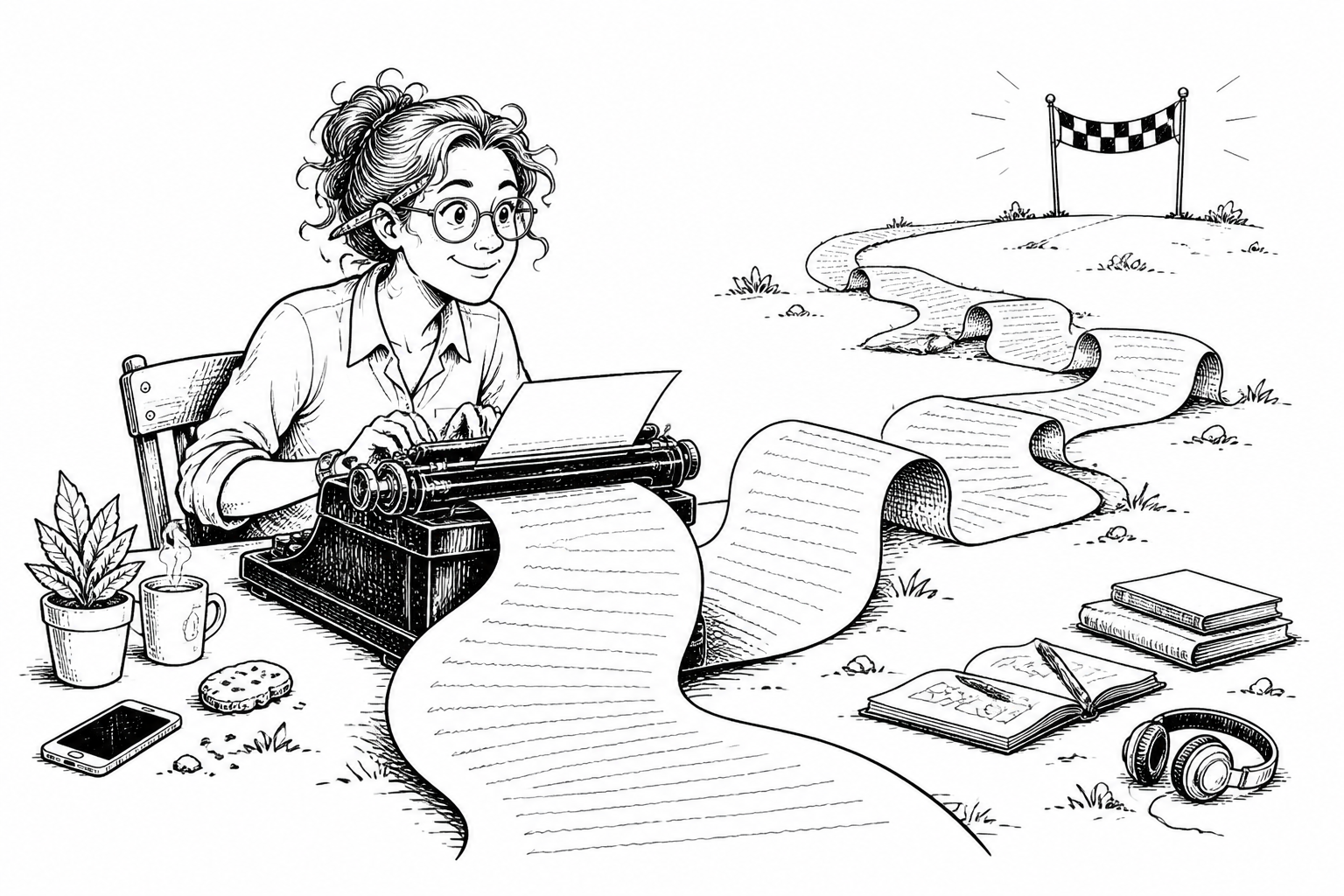
A first draft is not a performance. It is the part where you get the story onto the page before your inner critic turns up with a clipboard and begins asking whether Chapter Four has fulfilled its quarterly objectives.
Getting through it is less about waiting for inspiration than understanding how you write, protecting momentum and refusing to mistake a difficult afternoon for the death of the novel.
First, know which kind of writer you are
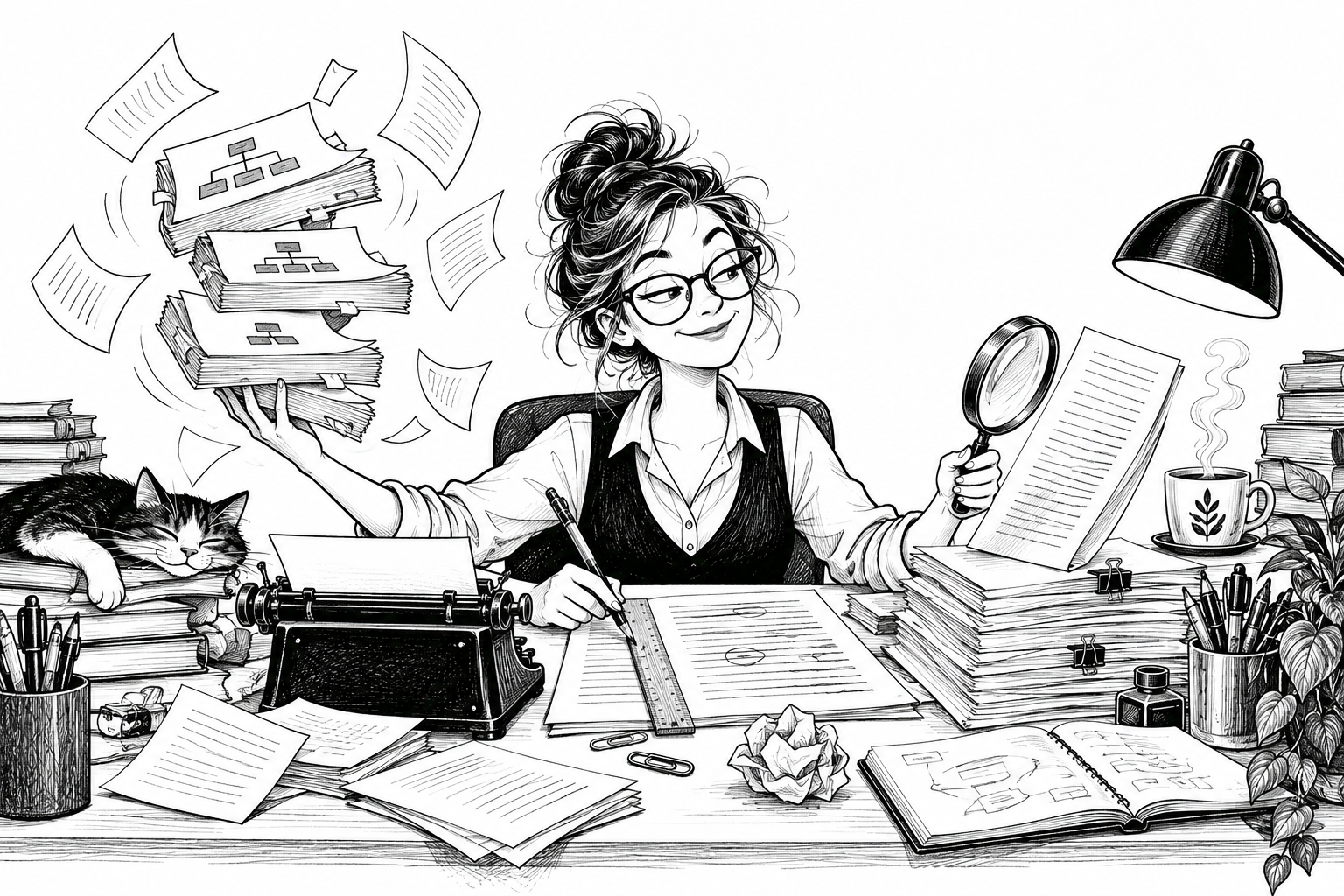
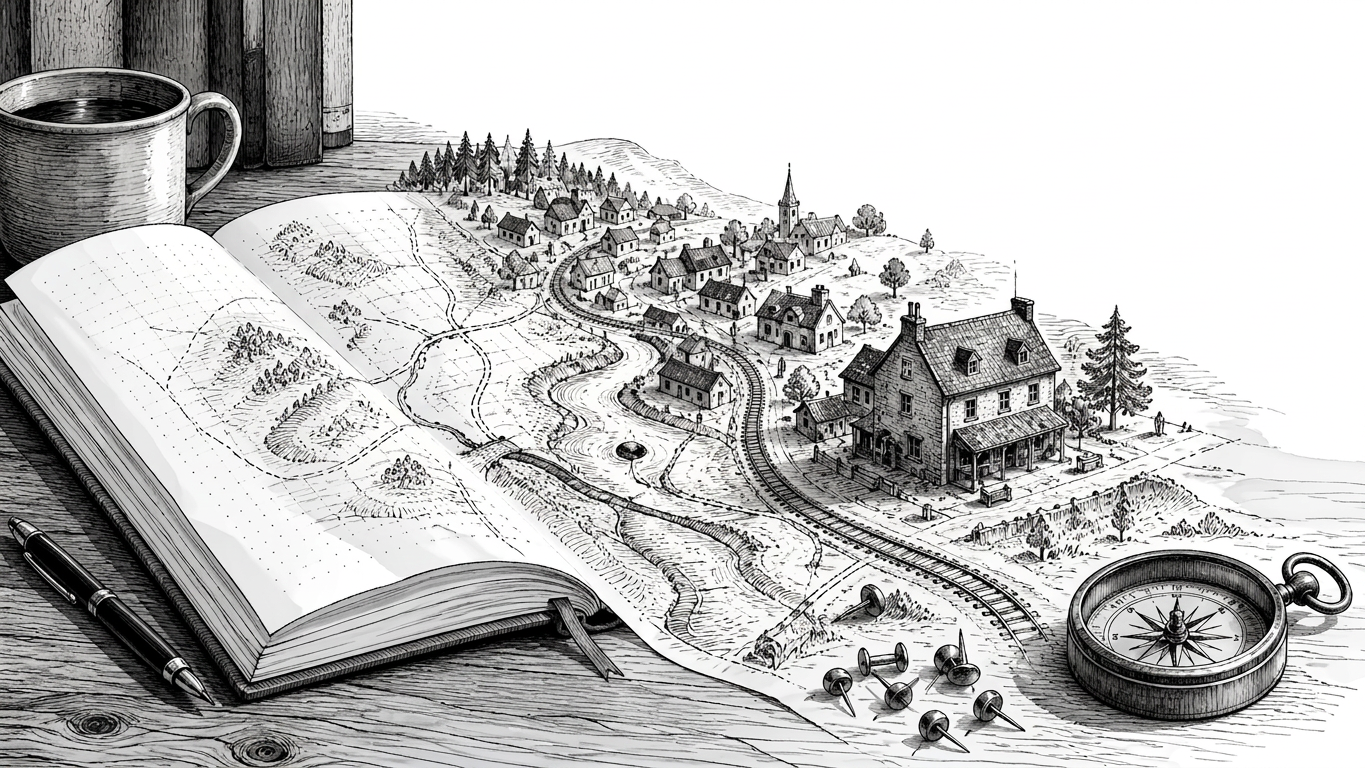
An outliner and a discovery writer are not travelling in quite the same way. The outliner has a map. The discovery writer has an open road and an alarming amount of confidence that the next turning will eventually appear.
If you outline, the plan should keep you moving: return to it, work out which scene comes next and write that scene. If you write by discovery, curiosity is often the engine. You come back because you genuinely want to know what the characters do next.
Neither method is inherently superior. The useful method is the one that gets your book written. If you are still working out which suits you, start with whether you need to outline your novel.
For an outliner, the outline is the map. For a discovery writer, curiosity is the engine.
Do not turn a blockage into a national emergency
A scene can stall because the timeline is wrong, a character has no believable reason to act, or the route you chose simply cannot reach the destination. That is a story problem. It can be diagnosed.
But sometimes you are merely stuck on one route. If you write in pieces, move to a scene that is alive in your head and come back later. The missing bridge may become obvious once more of the landscape exists. A novel does not have to be built from the front door to the chimney in strict order.
That is also why one awkward day does not prove the novel itself is not working. Diagnose the actual problem before declaring the patient deceased.
Give yourself permission to write the rough version
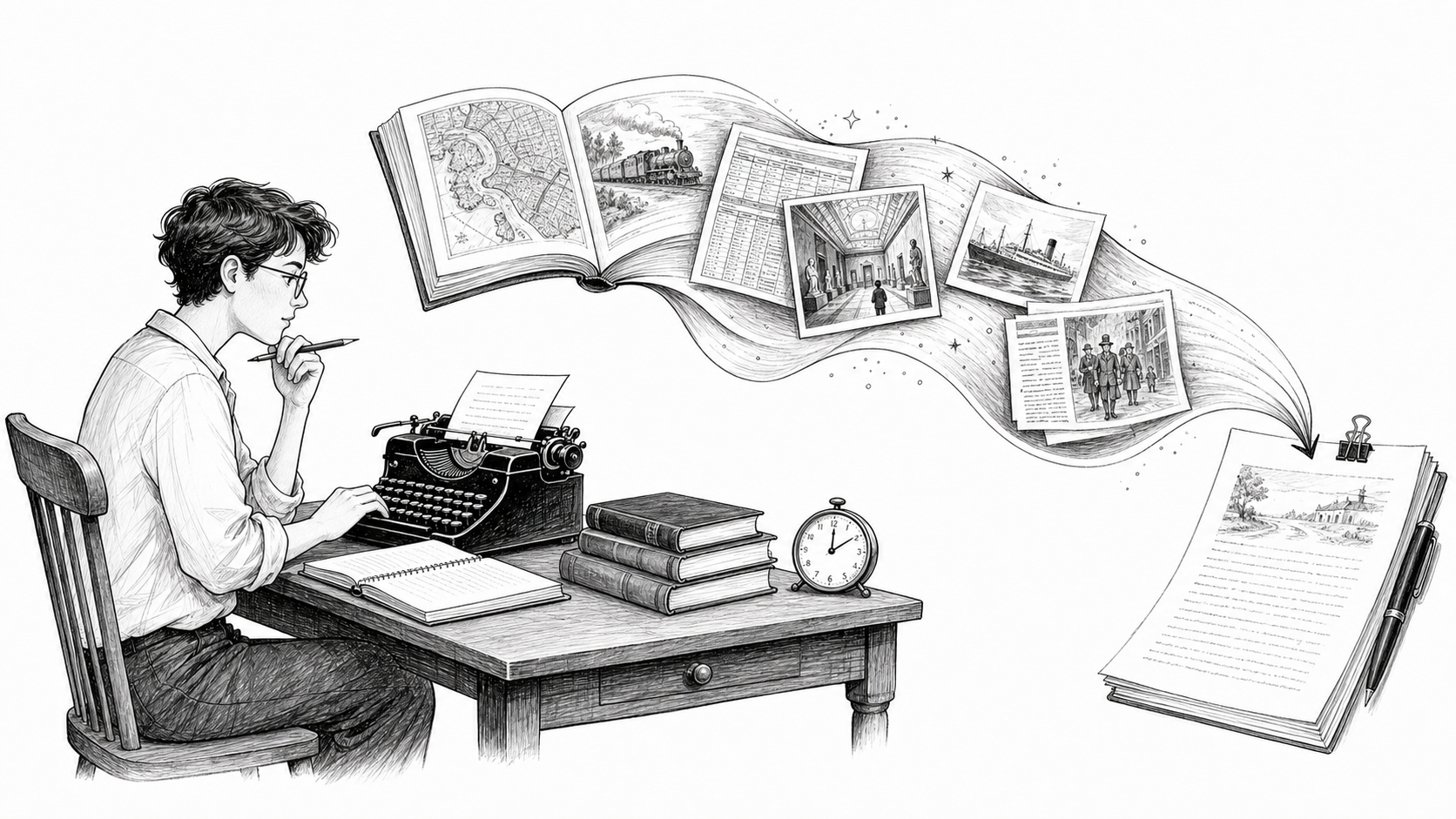
The first draft is not where every sentence must gleam. It is where the story gains enough physical existence to be improved. Complex chapters may need research, fact-checking or technical work later. If the bones of the scene are present, leave yourself a clear note and keep going.
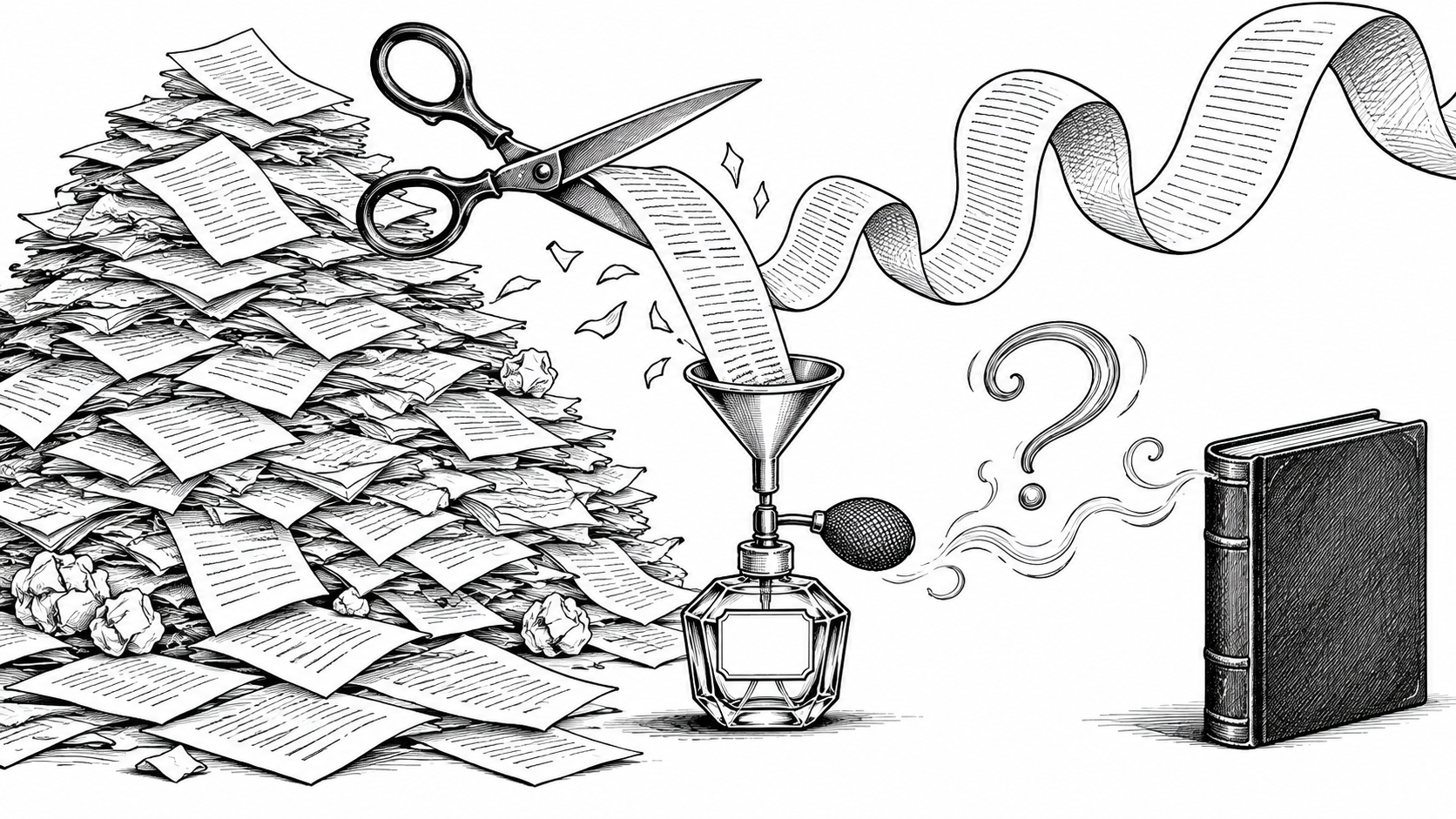
There is a dangerous little ritual in which a writer rereads yesterday’s chapter, adjusts a sentence, improves a paragraph, fixes another sentence and eventually discovers that the entire writing session has been spent revising. The manuscript is cleaner, certainly. It is also no closer to having an ending.
Do not confuse revising with writing. Get the story down; the hacking and honing can come later.
Use targets to stop the book quietly drifting away
A writing project can drift with extraordinary politeness. One poor night’s sleep becomes a missed morning. The next day the internet requires urgent inspection. Soon a month has passed and Chapter Seven is living alone like an abandoned caravan.
Daily word counts, deadlines and a visible progress tracker turn intention into output. Tony tracks words, chapters, writing speed, good days, bad days and projected completion. That may be more spreadsheet than every writer needs, but the principle is sound: make progress visible and give the work a place in your real life.
If you normally show up, one missed day is not a moral collapse. Take the day, step away from the screen and return properly. The cup of tea is not enchanted; its purpose is to make you stop staring at the same problem long enough for your brain to breathe. Our broader view on routines is in Must Writers Write Every Day?
Protect the draft from premature opinion
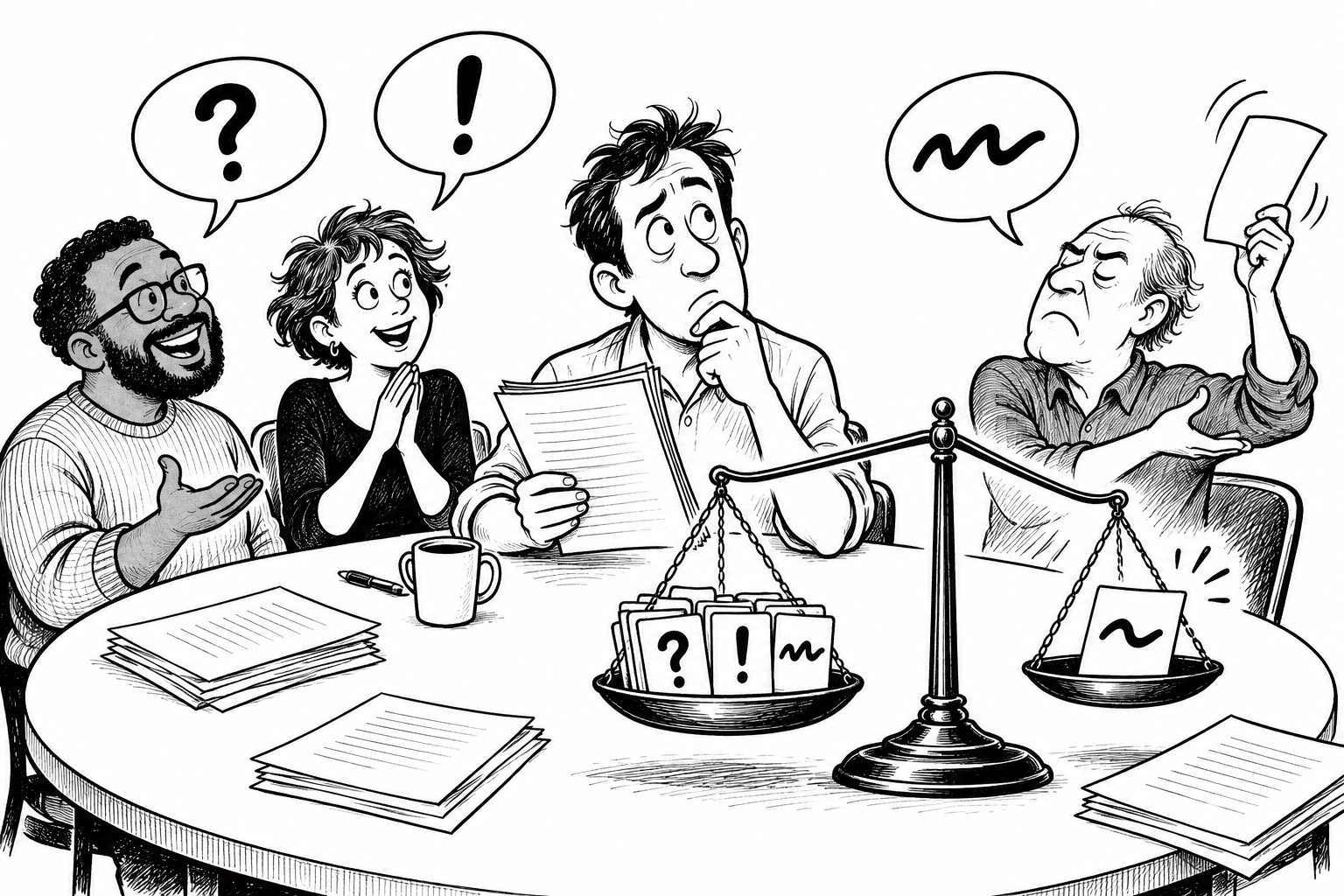
A few early pages can earn praise, but praise for a fragment is not evidence that the book works. Nor is one badly timed reaction a reliable verdict on a story still changing under your hands.
Tony generally keeps an unfinished manuscript protected. When it is ready, readers can experience the whole thing and respond to the whole thing. Until then, early applause is mainly a pleasant noise. If you are deciding when outside eyes become useful, read when to show your novel to other people.
Do not let self-doubt edit with a flamethrower
Tony once came close to deleting a journal section from his most successful book because he thought it was disconnected and mediocre. He made a deal with himself: let the focus group tell him it was rubbish first. They unanimously regarded it as one of the best parts of the novel.
The lesson is not to ignore every doubt. It is to stop doubt acting as judge and executioner before anyone trustworthy has seen the evidence. If your internal verdict repeatedly says the work is terrible while informed readers repeatedly say otherwise, the internal witness may not be entirely reliable.
Self-doubt is not evidence that you cannot finish. Half a manuscript is evidence that you can.
Treat the midpoint as a milestone, not a swamp
Halfway can look intimidating: you have written an enormous amount and, rather inconveniently, must now write approximately that much again. But it is also proof. The graph has climbed. The book exists in substantial form. You have already travelled far enough to know you can travel.
For a discovery writer, the unanswered second half is not necessarily a threat. It is the open road. Brainstorm, think bigger than seems sensible, reject the ridiculous ideas and keep the useful one. You can always tone an idea down; it is much harder to enlarge a story after fear has made it tiny.
The next thing to do is the next thing
If you have reached the middle of a first draft, there is evidence that you can finish it. Take a break when you genuinely need one. Solve concrete problems rather than worshipping the idea of writer’s block. Keep notes for the bridges. Leave the polishing tools in the cupboard. Then return and write the next workable piece.
If you are at the beginning of the whole journey rather than the middle of a manuscript, our living guide, I’m Thinking of Writing a Book. Where Do I Start?, connects the decisions from the first idea onwards.









Leave a Reply